

AI-generated illustration created to represent the article’s subject. It does not depict an actual EPW course, trainer, participant, client, event or venue.
Tunnel engineering is a unique field that is essential to the construction of modern infrastructure. The need for transportation, utility and other underground facilities will lead to the creation of ever more infrastructures in cities which in turn require proper planning so that resources are not wasted due to space limits or environmental restrictions. Tunnel Engineering Course Description: Tunnel engineering is a specialized field that focuses on the design and construction of tunnels, which are underground passageways used for transportation or utilities. So What Is Tunnel Engineering? What is a course in tunnel engineering like, and what career opportunities are there?
What is Tunnel Engineering?
Tunnel engineering — the science and art of designing and constructing tunnels, underground passageways used for transportation (e.g., road or rail), utilities, shallow or deep mining. It necessitates expertise in geology, structural engineering, and construction methods. Geological condition, water table, environmental impact are the challenges engineers need to deal with.
Why is Tunnel Engineering Important?
Today, tunnels form part of modern infrastructure. They also support efficient long-distance transportation infrastructures, such as subways and highways while alleviating surface-level congestion and allowing for underground storage and utilities. Tunneling projects also help the environment by minimizing what exists that disrupts the scenic natural landscape above ground. With the continuous development of urbanization, tunnel engineering has an crucial role in sustainable development.
Contents of a Typical Tunnel Engineering Course
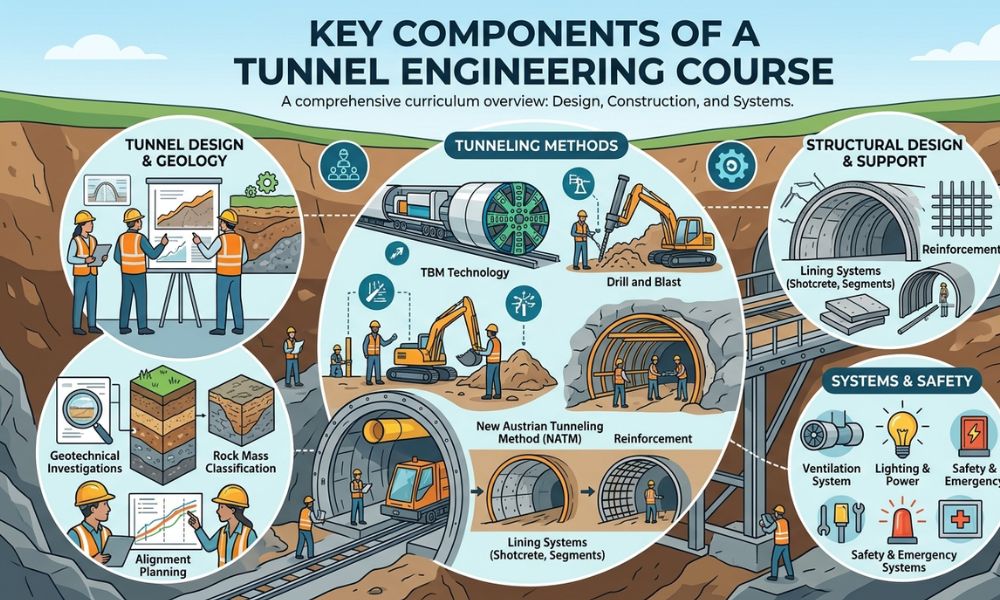
A course in tunnel engineering provides students with the technical skills necessary to work on tunnel construction projects. Some of the key areas covered in this discipline are geotechnical engineering, tunneling design and construction methods, project management and safety standards. Think of the world-class technical training example that advocates for practical exposure to real-world problems related to tunnel design and construction, essentially a niche subject in itself.
Key Components of a Tunnel Engineering Course
Geotechnical Engineering
Understanding the geological conditions surrounding a tunnel is crucial for its success. Students learn to analyze soil, rock formations, and groundwater to assess the feasibility of a tunnel project. Geotechnical engineering ensures that the tunnel is structurally sound and capable of withstanding external pressures.
Tunnel Design
Tunnel design involves the calculation of structural load-bearing capacities and the selection of appropriate materials. Students learn how to design tunnels that can withstand environmental and operational stresses, ensuring they are both functional and durable.
Construction Techniques
Tunnel construction methods are diverse, ranging from traditional drilling and blasting to modern tunnel boring machines (TBM). A tunnel engineering course covers these techniques and equips students with the knowledge to choose the most suitable method for different tunneling environments.
Tunnel Safety
Safety is a top priority in tunnel construction. The course covers the latest safety practices, including ventilation systems, fire prevention measures, and emergency evacuation protocols. Students learn how to mitigate the risks associated with working in confined underground spaces.
Environmental Considerations
Tunneling can have significant environmental impacts, such as disruption to ecosystems and water systems. Tunnel engineering students are trained in conducting environmental impact assessments and employing sustainable construction practices to minimize these effects.
Career Opportunities in Tunnel Engineering
Tunnel engineering offers a wide array of career opportunities. Graduates of tunnel engineering courses can work in various sectors, including transportation, water management, and energy. The demand for tunnel engineers is growing as infrastructure projects become more complex and require advanced tunneling techniques.
Potential Career Paths
- Tunnel Designer: Responsible for designing tunnels that meet safety and functionality standards.
- Geotechnical Engineer: Specializes in assessing the soil and rock conditions around the tunnel.
- Construction Manager: Oversees the construction process, ensuring the project stays on schedule and within budget.
- Safety Officer: Focuses on ensuring safety standards are met during construction and operation.
Salaries in tunnel engineering can be highly competitive, particularly for professionals with specialized skills. The field also offers opportunities for career advancement and professional development, with many engineers moving into senior management or specialized consulting roles.
Conclusion
A tunnel engineering course provides a strong foundation for those interested in pursuing a career in this dynamic field. With the increasing demand for tunnels in urban development, transportation, and infrastructure projects, the need for skilled tunnel engineers continues to grow. The knowledge gained through a tunnel engineering course can open doors to a range of exciting career opportunities in both the public and private sectors. As cities expand and the need for sustainable infrastructure intensifies, tunnel engineering remains a critical and rewarding field for engineers who are eager to shape the future of our built environment.