
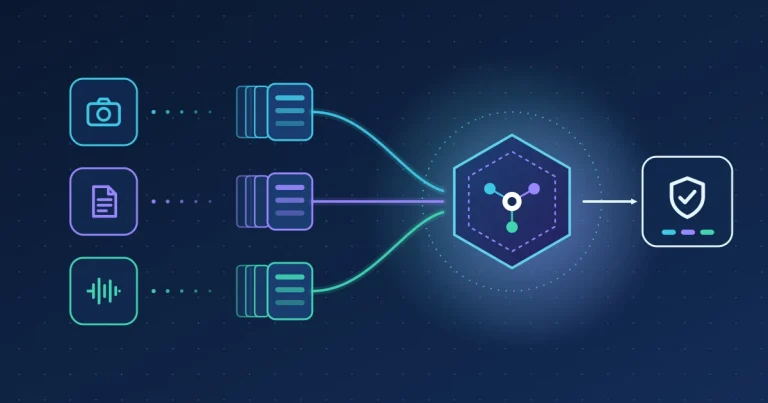
Multimodal AI Architecture: How Vision, Text and Audio Are Fused
A practical guide to multimodal AI architecture, covering modality-specific encoders, alignment, fusion strategies, evaluation and resilient deployment.
Explore expert-written articles on Artificial Intelligence and Machine Learning trends, tools, and real-world uses.
A practical guide to multimodal AI architecture, covering modality-specific encoders, alignment, fusion strategies, evaluation and resilient deployment.
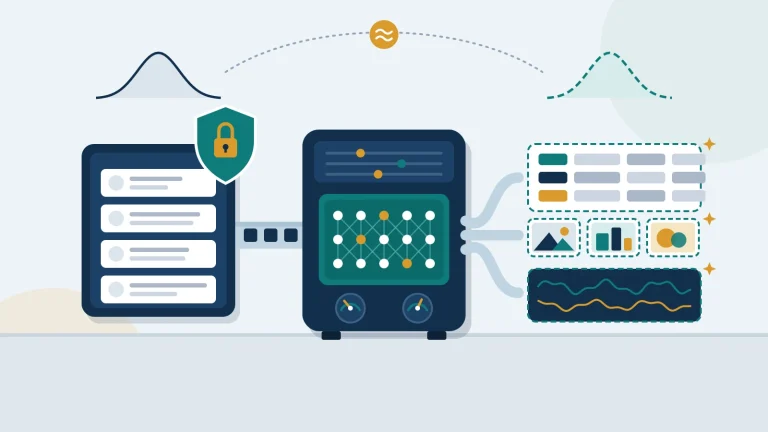
Learn how to select synthetic data generation methods, test fidelity, utility and privacy, and govern datasets through EPW’s practical SAFE framework.

Evaluate generative AI with EPW’s QSAFE framework, combining real-task quality, safety, operational fit, measurable value, monitoring and clear deployment gates.

Use EPW’s CLEAR framework to explain machine learning models to affected people, users, leaders, technical teams and auditors without overstating the evidence.

Evaluate speech recognition systems with WER, critical-term accuracy, latency and robustness using EPW’s practical CLEAR framework.

Use EPW’s RANKED framework to design recommendation objectives, data, retrieval, ranking, evaluation and feedback controls for production systems.

Compare MLOps and DevOps using EPW’s DUAL test, with clear differences in artefacts, testing, continuous training, monitoring, rollback and ownership.

Use EPW’s FORECAST process to frame horizons, protect temporal validation, compare baselines, assess uncertainty and connect forecasts to decisions.

Understand the difference between computer vision and image recognition, compare their outputs, data, metrics and use cases, and apply EPW’s SCOPE test to select the right visual AI task.

Compare reinforcement learning course types, prerequisites, outcomes and implementation depth, then use EPW’s READY test to decide whether the training fits your problem, role and organisational evidence.