
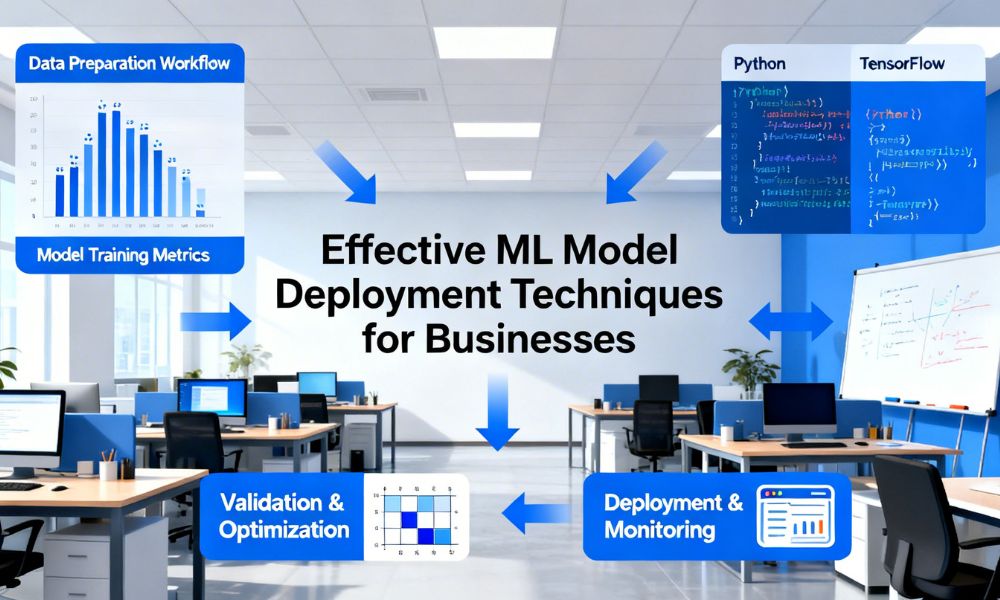
With the rapidly changing technology environment, it is important for organizations to be able to deploy machine learning (ML) models to make data-driven decisions and automate tasks. Machine learning Model Deployment is the process of taking a trained model and deploying it into operation where end-user can use it to make predictions on rolling basis, automate data handling work or for real-time analysis. No matter if you are planning to develop an app, streamline your operations or improve user experiences it is vital for you to grasp how each of these deployment strategies work in order to succeed.
Yet, it is not easy to push models to production. Careful planning and strategy are needed to ensure that models run robustly in the wild. In this article, we will discuss some of the deployment options and illustrate how you can fit one into your requirements.
What Does ‘Deployment’ Mean in Machine Learning?
In machine learning land, the word actually means to deploy your trained model in a live environment. The Whereas training is about building and profiling models (in terms of their reliability and prediction accuracy), deployment is what enables the built models to effectively evaluate new data, make predictions on it and contribute business value. It may include integrating the model into applications, deploying it in servers or exposing as APIs-safe calls.
To deploy is to lift systems out of theory and into practice. Effective deployment ensures that models work effectively, are scalable as data sizes grow and remain relevant as more data or requirements come along.
Key Benefits of Proper Machine Learning Model Deployment
Deploying machine learning models correctly offers several significant benefits:
- Real-Time Predictions: Once deployed, models can provide immediate feedback or predictions based on fresh data, which is vital for decision-making in fast-paced industries.
- Automation of Tasks: Machine learning models can automate routine tasks, reducing the need for manual intervention and boosting overall productivity.
- Scalability: Proper deployment strategies enable models to scale according to data growth, handling more requests and processing larger datasets.
- Continuous Improvement: With a good deployment system, models can be monitored, updated, and retrained regularly to maintain accuracy over time.
These advantages help businesses optimize operations, enhance user experiences, and stay competitive.
Challenges in Deploying Machine Learning Models
While machine learning models offer vast potential, deployment can be fraught with challenges. Some of the key issues include:
- Data Drift: Over time, the data used by the model may change, causing performance degradation if not regularly updated.
- Infrastructure Complexity: Deploying models often requires complex infrastructure setups, especially when scaling across multiple environments.
- Security Concerns: Ensuring data privacy and protection is critical, especially in industries like healthcare and finance.
- Integration Issues: Connecting models to existing systems and applications can be challenging, requiring seamless integration to function correctly.
Addressing these challenges requires thorough planning, robust infrastructure, and continuous monitoring to ensure models continue to deliver value.
How to Choose the Right Machine Learning Deployment Strategy
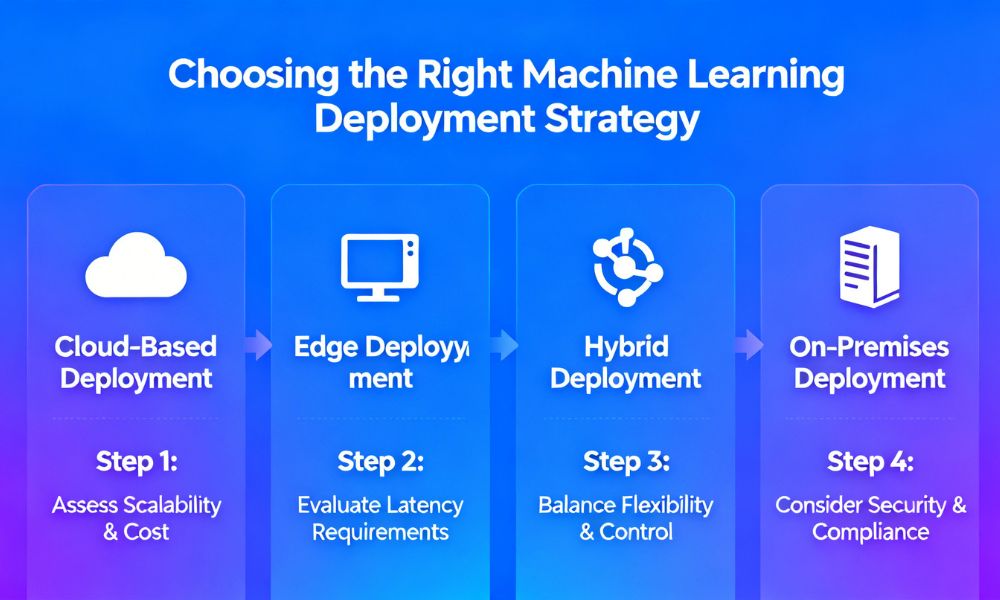
Selecting the best deployment strategy depends on several factors, including:
- Type of Model: Real-time models, such as those used in fraud detection, require low-latency deployments, whereas batch processing models for tasks like analytics can work with less stringent timing.
- Scalability Needs: For businesses expecting growth or high traffic, cloud-based solutions offer scalability and flexibility, while on-premises setups provide more control but require significant resources.
- Data Privacy: In industries like healthcare or finance, regulatory requirements may necessitate keeping sensitive data on-site, leading to the adoption of on-premises deployment.
- Cost: Budget considerations often dictate whether businesses opt for cloud or on-premises deployment. Cloud solutions tend to be more cost-effective for smaller businesses with fluctuating workloads.
By carefully evaluating these factors, businesses can determine the most appropriate deployment strategy.
Types of Machine Learning Deployment Strategies
There are several popular machine learning model deployment strategies, each suited to different needs and environments:
Cloud-Based Deployment
Cloud-based deployment involves hosting models on platforms like AWS, Google Cloud, or Microsoft Azure. This strategy offers flexibility, scalability, and reduced maintenance overhead. Businesses can scale their models up or down based on demand, making cloud solutions ideal for dynamic workloads.
On-Premises Deployment
For organizations with strict data privacy concerns, on-premises deployment allows models to run on the company’s own servers. While it offers complete control over data, it can be resource-intensive and more expensive to maintain compared to cloud solutions.
Hybrid Deployment
A hybrid strategy combines both cloud and on-premises deployment. It allows businesses to keep sensitive data on-site while taking advantage of the cloud’s scalability for non-sensitive operations. This approach provides flexibility without compromising on security.
Containerization with Docker
Containerization using Docker ensures that models are packaged in containers that can be run consistently across various environments. This makes it easier to deploy, manage, and scale models without worrying about compatibility issues or dependencies.
Serverless Deployment
In serverless deployment, the cloud provider manages the infrastructure, and the user only pays for the compute resources used. This approach is cost-effective for businesses with variable traffic and reduces the burden of managing servers.
Real-Time vs. Batch Processing Deployment
Real-time deployment is essential for use cases like personalized recommendations, where models need to provide immediate responses. Batch processing is more suitable for scenarios where predictions can be made at scheduled intervals, such as generating weekly reports or analyzing historical data.
Continuous Deployment and Monitoring
Continuous deployment ensures that models are regularly updated and retrained as new data becomes available. This approach is critical for businesses looking to maintain high model performance over time. Monitoring also plays a key role in identifying issues early and maintaining the integrity of the deployed model.
Tools like TensorFlow and Kubernetes make it easier to automate both the deployment and monitoring of machine learning models, ensuring they are always up to date and performing optimally.
Scaling Your Machine Learning Model
To handle large volumes of data or increased requests, models must be scalable. Best practices for scaling include:
- Optimizing Model Performance: Reducing complexity and using distributed computing can help models process data more efficiently.
- Using Load Balancing: Distributing requests across multiple servers prevents bottlenecks and ensures smooth performance.
- Caching Mechanisms: Caching frequently accessed data or predictions helps reduce latency and improve response times.
These techniques allow businesses to ensure that their models can handle growth without compromising on speed or accuracy.
Conclusion
Machine learning model deployment is a critical phase in the AI lifecycle. It turns theoretical models into practical, real-time solutions that automate processes, deliver predictions, and enhance user experiences. The right deployment strategy, whether it’s cloud-based, on-premises, or hybrid, ensures that models can scale effectively, remain secure, and continue to perform well as data evolves.
By understanding the key deployment strategies and selecting the best fit for their needs, businesses can ensure that their machine learning models deliver lasting value, helping them stay ahead in a competitive marketplace. Continuous monitoring and scaling are essential to keep models performing at their best and adapting to the changing demands of the business landscape.