

AI-generated illustration created to represent the article’s subject. It does not depict an actual EPW course, trainer, participant, client, event or venue.
Human resource (HR) risks must be managed to ensure organizational success in the volatile business landscape of today. HR-related risk refers to any threat that could potentially disrupt your business’s operations and reputation, from legal compliance issues to employee relations. An HR risk management strategy enables the businesses to identify, assess and mitigate potential threats that could disrupt your workforce and the overall business continuity. Such proactive measure doesnt only secures the company from potential losses but also keeps the work place a safe and productive environment.
What is an HR Risk Management Strategy?
HR risk management strategy is common practice for propensity mitigation, potency realization. “This also can include risks related to legal compliance, employee health and safety, talent management and operational efficiency. These processes and controls are sought to mitigate the potential exposure of this risk on the organization. A comprehensive HR risk management strategy covers these aspects and helps you avert costly mistakes and keep your workforce productive and engaged.
The Importance of an HR Risk Management Strategy for Every Organization
Today organizations are dealing with dynamic challenges that can affect HR functions. Many areas to consider: legal compliance, employee experience (engagement), workforce safety. Lack of an effective HR risk management strategy can expose businesses to higher risks of lawsuits, regulatory fines, employee dissatisfaction and high turnover rates. A robust strategy gives you a powerful foundation from which to manage this risk and set yourself up for long-term organizational success.
Benefits of an Effective HR Risk Management Strategy
- Legal Protection: Ensures compliance with labor laws, preventing costly legal battles and reputational damage.
- Enhanced Employee Relations: Promotes a positive work environment, reducing conflict and improving productivity.
- Cost Savings: Prevents financial losses associated with HR errors, compliance failures, and employee turnover.
- Talent Retention: Minimizes risks related to hiring and retaining key talent, enhancing organizational stability.
- Crisis Management: Prepares the organization for unforeseen challenges, improving resilience and adaptability.
Key Components of HR Risk Management Strategy
A comprehensive HR risk management strategy includes several critical components designed to address various types of risks. By focusing on these areas, businesses can create a robust plan that safeguards both employees and the organization.
Identifying Potential HR Risks
The first step in creating an HR risk management strategy is identifying potential risks. This process involves assessing internal and external factors that could pose threats to the workforce and operations. Common HR risks include:
- Legal Risks: Non-compliance with labor laws, discrimination claims, and wrongful termination lawsuits.
- Operational Risks: Inefficient HR processes, inadequate training, and lack of employee engagement.
- Financial Risks: Poor compensation management, budget overspending, and resource allocation errors.
- Reputational Risks: Negative publicity, employee misconduct, or failure to address workplace issues.
Legal Compliance and Risk Mitigation
Compliance with employment laws is one of the most critical aspects of HR risk management. Organizations must stay current with regulations related to labor standards, health and safety, and employee rights. A failure to comply with these laws can result in significant legal consequences, including fines and lawsuits. An HR risk management strategy ensures that businesses remain compliant through regular audits, training, and updated policies.
Employee Health and Safety
Employee health and safety are paramount to any HR strategy. An unsafe work environment not only jeopardizes the well-being of employees but can also lead to legal actions and operational disruptions. A proactive HR risk management strategy includes implementing safety protocols, regular training sessions, and risk assessments to prevent accidents and injuries in the workplace.
Effective Talent Management
Attracting and retaining top talent is essential for business success, but HR risks in recruitment and retention can undermine this effort. Poor hiring decisions, ineffective onboarding, and lack of career development opportunities can result in high turnover rates. A strong HR risk management strategy includes clear recruitment processes, employee development programs, and retention strategies to minimize these risks.
How HR Risk Management Enhances Employee Relations
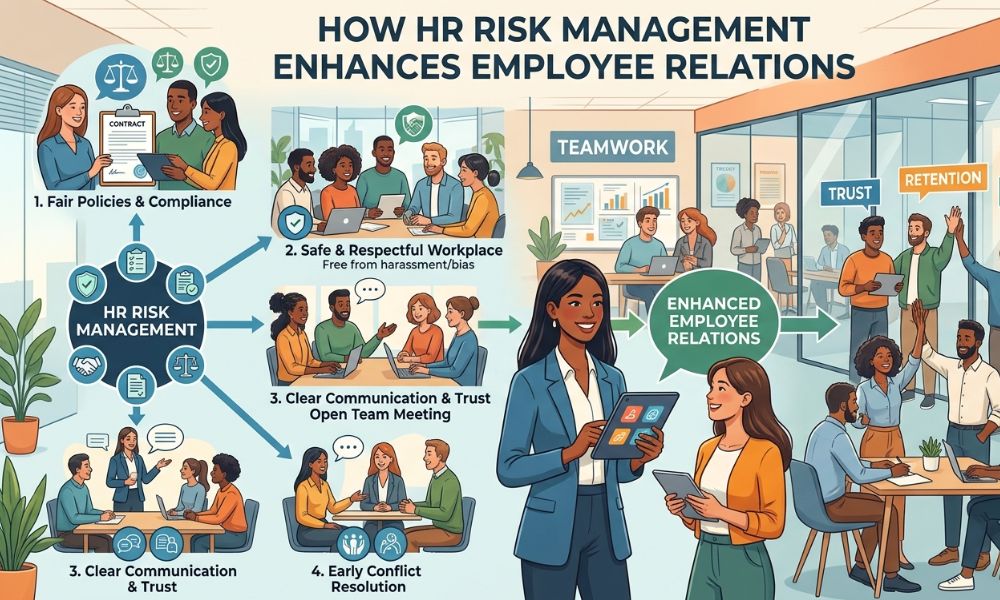
HR risk management also plays a crucial role in fostering healthy employee relations. Addressing issues such as conflict resolution, job dissatisfaction, and performance management can prevent workplace disruptions. By managing these risks effectively, businesses can create a positive work culture that promotes collaboration, trust, and loyalty.
Conflict Prevention and Resolution
Employee conflict is inevitable in any organization, but how it is handled makes all the difference. An HR risk management strategy should include conflict resolution mechanisms to address disputes early and prevent escalation. This can include open communication channels, mediation, and clear policies outlining expected behaviors.
Improving Employee Engagement
A disengaged workforce is a major risk to productivity and morale. By implementing an HR risk management strategy that prioritizes employee engagement, businesses can reduce turnover and enhance job satisfaction. Regular feedback, recognition programs, and career development opportunities can improve engagement and foster a sense of belonging.
Managing HR Risks in Small Businesses
For small businesses, managing HR risks can be challenging due to limited resources and fewer HR personnel. However, even small businesses can benefit from a tailored HR risk management strategy. By focusing on key risks such as legal compliance, employee retention, and health and safety, small businesses can avoid costly pitfalls. Leveraging affordable HR tools and outsourcing certain functions can also help mitigate risks without straining budgets.
Integrating HR Risk Management with Business Strategy
To be truly effective, HR risk management must align with the broader business strategy. This ensures that HR efforts contribute to organizational goals and drive long-term success. By integrating HR risk management into the company’s strategic plan, businesses can enhance performance, reduce risks, and improve decision-making across departments.
Conclusion
A well-crafted HR risk management strategy is essential for businesses of all sizes. It helps organizations navigate challenges, comply with regulations, and create a productive and safe work environment. By identifying potential risks, prioritizing compliance, and fostering strong employee relations, businesses can protect their workforce and reputation, leading to long-term growth and success.
Investing in a comprehensive HR risk management strategy is not just a legal necessity—it’s a smart business decision that promotes organizational stability, employee satisfaction, and overall success.