

AI-generated illustration created to represent the article’s subject. It does not depict an actual EPW course, trainer, participant, client, event or venue.
Employee engagement in today’s business environment is not just another buzzword, but an essential component for organizational success. Human Resources (HR) professionals are at the heart of creating an organisation where people don’t just show up, but are engaged. Engaged employees, who are motivated and committed to their jobs and the company, result in high productivity that directly influences a company’s bottom line. HR employee engagement courses, such as the ones from Purple SEM, are central to providing HR leaders with the skills needed to raise a considerable impact on employee engagement which will lead ultimately toward overall business success.
What Is Employee Engagement and Why It’s Important for HR?
Employee engagement is about more than just job satisfaction. It’s about how employees feel about their organization. Engaged employees are more motivated, productive and creative. They take ownership and pride in their work, leading to better results.
HR professionals have to find out what employee engagement is and how it can be developed. Higher engagement among a team leads to better retention, improved job satisfaction and a stronger work culture. When human resource teams implement the right strategies, employees are empowered to thrive — creating a robust talent engine for the organization.
The Role of HR in Building Engagement
HR professionals and the company culture architects. They create policies, design training programs and offer leadership that helps create a positive, engaging workplace. But employee engagement doesn’t happen by accident. It is a proactive strategic concept that must be adjusted to the different employee needs.
HR experts design the workplace by instilling engagement methods in accordance with organizational aspirations, providing employees a feeling of significance, establishing an open and inclusive work culture where team members feel free.
The Importance of an HR Employee Engagement Course
With workplace dynamics evolving and employee expectations changing constantly, HR professionals should keep up with trends and best practices. The Challenges of Employee Engagement: Why Old HR Leadership Styles No Longer Work An HR employee engagement course trains professionals on the most advanced tools, strategies, and research that capture employees’ motivation and satisfaction.
Taking a course like this will help HR professionals learn how to measure, and subsequently increase, levels of engagement from team to department. It covers everything, from leadership techniques to measuring engagement, providing HR leaders with the knowledge to build and execute effective strategies.
Benefits of Employee Engagement for Organizations
- Increased Productivity: Engaged employees are more focused and committed, leading to better performance and efficiency.
- Higher Retention Rates: Organizations with high employee engagement see lower turnover, saving time and resources on recruitment and training.
- Stronger Company Culture: Employee engagement fosters a positive, collaborative work environment where everyone feels valued and included.
- Improved Customer Satisfaction: Engaged employees tend to deliver better service, leading to higher customer satisfaction and loyalty.
Key Topics Covered in HR Employee Engagement Courses
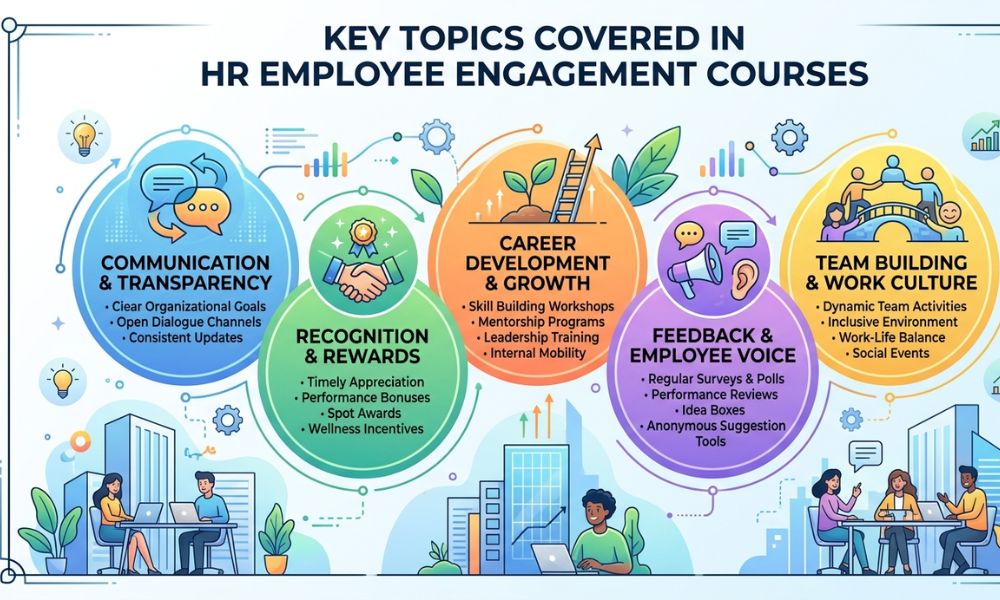
An HR employee engagement course offers an in-depth look at various strategies and tools that can help foster employee engagement across all levels of an organization. Some of the key topics include:
Employee Motivation and Its Impact on Engagement
Understanding what drives employee motivation is key to developing effective engagement strategies. Learn how to tap into intrinsic and extrinsic motivators to boost morale and performance.
Leadership Skills for Engagement
Effective leadership is at the heart of employee engagement. HR professionals will gain insight into how to train leaders who can inspire, motivate, and engage their teams, ultimately fostering a culture of trust and respect.
Measuring Engagement Effectively
Learn how to assess engagement levels using surveys, feedback tools, and performance metrics. This data is crucial for identifying areas of improvement and adjusting strategies accordingly.
Creating a Positive Work Environment
Explore techniques for building a supportive, inclusive, and transparent workplace. Discover how communication and collaboration can be improved to foster an environment that employees want to be a part of.
Employee Recognition and Reward Systems
Recognizing and rewarding employees for their hard work is an essential component of engagement. This section covers best practices for creating an effective recognition system that boosts morale and enhances motivation.
How HR Employee Engagement Training Boosts Leadership Effectiveness
HR professionals are tasked with guiding leaders in an organization to cultivate an environment of engagement. An HR employee engagement course enhances leadership skills, teaching HR professionals how to coach managers to lead with empathy, motivation, and a clear focus on employee well-being. With these skills, HR can ensure that leaders are not only managing tasks but also inspiring their teams to achieve their best work.
The Long-Term Impact of Employee Engagement
An engaged workforce has long-lasting effects on a company’s success. HR professionals who are skilled in employee engagement can design strategies that produce sustainable results. Over time, these strategies lead to increased productivity, higher employee retention, and a more collaborative and motivated workplace. Ultimately, this positively impacts the company’s bottom line and reputation.
Measuring the Success of Engagement Strategies
For HR professionals, measuring the success of engagement initiatives is essential. Key performance indicators (KPIs) such as employee satisfaction, turnover rates, and productivity levels are often use to track engagement. Feedback from employees, in the form of surveys or one-on-one meetings. Also plays a critical role in assessing the effectiveness of engagement strategies.
The Future of Employee Engagement in HR
As the workplace continues to evolve, so too must the strategies for engaging employees. Trends such as remote work, flexible hours, and a focus on mental health are shaping how engagement is perceived and executed. HR professionals who undergo employee engagement training are better equipped to stay ahead of these changes, ensuring that they continue to foster an engaged, productive workforce.
Conclusion
Investing in HR employee engagement training is an investment in the future success of your organization. By gaining a deep understanding of employee motivation, leadership development, and engagement measurement, HR professionals can build a more productive, engaged, and loyal workforce. These efforts not only contribute to a healthier company culture but also drive significant business outcomes, making employee engagement a key factor in long-term organizational success.