

AI-generated illustration created to represent the article’s subject. It does not depict an actual EPW course, trainer, participant, client, event or venue.
In today’s world of unstable market fluctuations and global economic volatility, financial risk management is an important tool for all kinds of business and professionals. However, a financial risk management course will help you understand how to deal with these problems. If you are a business leader, investor, or financial analyst, knowing risk management principles can assist in asset protection as well as improving performance and long-term stability.
In this article, we explore what to expect from a financial risk management course including key concepts covered, as well as benefits, skills acquired and real world applications.
What is Financial Risk Management?
Financial risk management is the practice of managing and minimizing risks that can negatively impact a firm’s financial stability. These include market fluctuations, credit risk, liquidity shortages and operational failures.
Participants learn how to deal with these risks using systematic frameworks and tools through a financial risk management course. This approach equips individuals with the tools to make educated decisions that reduce financial uncertainty by contextualizing theoretical knowledge in real-life experiences.
Applying to a Financial Risk Management Course: Why and Why not
Financial Risk. As economic instability becomes more normal in a world there is little else so needed to understand. Taking a course in financial risk management provides various advantages for both personal career development and company achievement:
- Improve Decision-Making: Risk management knowledge helps you make better-informed financial decisions, minimizing potential losses.
- Boost Career Prospects: As companies prioritize risk management, professionals with expertise in this area are in high demand.
- Protect Business Interests: Learning to identify and mitigate financial risks helps safeguard a company’s assets and financial health.
- Enhance Risk Awareness: The course provides a comprehensive understanding of financial risks and the tools to handle them effectively.
Key Concepts Covered in a Financial Risk Management Course
A financial risk management course covers several essential concepts designed to prepare you for real-world risk scenarios:
Types of Financial Risks
Understanding the different types of financial risks is crucial to effective risk management. These include:
- Market Risk: The risk of losses due to changes in market conditions such as stock prices, interest rates, and commodity prices.
- Credit Risk: The possibility of a loss due to a borrower’s inability to meet their financial obligations.
- Liquidity Risk: The risk of not being able to meet short-term financial obligations due to insufficient liquid assets.
- Operational Risk: The risk of loss due to failed internal processes, systems, or human error.
Risk Assessment and Measurement
A financial risk management course teaches you how to assess and measure potential risks. This includes learning various risk analysis techniques such as stress testing, sensitivity analysis, and scenario modeling. These methods help determine how changes in market conditions could affect an organization’s financial position.
Risk Mitigation Strategies
Once risks are identified, effective strategies must be implemented to mitigate their impact. These strategies could involve:
- Hedging: Using financial instruments such as derivatives to offset potential losses.
- Diversification: Spreading investments across different assets to reduce exposure to a single risk.
- Insurance: Transferring risk to third parties to limit financial exposure.
Real-World Applications of Financial Risk Management
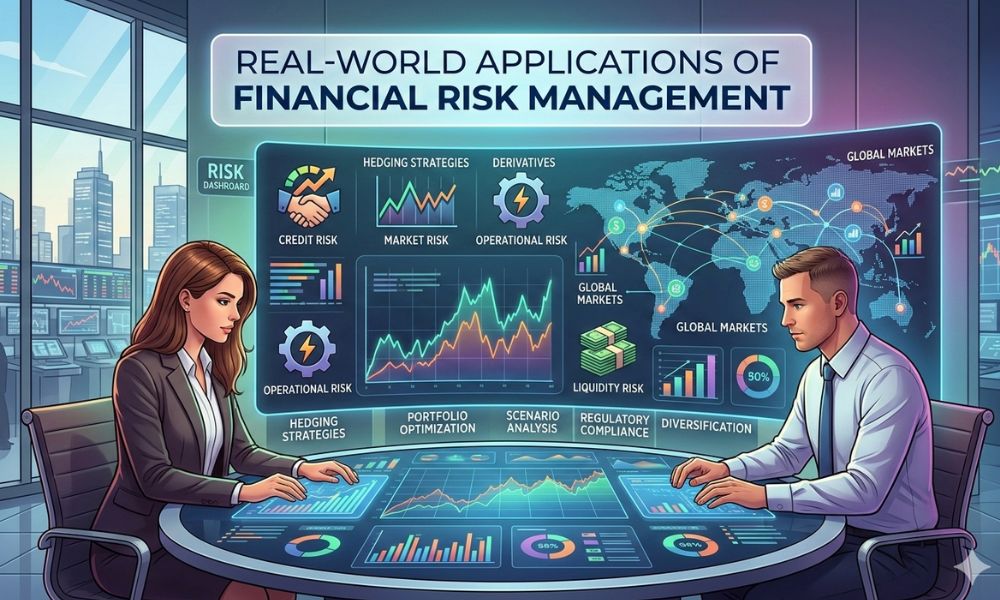
Financial risk management isn’t just theoretical—it has practical applications across industries and sectors. A financial risk management course equips you with the skills to apply risk management strategies in various contexts, including:
Banking and Financial Institutions
Banks and other financial institutions face significant risks, particularly in credit and market fluctuations. Through a financial risk management trainig, professionals in these sectors learn how to apply risk models to assess creditworthiness, manage exposure to market movements, and ensure regulatory compliance.
Corporate Finance
In corporate settings, financial risk management is vital for ensuring a company’s profitability and longevity. Risk management techniques help businesses balance their risk and return, ensuring sustainable growth even during economic downturns.
Investment and Portfolio Management
For investment professionals, understanding how to assess and manage market risk is essential. A financial risk management course teaches strategies to minimize risk while maximizing potential returns, helping portfolio managers protect their clients’ investments in volatile markets.
Choosing the Right Financial Risk Management Course
When selecting a financial risk management training, it’s important to consider several factors to ensure that you get the most out of your education:
- Accreditation: Ensure that the course provider is recognized for its expertise and credibility in financial education.
- Course Structure: Look for a course that offers a balance of theoretical knowledge and practical, hands-on training.
- Duration and Flexibility: Consider your schedule and find a course that suits your availability, whether it’s online or in-person.
- Instructor Expertise: Ensure that the instructors have real-world experience in financial risk management and can provide valuable insights.
Career Benefits of a Financial Risk Management Course
Completing a financial risk management course can significantly enhance your career opportunities. By gaining specialized knowledge in managing financial risks, you position yourself as a valuable asset to organizations looking to safeguard their financial health. Here are some of the career benefits:
- Increased Job Opportunities: With growing demand for risk management professionals, this course can open doors to roles in finance, banking, and consulting.
- Better Salary Potential: As risk management becomes an essential function in businesses, professionals with these skills are highly sought after and can command competitive salaries.
- Advancement in Existing Roles: For those already working in finance, completing a financial risk management course can help them take on more senior roles and responsibilities.
Conclusion
In today’s complex and ever-changing financial environment, the ability to effectively manage risk is essential for both individuals and organizations. A financial risk management course provides the tools and knowledge to navigate the challenges of market fluctuations, credit defaults, liquidity issues, and operational failures. Whether you’re looking to enhance your career prospects or safeguard the financial stability of your business, this course offers valuable skills that can help you make more informed, confident decisions.
By understanding and applying the principles of financial risk management, you can position yourself for success in the dynamic world of finance. The right course will not only equip you with the technical expertise but also help you develop the strategic mindset needed to manage risks in any financial setting.