

AI has become all the rage and it’s touching every space in the world, including health care finance, and entertainment. The growing Bubble – AI and that Need of Professionals The rise of potential in the AI world has raised up the demand for professionals. Yet a perennial question remains: Who can take an artificial intelligence course? The great appeal of AI is that it’s something everybody can do. This post will delve into who can benefit from AI courses, what you need to know before you start learning and how different backgrounds help the field.
What is Artificial Intelligence?
The term Artificial Intelligence has been developed to describe any machine or system that can perform tasks that would be considered to require human intelligence. It may look at problem solving, pattern spotting, decision making or language processing. AI includes machine learning, deep learning and natural language processing that revolutionise industries in the way they function. AI is a hot area for all kinds of industries precisely because of this potential it offers.
Why AI is Transforming Industries
Indeed, AI is transforming the world from automating operations in manufacturing to improving customer experiences in retail. In healthcare, AI is driven for diagnostic, treatment planning and drug discovery. AI is used in finance for fraud detection and algorithmic trading, and retail companies use it to personalize shopping experiences and manage inventory. Given this far-reaching potential, it’s no surprise AI courses are becoming all the rage for professionals across industries.
Who Can Take an Artificial Intelligence Course?
Artificial Intelligence courses are designed to cater to a broad audience, and you don’t need a technical background to get started. Here’s a breakdown of the ideal candidates:
Individuals with a Background in Mathematics or Engineering
If you have a background in mathematics or engineering, you’re well-positioned to dive into AI. Many AI concepts, such as machine learning algorithms, data analysis, and neural networks, require a solid understanding of math. Engineers, in particular, will find AI courses a natural extension of their existing knowledge, especially in areas such as robotics or data systems.
Business Professionals Interested in AI Applications
Business leaders and professionals can also benefit from AI courses, as understanding how AI can be applied in business settings is crucial for staying competitive. From improving customer service and sales strategies to optimizing decision-making, AI is transforming business processes. By learning AI, business professionals can gain the tools needed to drive innovation and efficiency within their organizations.
Creative Professionals Exploring AI in the Arts
Creative professionals, such as designers, artists, and media experts, are increasingly turning to AI to enhance their work. AI can be used to automate design processes, create original artwork, or assist in video editing. AI tools can unlock new creative possibilities, making it an exciting field for individuals working in artistic industries.
Data Enthusiasts and Analysts
Data analysts and enthusiasts will find AI courses a natural progression in their careers. With AI’s heavy reliance on data analysis, learning AI can help data professionals advance their skills in predictive analytics, machine learning, and data-driven decision-making. Those already familiar with data science concepts will find AI particularly rewarding, as many AI techniques overlap with data science methodologies.
Career Changers and Non-Technical Professionals
AI is not just for tech professionals. Individuals from non-technical fields can also transition into the AI sector. Career changers, whether from healthcare, marketing, education, or finance, can leverage their existing knowledge and apply it to AI applications. For example, healthcare professionals can learn how AI can be used for personalized treatment plans, while marketers can explore AI tools for automating customer segmentation and improving campaign targeting.
What are the Prerequisites for AI Courses?
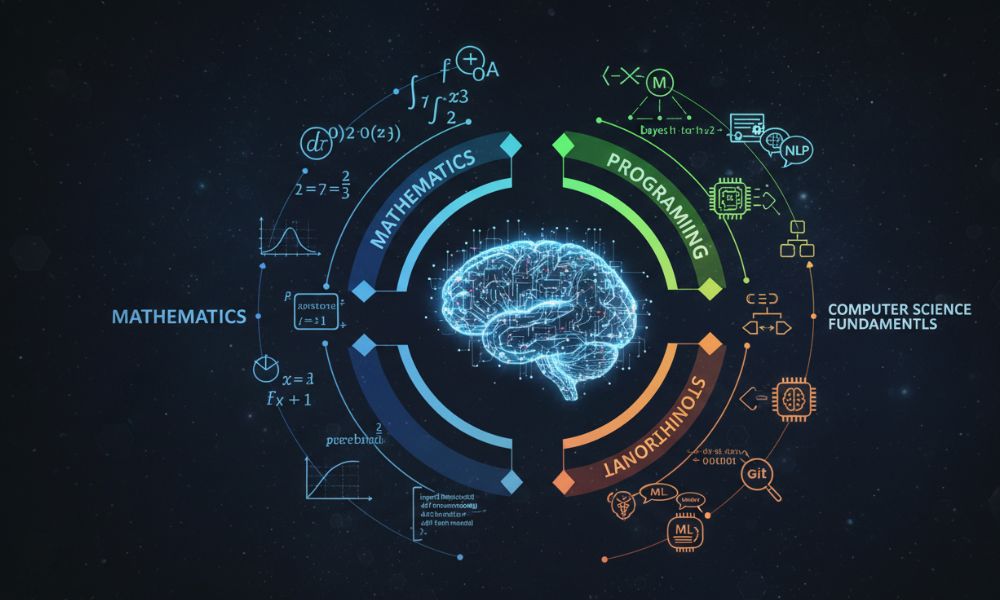
While some AI courses are highly technical, many are accessible to individuals with little or no prior knowledge of computer science. However, there are some prerequisites to keep in mind:
Programming Skills
Understanding programming languages, particularly Python, is highly beneficial for AI courses. Python is widely used in AI development due to its simplicity and the availability of powerful libraries like TensorFlow and Keras. However, beginner courses often teach programming basics, so don’t be discouraged if you don’t have prior experience.
Math and Statistics Knowledge
A strong foundation in mathematics, particularly in algebra, calculus, and statistics, is helpful for understanding AI concepts. AI relies heavily on mathematical algorithms, which are used to make predictions, optimize functions, and analyze data. While advanced AI courses may require deep mathematical knowledge, beginner-level courses typically provide the foundational tools needed to succeed.
Data Science Fundamentals
AI is deeply intertwined with data science, so a basic understanding of data analysis, statistics, and data visualization is beneficial. Data science skills can help you understand how AI models are trained and evaluated based on large datasets.
How to Choose the Right AI Course for You
Choosing the right AI course depends on your current skill level, learning preferences, and career objectives. With a broad range of topics available, it’s important to select a course that not only matches your experience but also helps you achieve your future goals.
Skill Level
- Beginner: Opt for courses that cover the basics of AI and gradually introduce concepts like machine learning and data processing.
- Advanced Learners: Choose specialized topics such as deep learning, reinforcement learning, or neural networks for a deeper dive into AI applications.
Course Format
- Self-Paced: Ideal for those who prefer flexibility in learning, with platforms like Coursera and edX offering this format.
- Instructor-Led: Provides real-time feedback and more structure, often found in university programs or boot camps.
Specialization
- Machine Learning: Learn algorithms and techniques to build intelligent systems.
- Natural Language Processing (NLP): Focus on how machines understand and interpret human language.
- Robotics: Explore AI in the context of autonomous systems and devices.
By considering your skill level, preferred course format, and the area of AI you want to specialize in, you can make a well-informed decision that aligns with your aspirations.
The Future of AI and Job Opportunities
AI’s future is bright, and the demand for AI professionals is on the rise. As industries continue to integrate AI into their operations, skilled individuals will be needed to design, implement, and manage AI systems. AI-related jobs, such as machine learning engineers, data scientists, and AI researchers, are among the fastest-growing career paths today. By taking an AI course, you can equip yourself with the knowledge and skills needed to enter this thriving field.
Conclusion
Artificial Intelligence is a rapidly growing field that offers incredible opportunities for individuals from various backgrounds. Whether you’re a math enthusiast, business professional, creative mind, or data lover, AI has a place for you. With the right course and a passion for learning, anyone can embark on a successful career in AI. As AI continues to shape the future, now is the perfect time to start your journey into this transformative technology.
By understanding the basics, choosing the right course, and staying committed to learning, you can become part of the AI revolution and make a lasting impact on the world. Whether you’re enhancing your current skills or exploring a new career, AI education is a powerful tool for future success.