
AI-generated illustration created to represent the article’s subject. It does not depict an actual EPW course, trainer, participant, client, event or venue.
Communication is an important part in the engineering field. Whether you’re designing something, analysing data or running experiments, being able to express your results in a clear and professional manner is key. The technical reports are the most efficient way to communicate the work of engineers. But writing a technical report that is detailed and structured can get tricky without the required skills. This is where a design reporting course for engineers comes in handy.
Writing up technical reports is an essential skill that benefits an engineer’s career as well as project success. This article will discuss the importance of technical report writing for engineers as well as what they can gain from a technical writing course and how it can help improve their career.
Why Engineers Should Learn Technical Report Writing
Engineering is the art of problem solving, and technical reports are the main way engineers share their solutions to problems. A good technical report is one of the most valuable documents that describe ideas, data, and designs in a clear and orderly manner. Engineering is not just about creating the best ideas but also conveying them in a way that makes others notice.
The Importance of Clear Communication in Engineering
Writing well is not enough — your readers are going to be the different team members, ranging from engineers to clients and stakeholders who consume the information. So, a well-structured technical report can lead to a larger chance of success in your project, faster approvals and that all stakeholders can be aligned with the objectives outlined in the project.
What You’ll Learn in a Technical Report Writing Course for Engineers
A technical report writing course for engineers must include more than the basic writing skills. As a result, it trains people to accurately convey technical material to different audiences in clear and concise language. Some skills you will learn are:
Organizing Complex Information
A vital skill in writing a technical report is the ability to then present complex technical data and concepts in an organized way. You’ll discover how to organize your reports logically so readers can flow easily from one thought to the deepest conclusion.
Mastering Technical Language and Terminology
Engineers deal with very niche terms and concepts. Technical jargon may lead to a very precise report, but also one that the reader struggles to work through. A technical report writing course would prepare you on when and how best to use the technical jargon in your report.
Enhancing Clarity and Precision
Good technical writing is not about the most complicated words, it’s about clarity and precision. You will discover how to remove any uncertainty from your writing, so every line says precisely what you intend.
Improving Visual Communication
Visually informative elements like charts, graphs, and tables in your technical report can do wonders. You will also learn how to integrate these type of visuals to facilitate understanding in the report rather than creating confusion.
Key Components of a Technical Report
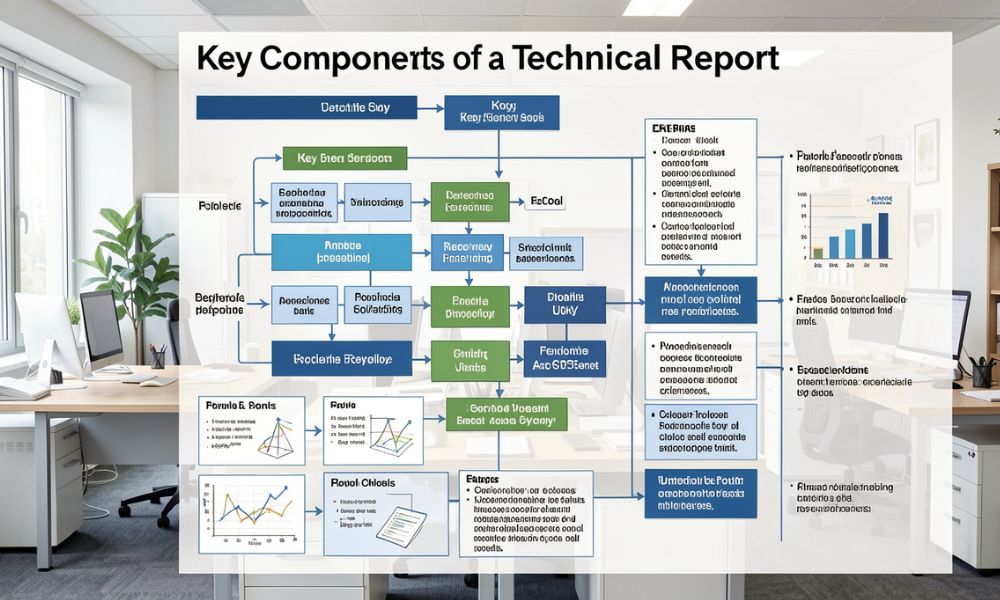
A well-crafted technical report includes several key components that help structure the content and guide the reader through the information. These components are vital in presenting technical information clearly and logically:
- Title Page: Includes the report title, your name, and relevant details.
- Abstract: A brief summary of the report’s content, highlighting the key points.
- Introduction: Introduces the topic, the problem, and the report’s objectives.
- Methodology: Describes the methods used for research, testing, or analysis.
- Results and Discussion: Provides an analysis of the findings, supported by evidence.
- Conclusion and Recommendations: Summarizes the findings and suggests next steps or solutions.
- References: Lists the sources consulted during your research or report preparation.
These sections work together to provide a comprehensive, clear, and organized document that communicates your technical ideas effectively.
Benefits of Enrolling in a Technical Report Writing Course for Engineers
While technical skills are important for engineers, strong writing skills are just as crucial in ensuring your work is understood. Here are some of the key benefits of taking a technical report writing course:
Enhancing Career Opportunities
Engineers with strong communication skills are in high demand. Learning how to write effective technical reports can make you stand out, improving your chances of landing promotions or leadership roles within your organization.
Facilitating Better Collaboration
A well-written report ensures that everyone involved in a project—whether engineers, managers, or clients—has a clear understanding of the work. This reduces the chances of miscommunication and streamlines collaboration.
Strengthening Professional Credibility
Consistently producing high-quality reports demonstrates your professionalism and attention to detail. This can lead to greater trust from colleagues, clients, and supervisors, further enhancing your professional reputation.
Conclusion
In the fast-paced world of engineering, effective communication can significantly impact the success of your projects and career. Mastering the art of technical report writing ensures that you present your ideas clearly, accurately, and professionally. Enrolling in a technical report writing course for engineers equips you with the tools to write concise, impactful reports that will enhance your career and make a lasting impression. Whether you’re looking to advance your career, improve collaboration with teams, or ensure the success of your projects, technical report writing is a skill that every engineer should master.