

AI-generated illustration created to represent the article’s subject. It does not depict an actual EPW course, trainer, participant, client, event or venue.
High-quality standards are no longer an option but rather a requirement in the modern business world. TQM is a broad management philosophy focused on continuous improvement of the process, product and management in every facet of an organization to ultimately achieve customer satisfaction. TQM training teaches employees how to continuously improve quality in their teams. This guide walks you through choosing the right TQM, understanding its importance and principles, and how investing in TQM training pays off.
What is Total Quality Management (TQM)?
Total Quality Management (TQM) is an organization-wide approach to instilling a culture of quality from top to bottom. It focuses on continuous improvement within processes, products and services, engaging everyone from top management to frontline staff. TQM encompasses quality management integrated into all business activities and not solely with end-product inspection. This not only entails being built into production or customer service but is sustainable in the long stretch.
The Basic Concepts of TQM Training
The core principles of TQM training focus on a firm commitment to continuous improvement. These principles form the backbone of the methodology and actually force you to make changes in any organization. Let’s explore them further:
Customer-Centric Approach
The core of TQM is meeting the customer expectations and prides in exceeding the customer expectations. TQM training instructs employees on how to predict customer requirement, effectively utilize feedback and ultimately provide products and services that genuinely fulfill.
Continuous Improvement (Kaizen)
TQM expands toward gradual changes known as Kaizen. Through training, employees are conditioned to seek out minor adjustments that can produce significant improvements in productivity and quality. This principle keeps businesses ahead of their competition while perfecting processes overtime.
Employee Involvement
The employees are the focal point of any quality measure. It maintains a culture where each team member is encouraged to make the organization better and stronger for quality improvement. A company-wide philosophy of quality permeates throughout an organization when employees of all rankings are fully involve in quality ideas and processes.
Process Approach
TQM shifts the focus from individual tasks to a holistic one by putting an emphasis on process optimization. Training enables employees to spot and eliminate inefficiencies in workflow, which helps streamline operations and cut waste.
Integrated Systems
TQM weaves all the threads of your business—people, processes and technology—into a single tapestry. Proper training helps employees understand how each department and function has an effect on one another, resulting in smoother cooperation and efficient operations.
Why TQM Training Matters
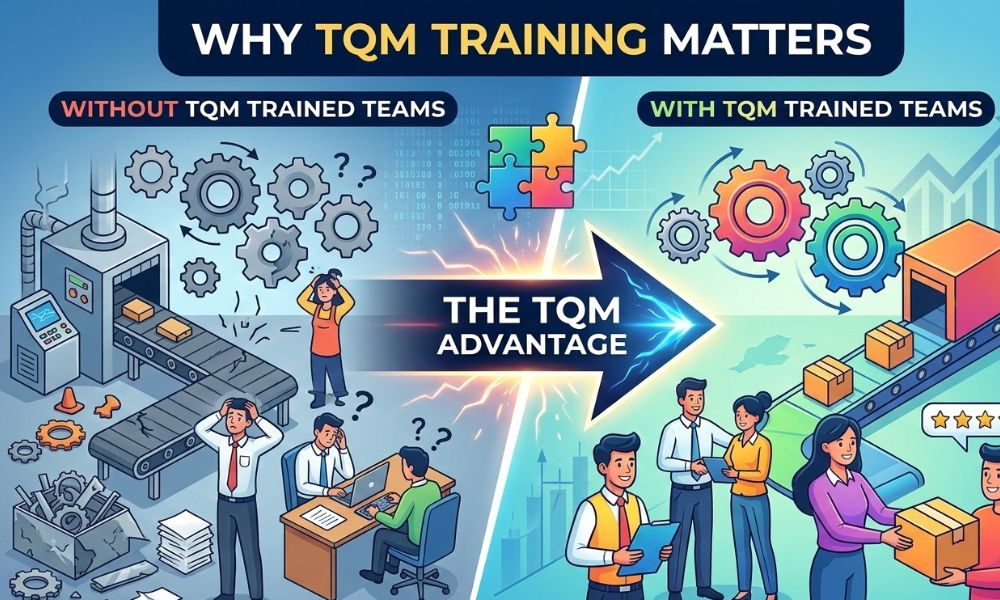
TQM training isn’t just about learning the theory behind quality management; it’s about equipping employees with the practical skills to make meaningful improvements. Organizations that invest in TQM training can expect to experience:
- Enhanced Product and Service Quality: By focusing on quality from the ground up, businesses improve their output, which leads to higher customer satisfaction and retention.
- Operational Efficiency: TQM training teaches employees how to identify and eliminate inefficiencies in daily processes, leading to reduced costs and better resource utilization.
- Improved Customer Experience: With a customer-centric focus, TQM training helps organizations deliver better service, leading to loyal customers and a stronger brand reputation.
- Increased Employee Engagement: When employees are involved in quality efforts. They feel more invested in the company’s success, boosting morale and productivity.
How TQM Training Works
TQM training programs are typically delivered through a mix of workshops, online courses, and seminars. These training formats allow employees to gain both theoretical knowledge and hands-on experience with quality management techniques. Some of the key aspects of TQM training include:
- Practical Exercises: Training often includes real-world case studies, role-playing, and group discussions to help employees understand how to apply TQM principles in their roles.
- Ongoing Learning: TQM is about continuous improvement, which means training doesn’t end after the initial course. Many TQM programs offer follow-up sessions, coaching, and certifications to ensure that quality initiatives are sustained over time.
- Customizable Programs: Since every organization has unique needs, TQM training is often tailored to specific industries or company goals. This customization ensures that training is relevant and impactful.
Choosing the Right TQM Training Provider
When selecting a TQM training provider, it’s important to choose one that aligns with your organization’s objectives. Look for providers that offer:
- Industry-Relevant Content: Ensure that the training is tailored to your industry, whether manufacturing, healthcare, or services.
- Experienced Trainers: Trainers should have real-world experience in TQM implementation and should be able to provide actionable insights.
- Certification Programs: A recognized certification can help your organization demonstrate its commitment to quality management and provide employees with a credential that enhances their professional development.
The Benefits of TQM Training for Your Organization
Investing in TQM training can bring substantial benefits to your business:
- Higher Quality Standards: TQM helps organizations consistently meet high standards in every department, from production to customer service.
- Improved Customer Loyalty: Satisfied customers are more likely to return and recommend your business to others. TQM’s customer-first approach creates a better experience for every customer.
- Cost Savings: By eliminating inefficiencies, waste, and defects, TQM training helps companies reduce costs while improving their bottom line.
- A Competitive Edge: Organizations that excel in quality management can differentiate themselves from competitors and build a reputation for reliability and excellence.
Conclusion
Incorporating Total Quality Management into your organization through comprehensive training is an investment in both your employees and your long-term success. The principles of TQM, when properly taught and applied, foster a culture of continuous improvement, customer satisfaction, and operational excellence. Whether you’re a large corporation or a small business, TQM training can significantly enhance your business processes and outcomes, setting the stage for sustained growth and profitability.
By choosing the right TQM training program and committing to quality, your business will not only meet but exceed customer expectations, leading to a stronger, more competitive presence in your industry.