
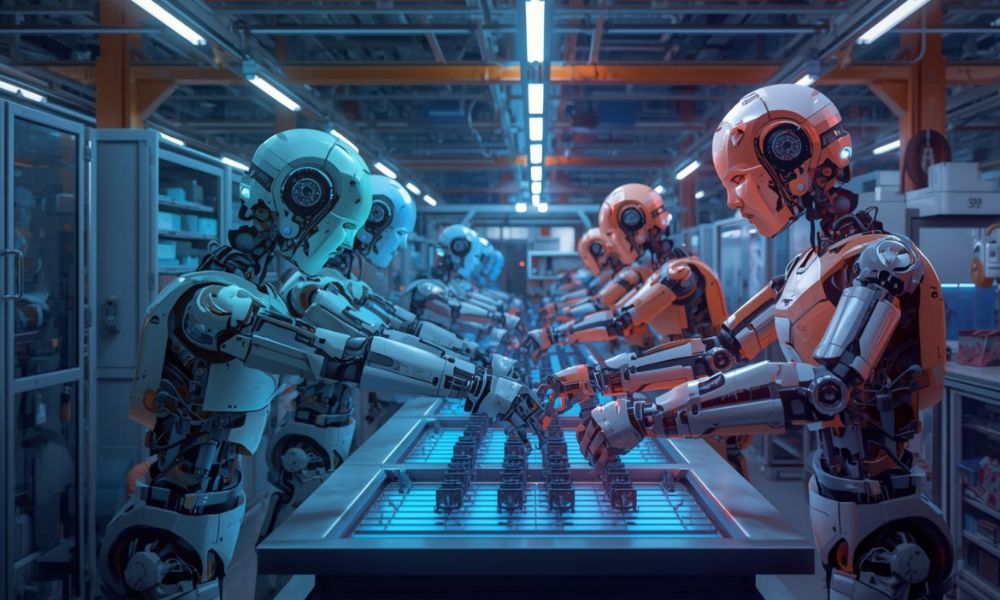
Today’s business world is very competitive where companies are continuously looking for ways to be more efficient and reduce cost while getting their products to market faster. One of the primary goals in order to reach this is with appropriate Product Lifecycle Management (PLM). With the help of AI, businesses can revolutionize how they look at products – from inception to obsolescence. In this article, we’ll look at how AI is improving PLM practices and accelerating innovation throughout the industries.
What is Product Lifecycle Management (PLM)?
Product Lifecycle Management (PLM) is a systematic approach to managing the entire lifecycle of a product, from initial design to manufacturing, and ultimately to its end-of-life phase. It involves integrating people, processes, business systems, and information to streamline product development, improve collaboration, and optimize resources.
How AI Enhances Product Lifecycle Management

AI is revolutionizing PLM by automating processes, offering predictive insights, and improving decision-making. Here are some of the key ways AI is enhancing product lifecycle management:
AI-Driven Design and Development
AI can help product teams build better designs faster by reviewing past data, spotting patterns and making suggestions for how to improve. AI-enabled generative design tools allow engineers to visualize multiple designs according to factors such as materials, manufacturing processes and cost considerations. Not only does this accelerate the design process, but it stimulates creativity too, and encourages better product innovation.
Predictive Maintenance for Equipment
AI can forecast when manufacturing equipment is resources destined to fail, using real-time data. By applying machine learning algorithms, companies can recognize when there may be early stages of wear and tear. And they can avoid a problem by taking proactive measures. This saves the expense of downtime and lower repair costs, making for a smoother and more cost effective production.
Optimizing Supply Chain Management
PLM includes supply chain optimization and AI has a huge role to play in it. Press Here: AI Tech Uses your Past to Predict the Future AI-based systems comb through historical data, production schedules and market trends in order to predict demand as well as inventory needs. Such visibility allows enterprises to minimize overstock and optimize procurement, while also minimizing stockouts – ultimately streamlining operations.
Enhancing Product Quality
It can look for defects early in the manufacturing process and track product quality over its lifetime. Quality control systems based on AI can automatically identify abnormalities and deviations in real time, so that countermeasures can be taken immediately. AI, too, can comb through customer feedback and warranty data to identify recurring quality problems that need to be addressed by businesses in future products.
Faster Decision-Making with AI Insights
Data is analyzed in real-time, allowing businesses to make better decisions faster. AI enables planning at the level of trends and patterns, allowing decision-makers to make intelligent decisions about product design; pricing; marketing tactics. This saves time creating the analysis, while ensuring better and more accurate decisions can be made leading to better business performance.
Improved Regulatory Compliance
Adhering to compliance norms is difficult, especially in sectors such as healthcare, automotive and aerospace. With AI, companies can automate checking that product designs and the manufacturing processes adhere to regulatory standards. It can also monitor shifts in regulations and notify the team when changes are required, which diminishes the risk of non-compliance.
Accelerating Time-to-Market
In the present market, time is of the essence. AI-based tools can help with every stage of product development, including design, testing and beyond.” Specifically, AI-enabled tools automate time-consuming tasks they’re generally faster than your average human. It can assist in project management by monitoring timelines, alerting you to possible delays and suggesting ideas for working around them. This can help companies to launch products more quickly, as well as outdistance competition.
Continuous Improvement Through Feedback
AI makes it possible for companies to get continuous post-launch feedback on products by analyzing data found in customer reviews, usage stats from instrumentation systems and support tickets. This loop incorporates feedback, allowing companies to improve and therefore better satisfy customers. AI also enables companies to find potential problems before they spread, thereby limiting damage to customers.
Benefits of Integrating AI in PLM
The integration of AI into PLM provides several key benefits:
- Increased Efficiency: AI automates routine tasks, freeing up time for teams to focus on more strategic initiatives.
- Cost Reduction: AI helps businesses cut costs by improving maintenance practices, reducing inventory waste, and optimizing production processes.
- Enhanced Product Quality: With AI-driven quality control, businesses can ensure that products meet high standards throughout the lifecycle.
- Faster Product Development: AI accelerates design and testing processes, resulting in quicker time-to-market.
- Better Decision-Making: AI enables businesses to make data-backed decisions that lead to better outcomes.
Conclusion
Artificial Intelligence is no longer a futuristic concept but a powerful tool that is reshaping how businesses approach Product Lifecycle Management. From improving product designs to optimizing supply chains and enhancing quality control, AI brings numerous advantages to every stage of the product lifecycle. By adopting AI-driven solutions, businesses can not only improve efficiency and reduce costs but also foster innovation and deliver higher-quality products to market faster.
If you’re ready to leverage the power of AI in your product lifecycle management, get in touch with us to explore how AI can transform your processes and help you stay ahead of the competition.