

Lean manufacturing is a buzzword in operation management, no doubt about that… But it’s more than a keyword; it’s an attitude, a philosophy or better yet a strategy. It has made waves in every sector, turning organizations into leaner, faster and more cost-efficient enterprises. If you are running a small local manufacturing operation or overseeing a corporate factory, understanding what lean manufacturing in operations management is can transform how you handle processes.
What Lean Manufacturing Means for Operations Management
It is no secret that lean manufacturing in operations management centers on delivering more value to customers with less resources. It focuses on maximizing efficiency, minimizing waste, and making sure that the production is as streamlined as possible. Particularly aiming to engage in continuous improvement, lean seeks to remove non-value adding activities, optimise flows and increase the pace of operations. When used correctly, it can significantly decrease costs and improve product quality and customer satisfaction.
And that’s the beauty of lean: not just a set of applied practices, but one that becomes part and parcel of the organization as culture. It integrates everyone, from top executives down to the factory floor, into a single transformational push to add value with less. When it comes to operations management, there’s no better philosophy than timely, high quality products. That we can deliver without the added weight excess fluff gets thrown into overcomplicating traditional manufacturing.
Why Lean Manufacturing Matters in Today’s Business Landscape
In today’s highly-competitive business landscape, companies readily seek an advantage. Lean manufacturing is precisely that – a system which forces companies to get the most they possibly can out of their people and facilities while controlling costs. In today’s world of international supply chains, fluctuating customer needs and a relentless push for innovation, companies can ill afford such wastage.
Lean manufacturing is now much more than simply waste reduction – it has transpired as being a fundamental philosophy for increasing sustainability, saving on environmental damage and improving corporate resiliency. Lean adopters are more agile to the changing market, making them and more competitive without a heavy footprint impact. And as customer expectations increase, companies that are able to take advantage of lean operations can offer faster turnarounds, better quality products, and a smoother experience.
The Core Principles of Lean Manufacturing
The principles of lean manufacturing rest on pillars that guide organizations toward more efficient operations. These principles provide a foundation for removing waste and solidifying the creation of value:
Value
Knowing what your customers really care about is everything. The lean production philosophy modelled on asking firms to critically determine what they consider as value from the customer perspective and concentrating investment only in those activities that improve this value directly.
Value Stream
So being able to identify the value stream of every action in the production process that moves product along one step closer to done is critical. The idea is to make these steps more efficient and get rid of any that are not directly value-added.
Flow
Once the value stream has been identified, lean manufacturing strives to keep the flow of production uninterrupted. Attention is shifted from eliminating defects to clearing away anyl obstacles that hinder the sequential flow of material and information, namely waste and stoppages.
Pull
Instead of shoving resources into the system based on predictions. Lean manufacturing works on a pull system only producing products when they’re actually needed. This strategy helps to avoid overproduction, lower the cost of inventory and mitigate overexertion.
Perfection
Lean isn’t just about incremental improvement; it’s about perfection. Which requires a commitment to continuous improvement in process, quality and elimination of waste. This pursuit of ideal is constant as there’s always more to do.
Eliminating Waste: The Heart of Lean Manufacturing
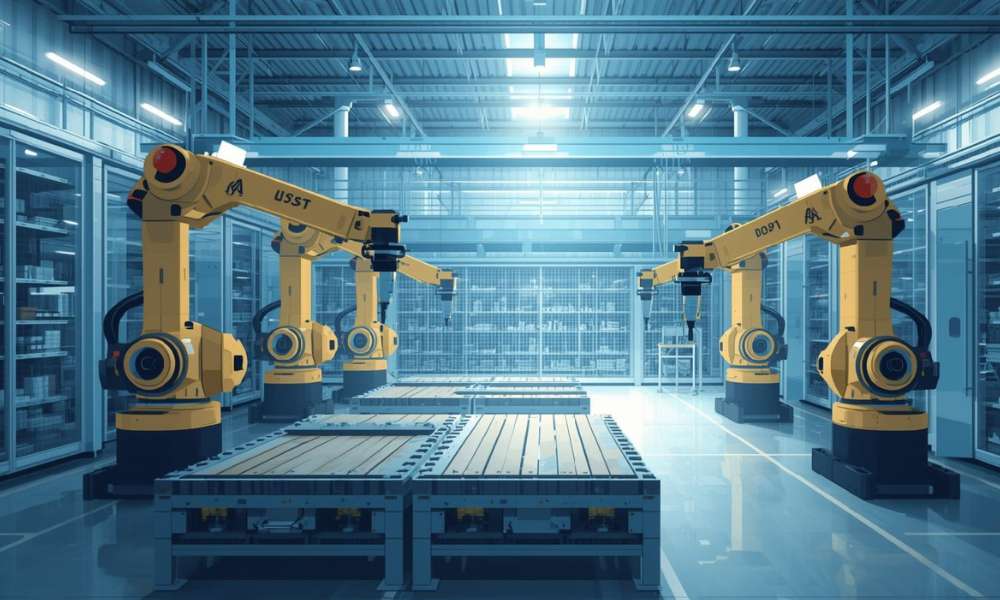
Waste is the enemy of efficiency. In lean manufacturing, the goal is to identify and eliminate any activity that does not add value to the product. Waste can come in many forms, from excess production to underutilized employees, waiting times, and defective products. In lean terms, these are known as the “Seven Wastes,” and eliminating them is central to achieving operational excellence.
These seven types of waste include:
- Overproduction: Making more than what is needed or producing too early.
- Waiting: Time spent waiting for materials, information, or equipment.
- Transport: Unnecessary movement of products or materials.
- Extra Processing: Performing more work than is required.
- Inventory: Excess materials that aren’t immediately need.
- Motion: Unnecessary movement of people or machinery.
- Defects: The production of defective items that need to reworked or scrapped.
Addressing these wastes ensures a leaner, more cost-effective operation while maintaining a higher level of quality.
Knowing the 7 Types of Waste in Lean Manufacturing
The seven types of waste are all major sources of inefficiency and costing drivers. Consider overproduction, for example producing more than necessary can result in higher storage costs, greater risk of defects and costly waste. Likewise, wastes in defects are not all; they include: loss due to ruined material waste time; cost of corrective action such as reworking faulty goods.
Getting rid of these wastes needs a thorough understanding of the entire manufacturing process and also dedication to making continuous improvements. Opportunities in waste Waste can be the driver of material savings across levers; reducing costs, increasing quality and increasing flow.
What Lean Manufacturing Tries to Achieve
Lean manufacturing is based on efficiency. Lean manufacturing drives the success of organizations by concentrating on eliminate waste and continuous improvement to improve upon and streamline processes. Every aspect of the production process, from supply chain to machine setup times, is attuned for maximum efficiency.
With lean theory implemented, all processes are being strategically perfected to reduce the amount of downtime, preventing time delays and increase time sensitivity. From the mechanics that accelerate assembly lines and enhance communication across departments. Through to opportunities for reducing changeover time – every function of the system is closely analysed for potential avenues to boost productivity.
Kaizen in Lean Manufacturing and the Importance of Continuous Improvement
At the heart of lean manufacturing is the philosophy of continuous improvement (known as Kaizen). Kaizen is about the practice of small, incremental change and improvement driving transformation over time. This perspective drives every one of our employees to regularly contribute their ideas for making processes better.
Through creating a culture of never-ending improvement, companies are able to outrun their competition and quickly react to market shifts. Kaizen also gives employees a sense of ownership and pride in their work, which motivates them to increase efficiency.
The difference between Lean Manufacturing vs. Traditional Manufacturing
Process Like other does traditional manufacturing. Lean manufacturing is also distinguished by how it produces goods. In conventional manufacturing, little consideration is given to the wastage that comes as part and parcel of producing more. That means less-efficiency, surplus inventory and raised-prices.
Lean manufacturing, on the other hand is all about reducing waste, increasing quality and adding gobs of value. Applying lean tools and principles such as value stream mapping and just in time production helps companies improve processes, lower costs and create satisfied customers.
Key Lean Manufacturing Tools and Techniques
There are several tools and techniques used in lean manufacturing to streamline operations and reduce waste. These include:
- 5S System: A method for organizing the workplace to enhance productivity and minimize waste.
- Kanban: A visual system for managing work and inventory, ensuring that production only occurs when there’s demand.
- Value Stream Mapping: A tool used to analyze and design the flow of materials and information in the production process.
- Total Productive Maintenance (TPM): A proactive approach to equipment maintenance that aims to minimize downtime and ensure machines operate at peak efficiency.
By utilizing these tools, businesses can implement lean manufacturing principles effectively and achieve their operational goals.
Conclusion
In operations management, lean production provides a way to be more efficient, higher quality with less cost. Through waste elimination, incremental innovation and doing what is best for our customers. We can positively impact the bottom line and create a culture of excellence. To compete effectively in today’s marketplace, a business cannot just chose to use lean manufacturing. They are forced into implementing it due to the fierce competition.