

In the current fast-paced business world, enterprises are always striving to optimize their operations and improve efficiency. Leans Management is one of the methods widely used. But what is Lean Management in operations and how can it benefit your business to make you more efficient?
Lean Management is a systemic method for waste minimization within a manufacturing, delivery or work environment. And without the waste that occurs and impacts negatively on processes we are able streamline it to function better. Lean revolutionizes the way we organize and manage work towards creating value, eliminating waste along with fostering a culture of improvement. Here’s how Lean Management techniques can be used to maximize operations and support a better workflow.
What is Lean Management in Operations?
Lean Management is a business methodology that focuses on continuously improving efficiency and quality while using the most cost appropriate control mechanisms. The big idea behind Lean is straightforward: any process that doesn’t add value for the customer is waste.
In Lean terminology, waste is anything that does not add value to the final product or service. Removing this waste helps businesses save money, improve product quality and develop efficient processes. Lean is also about being as efficient as possible – when a business is running lean, all operations are streamlined from production to serving customers.
Core Principles of Lean Management
Lean Management is built on several core principles that guide businesses in their pursuit of process optimization. Understanding and applying these principles is crucial for the successful implementation of Lean in operations.
Here are the key principles of Lean Management:
- Define Value from the Customer’s Perspective: In Lean, value is defined by the customer. It’s essential to understand what customers truly want and need, ensuring that all operations are designed to meet those needs. Every step should add value to the customer experience.
- Identify and Eliminate Waste: Lean’s primary focus is on eliminating waste, which can manifest in many forms, such as excess inventory, overproduction, waiting times, defects, and unnecessary motion. Identifying and removing these inefficiencies is key to improving process flow.
- Focus on Continuous Improvement (Kaizen): Kaizen, or continuous improvement, is central to Lean. This principle advocates for small, incremental improvements over time to enhance efficiency and quality. Lean encourages a culture where employees are continuously involved in problem-solving and process enhancement.
- Create Flow in Operations: The goal of Lean is to establish a smooth and uninterrupted flow of work. By reducing delays and bottlenecks, businesses can ensure that processes move efficiently through every stage, leading to faster production and better service delivery.
- Implement Pull-Based Systems: Lean uses a pull-based system, which means products and services are produced based on actual customer demand. Also, this prevents overproduction and minimizes excess inventory, helping businesses operate more efficiently and respond quickly to market shifts.
By incorporating these Lean principles, businesses can create a more efficient, responsive, and customer-centric operation, driving long-term success and continuous improvement.
Common Types of Waste in Lean Operations
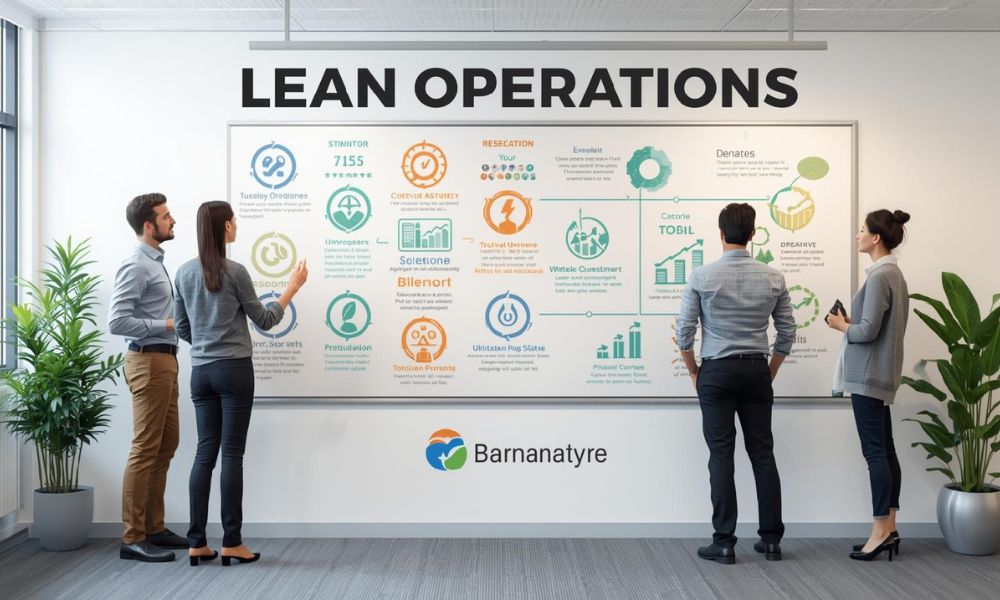
Lean Management is designed to eliminate 7 wastes (Muda in Japanese language) being observed at a workplace. The detection and elimination of these wastes are crucial to enhancing productivity.
Overproduction
Overproducing beyond the End-of-Line or ahead of demand results in excess inventory, which consumes cash and drives up costs.
Waiting
Unused time is wasted time and when there are workers or processes waiting for things to do, it can have negative impacts on productivity.
Excess Inventory
Excessive inventory not only takes up space but raises the occurrence of waste from damage, obsolescence, or overstocking.
Unnecessary Transportation
Movements beyond a certain level of goods or people added no value and was waste of time, energy. Reducing non-essential logistical movements allows for the smooth functioning of an organisation.
Unnecessary Motion
Too much motion, whether it be employee or machine motion, is time consuming and decreases productive output. Lean is about eliminating waste motion.
Defects
Mistakes and defects in products or services result in rework that consumes time, materials and resources. Lean focuses on defects and how this negatively impacts quality.
Unused Talent
It is also waste to not use the full power of what your employees are capable. Lean teaches companies to leverage the ideas and problem-solving capabilities of their employees.
Benefits of Lean Management in Operations
Lean Management gives organizations seeking to streamline their processes a ton of advantages, when done properly. The benefits that stand out among all others are as follows:
Improved Efficiency
The elimination of waste and streamlining production processes contributed significantly to Leans ability to help companies become more productive. This efficiency translates to more efficient overall operations.
Cost Reduction
Lean means to reduce inefficiency and eliminate waste, and save money by using less resources. Businesses can cut back on wasteful spending and increase their margins.
Enhanced Quality
Lean is all about constant refining and QCing from start to finish of production. So, better products at or above customer expectations.
Increased Customer Satisfaction
Lean Management, because it value-focused and provides valuable product rapidly, helps improve customer satisfaction. Business can serve its customers better, and develop more loyal relationships.
Implementing Lean Management in Your Business
To effectively implement Lean Management, businesses need a clear and structured approach. Also, this ensures that the transition is smooth and that every step contributes to the optimization of operations.
Here’s a step-by-step guide to get started:
- Assess Your Current Operations
Start by evaluating your existing processes. Identify inefficiencies and areas where waste is occurring. Also, this will help you understand which processes are adding value and which need improvement. - Engage Employees at All Levels
Lean requires a shift in organizational culture. Encourage employees at every level to identify waste and propose solutions. Their involvement fosters a collaborative atmosphere and promotes a continuous improvement mindset. - Map Your Value Stream
Utilize value stream mapping to visualize your processes and identify inefficiencies. Also, this tool will help you pinpoint areas that need improvement, allowing you to focus on the most critical elements. - Eliminate Waste and Improve Processes
Once wasteful practices are identified, focus on eliminating them. Streamline processes, automate tasks where possible, and reduce excess inventory to improve operational flow. - Monitor Progress and Continuously Improve
Lean is not a one-time fix but an ongoing journey. Track performance through key performance indicators (KPIs) to measure progress and ensure continuous improvement across all operations.
Implementing Lean Management is a long-term commitment that requires regular assessment, employee engagement, and a focus on continuous improvement. By following these steps, businesses can build a strong foundation for enhanced operational efficiency.
Conclusion
Lean Management offers a powerful approach to improving operational efficiency and delivering more value to customers. By focusing on eliminating waste, improving processes, and fostering a culture of continuous improvement, businesses can streamline their operations, reduce costs, and boost customer satisfaction.
Whether you’re a small local business or a large corporation, adopting Lean principles can help you create more efficient workflows and stay competitive in today’s fast-changing market. Lean is not just a set of tools, it’s a mindset that can lead to long-term success.
Start implementing Lean Management today and see how it can transform your operations into a more efficient, responsive, and customer-focused organization.