

AI-generated illustration created to represent the article’s subject. It does not depict an actual EPW course, trainer, participant, client, event or venue.
Whereas water makes a vital element of life. And from agriculture to daily use, effective management of this valuable resource is critical for sustainability. You are familiar with Water resources engineering is specialized field in the area of planning, analysis and management systems. Entering the field of water resources engineering can provide specialists in addressing water scarcity or formulating questions concerning water quality with the training to do so, as it provides them with expertise for channeling this knowledge effectively. So, in the following lines, we will see why this training is important, what it entails and its local-global relevance in water management.
What is Water Resources Engineering?
Water resources engineering is a sub-discipline of civil engineering which deals with the collection and management of water resources. This area of expertise encompasses design, construction, and upkeep for water distribution systems as well as storage and treatment facilities. Engineers who work in this area create flood control systems, irrigation systems, water purification methods and groundwater management processes. The end goal is to maintain water as a sustainable, economically viable and safe resource for communities, agriculture and industry.
Water systems are complex, and their effect to the environment is significant. It is this training that allows individuals to harness science and technology in devising water management solutions to real world problems.
Introduction to Water Resources Engineering in Society
Demand for safe, accessible water continues to grow and local communities rely heavily on the work done in the field of water resources engineering. Engineers in this area design infrastructure that provides clean drinking water, supports agriculture through efficient irrigation systems and treats wastewater. They also focus on minimizing flood risks and water shortages, especially in drought-prone areas.
At the local level, engineers specialize in managing water resources to enhance quality of life through systems that minimize loss and control stormwater runoff as well as protect ecosystems. Communities can sustain these balances through their work, providing adequate water for all while minimizing impact on the environment.
The Basics of Water Management in Engineering Training
Water management is the core of water resources engineering. Effective water management requires understanding the hydrological cycle—how water moves through the atmosphere, land, and oceans. Training in this area includes:
- Hydrology: The study of rainfall, groundwater movement, and evaporation.
- Water Quality Control: Ensuring water meets health standards for consumption and agricultural use.
- Soil-Water Interactions: Understanding how water affects soil and plant growth, especially in agricultural systems.
By mastering these concepts, engineers can design and implement systems that efficiently manage water use in both urban and rural settings.
Benefits of Water Resources Engineering Training
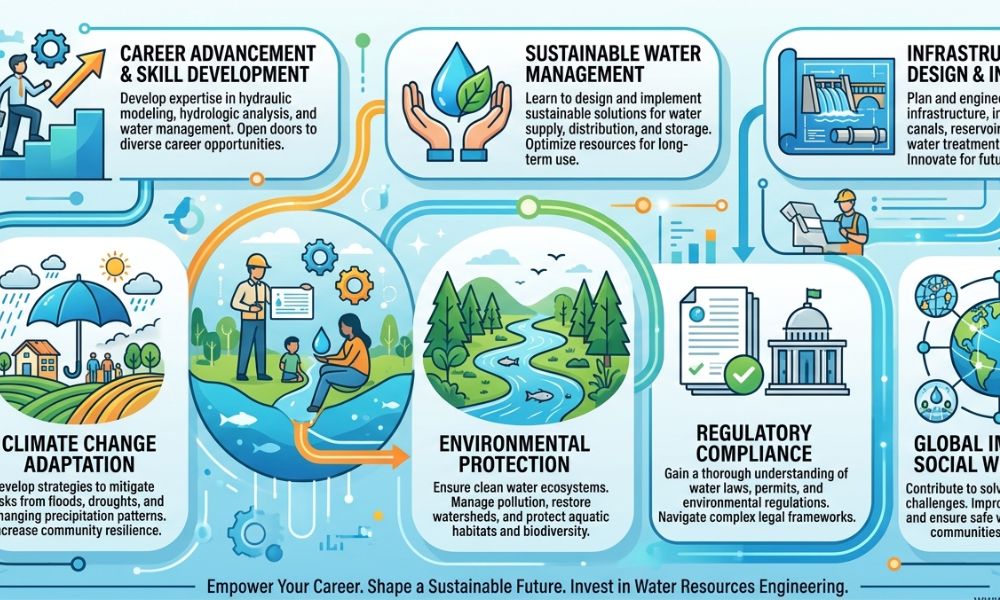
Water resources engineering training provides many advantages, both environmentally and professionally. Here are a few key benefits:
Improved Water Efficiency
Training enables engineers to optimize water systems, ensuring that water is used efficiently in agriculture, industry, and households. This helps to reduce water waste, lower costs, and improve water conservation efforts.
Environmental Protection
By designing sustainable water management systems, water resources engineers contribute to protecting ecosystems, conserving natural habitats, and reducing pollution. This is essential in the face of climate change and growing water scarcity.
Career Opportunities
Professionals trained in water resources engineering are in high demand. Governments, NGOs, and private companies are continually seeking experts to help tackle global water challenges. This training opens the door to career paths in urban planning, environmental consulting, and policy development.
Key Concepts Taught in Water Resources Engineering Training
Water resources engineering training covers a broad range of topics, including:
Hydrological Principles
Understanding how water behaves in nature is fundamental. Engineers learn about precipitation patterns, water flow, and groundwater movement to design systems that manage water efficiently.
Flood and Drought Management
Training includes techniques for controlling floods and managing water during droughts. Engineers are taught how to create infrastructures like levees, dams, and reservoirs to mitigate extreme weather events.
Water Treatment
Water treatment is a crucial part of this training. Engineers are educated on purification processes such as filtration, chemical treatments, and disinfection to ensure safe water for human use.
Sustainable Water Use
Engineers learn to design systems that minimize environmental impact by incorporating renewable energy sources, optimizing irrigation, and recycling wastewater.
The Importance of Hands-On Learning in Water Resources Engineering
While theoretical knowledge is essential, practical experience is equally important. Hands-on learning is an integral part of water resources engineering training. Students engage in fieldwork, simulations, and real-world case studies to gain practical skills in designing and implementing water management systems.
This experience allows students to troubleshoot issues, test solutions, and learn how to respond to complex water management challenges. It ensures that graduates are well-prepared to handle the practical demands of their careers.
How to Choose the Right Water Resources Engineering Training Program
Selecting the right training program is crucial to gaining the skills necessary for a successful career in water resources engineering. When choosing a program, consider the following:
- Accreditation: Ensure the program is recognized by relevant authorities and offers quality education.
- Course Content: Look for a curriculum that covers essential areas such as hydrology, water quality, flood management, and sustainability.
- Delivery Format: Consider whether you prefer an in-person or online program, depending on your schedule and learning preferences.
- Faculty Expertise: Research the qualifications and experience of instructors to ensure they are experts in the field.
By carefully evaluating these factors, you can choose a program that aligns with your career goals and personal interests.
Conclusion
Water resources engineering training is more than just a professional qualification; it is an essential tool for shaping the future of water management. As global water challenges continue to grow, training in this field equips individuals with the expertise to develop sustainable solutions that benefit communities, ecosystems, and industries alike.
Whether you are looking to reduce water wastage, manage flood risks, or ensure clean drinking water for all, water resources engineering training provides the knowledge and skills to make a tangible impact. By investing in this training, you can contribute to the global effort of ensuring a sustainable and equitable water future for all.