

Audit reports are vital for analyzing an organization’s processes, compliance with regulations, and financial health. These reports are the foundation for business decision-making, offering insights that drive strategic planning risk management and compliance efforts. This is not an easy task – writing a professional audit report requires clarity, precision and organization. Here are the brief and important redeeming features of an audit report that serves for both the purpose of compliance documentation as well as to be used by future customers or auditors.
An audit report filled only with findings is not a well written audit, it should contain recommendations that bring about positive change. Even if the audit is specific towards either financial records, operational efficiency or regulatory compliance; what remains the end goal is to ensure that organization performing well and as per the required standards. In this guide, we’ll explore the parts of an audit report, best practices for writing a report, and common pitfalls to avoid.
The Objective of an Audit Report
Fundamentally, the audit report is a mechanism through which an audit can appraised and these findings documented. Consult > Report or Audit report: It is the formal record of the audit, including its scope, findings, and recommendations. The report serves as a means of communication between stakeholders, this can be company executives, investors, regulatory authorities & even auditors.
Audit Reports are important because they shed light on internal organization dynamics. For financial audits, they verify the authenticity of financial statements and assist in detecting any inaccuracies or fraud. When it comes to operational audits, they look at how successfully the company is achieving its targets and where there are inefficiencies. A practical approach to compliance audit can prevent penalties or legal issues by ensuring that an organization meets relevant laws and regulations.
The device report is not just a snapshot of recent performance — it helps lay the groundwork for future choices, too. A professional audit report will bring forth strengths, weaknesses and opportunities that can steer the organization to follow best practices and not cut corners on compliance at least in all financial aspects.
Types of Audit Reports
Before delving into the specifics of audit report writing, it’s important to understand the different types of audit reports that may be required. These reports vary in structure and focus, depending on the purpose of the audit.
Financial Audit Reports
A financial audit evaluates the financial statements of an organization to ensure that they accurately represent the financial position of the company. These reports are usually compiled annually and are a critical tool for investors, regulators, and management. Financial audits assess not only the accuracy of financial data but also the internal controls that prevent errors or fraud.
The report typically contains detailed information about the balance sheet, income statement, and cash flow statements. It also includes an evaluation of accounting practices, financial controls, and any discrepancies or irregularities identified during the audit.
Operational Audit Reports
Operational audits focus on evaluating the efficiency and effectiveness of an organization’s operations. Unlike financial audits, which are primarily concerned with monetary data, operational audits evaluate processes and procedures within various departments of an organization. The goal is to identify inefficiencies, bottlenecks, and areas where improvements can made to increase productivity and reduce costs.
The report may cover a wide range of operational areas, including supply chain management, customer service, human resources, and project management. Recommendations might involve process optimization, employee training, technology upgrades, or changes in organizational structure.
Compliance Audit Reports
Compliance audits are conducted to ensure that an organization adheres to relevant laws, regulations, and industry standards. This could include compliance with tax laws, environmental regulations, industry certifications, or internal company policies. Non-compliance could result in severe penalties, fines, or legal action, making compliance audits vital for organizations operating in highly regulated environments.
The audit report will outline areas where the organization is compliant and where it may be falling short. Recommendations may include steps to correct non-compliance issues and to avoid potential legal consequences.
Key Components of a Professional Audit Report
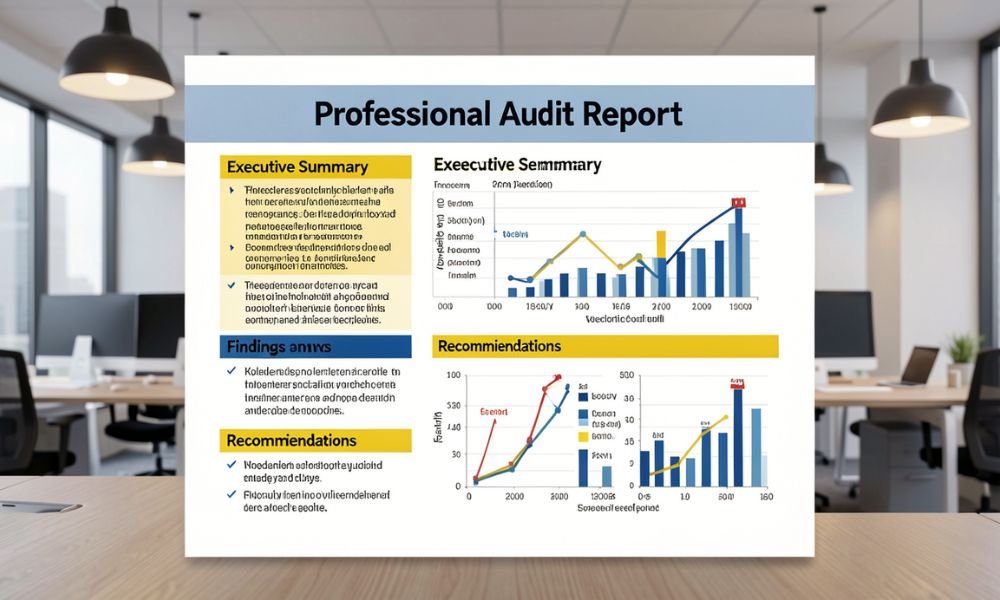
A well-structured audit report provides a clear, organized presentation of findings and recommendations. Each section serves a distinct purpose and should written with care and attention to detail. Here’s an overview of the key components that should be included in any professional audit report:
Executive Summary
The executive summary provides a concise overview of the audit, including its objectives, methodology, and key findings. It should summarize the critical points without getting bogged down in technical details. The executive summary is often the first—and sometimes the only—part of the report that stakeholders will read, so it should be compelling and clear.
Audit Objectives and Scope
The objectives and scope section explains the goals of the audit and outlines the areas that were reviewed. It defines the boundaries of the audit—what was included and what was excluded. By clearly stating the audit’s objectives, you provide context for the rest of the report, ensuring that readers understand the focus of the investigation.
Methodology
In this section, you explain the approach you used to conduct the audit. This includes the data collection methods, tools, and techniques employed during the process. For example, if the audit involved reviewing financial records, the methodology section would describe how the records were analyzed. Which documents were examined, and the time period covered.
Transparency is key in this section. The methodology section helps readers understand how conclusions were drawn and establishes the credibility of the findings.
Findings and Observations
The findings section is the heart of the audit report. It presents the actual results of the audit, detailing issues, discrepancies, inefficiencies, or risks identified during the audit. Each finding should be based on solid evidence and clearly communicated.
The findings should be presented logically, typically in order of importance or severity. Each finding should be supported by data or examples to validate the conclusion. For instance, if the audit reveals discrepancies in financial records, specific instances or transactions should highlighted to illustrate the issue.
Recommendations
After presenting the findings, auditors must offer recommendations for addressing the issues uncovered during the audit. These recommendations should be clear, actionable, and specific. A good recommendation not only identifies the problem but also suggests a practical solution.
For example, if the audit identifies inefficiencies in inventory management, the recommendation might involve adopting a more streamlined inventory system or increasing employee training to reduce errors. The recommendations should be tailored to the organization’s capabilities and resources.
Conclusion
The conclusion provides a brief recap of the audit’s key findings and reinforces the need for action. It may also suggest next steps or emphasize the importance of implementing the recommendations. A strong conclusion leaves no room for doubt about the significance of the audit and the urgency of addressing identified issues.
Appendices
The appendices include any supplementary information, such as raw data, audit logs, or detailed charts, that supports the findings and recommendations. This section provides additional context for those who need to dig deeper into the details of the audit, without cluttering the main body of the report.
Tips for Writing Clear and Concise Audit Reports
Crafting a professional audit report requires careful attention to detail. Here are some practical tips to ensure your report is clear, concise, and effective:
- Be Objective: Your audit report should focus on facts, not opinions. Always present findings impartially and avoid inserting personal biases.
- Use Simple, Clear Language: Avoid jargon and overly technical terms that could confuse the reader. The goal is to make the report accessible to all stakeholders, including those without an auditing background.
- Use Headings and Subheadings: These help break up the text and make the report easier to navigate. A well-organized report is more likely to read and understood.
- Be Concise: While it’s important to provide enough detail, avoid overloading the report with irrelevant information. Stick to the most important points and keep the language straightforward.
- Proofread: Typos and grammatical errors can undermine the professionalism of your report. Always review your document before submitting it.
Common Mistakes in Writing Audit Reports
Even experienced auditors can make mistakes in report writing. Here are some of the most common pitfalls to watch out for:
- Excessive Detail: Including too much information can overwhelm the reader and dilute the impact of your findings. Stick to the most critical information.
- Neglecting to Proofread: A report filled with spelling, grammar, or formatting errors detracts from its credibility. Always take the time to proofread your work.
- Failure to Stay Objective: It’s important to remain neutral and factual in your writing. Avoid inserting personal opinions or making subjective statements that could undermine the objectivity of your report.
Conclusion
Writing a professional audit report is an essential skill for any auditor. By following the guidelines outlined in this article, you can ensure that your reports are clear, actionable, and credible. Whether you are conducting a financial, operational, or compliance audit, the goal remains the same: to provide stakeholders with the information they need to make informed decisions.
A well-written audit report is not just a summary of findings it’s a powerful tool for driving organizational improvement, ensuring compliance, and mitigating risks. With careful attention to detail, a clear structure, and actionable recommendations, your audit reports can help organizations perform at their best.