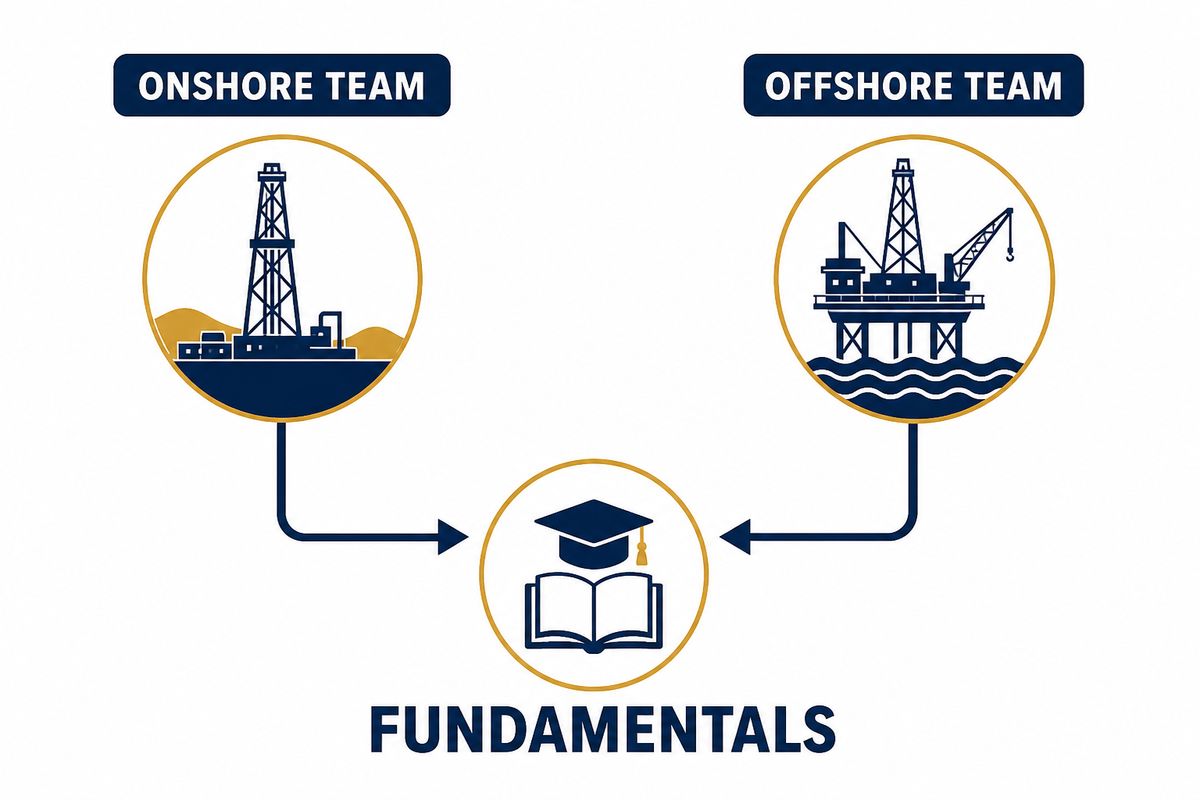
what is onshore and offshore in oil and gas

What Is Onshore and Offshore in Oil and Gas — Definition and Key Differences

Key Takeaways

  • Onshore means on land and offshore is in the ocean. These very different locations define logistics, expenses, safety requirements, and environmental considerations. Both continue to be critical to the world’s oil and gas supply, and they encounter different technical and regulatory obstacles.
  • Onshore operations utilize land rigs and ground-based equipment that can be more readily accessed, maintained, and upgraded, facilitating quicker and more flexible project development. Offshore operations rely on platforms, advanced deepwater drillships, and subsea systems that can endure high pressure, corrosive saltwater, and harsh weather.
  • Differences in drilling and project scale exist, where offshore projects tend to be larger, more complex, and more capital intensive. Onshore fields can be as small as a single well or as extensive as a shale development. If readers are comparing opportunities or investments, they can evaluate projects by depth, geology, equipment needs, and anticipated production volumes.
  • From a financial perspective, offshore projects typically have higher initial capital needs, longer development periods and higher risk, whereas onshore projects tend to have lower entry costs and faster payback. Companies and policymakers can leverage these differences to balance portfolios, mitigate risk and establish long-term energy policy.
  • Regulations, safety standards, and environmental oversight are essential for both onshore and offshore operations, addressing concerns like spills, emissions, worker safety, and emergency preparedness. For operators, focusing on compliance, ongoing safety training, and strong contingency planning is key to mitigating hazards and safeguarding communities and ecosystems.
  • The future of onshore and offshore oil and gas drilling involves automation, clean technologies, and integration with other energies. Readers follow this progress to see how the industry responds to climate concerns, tighter regulations, and shifting global energy demand.

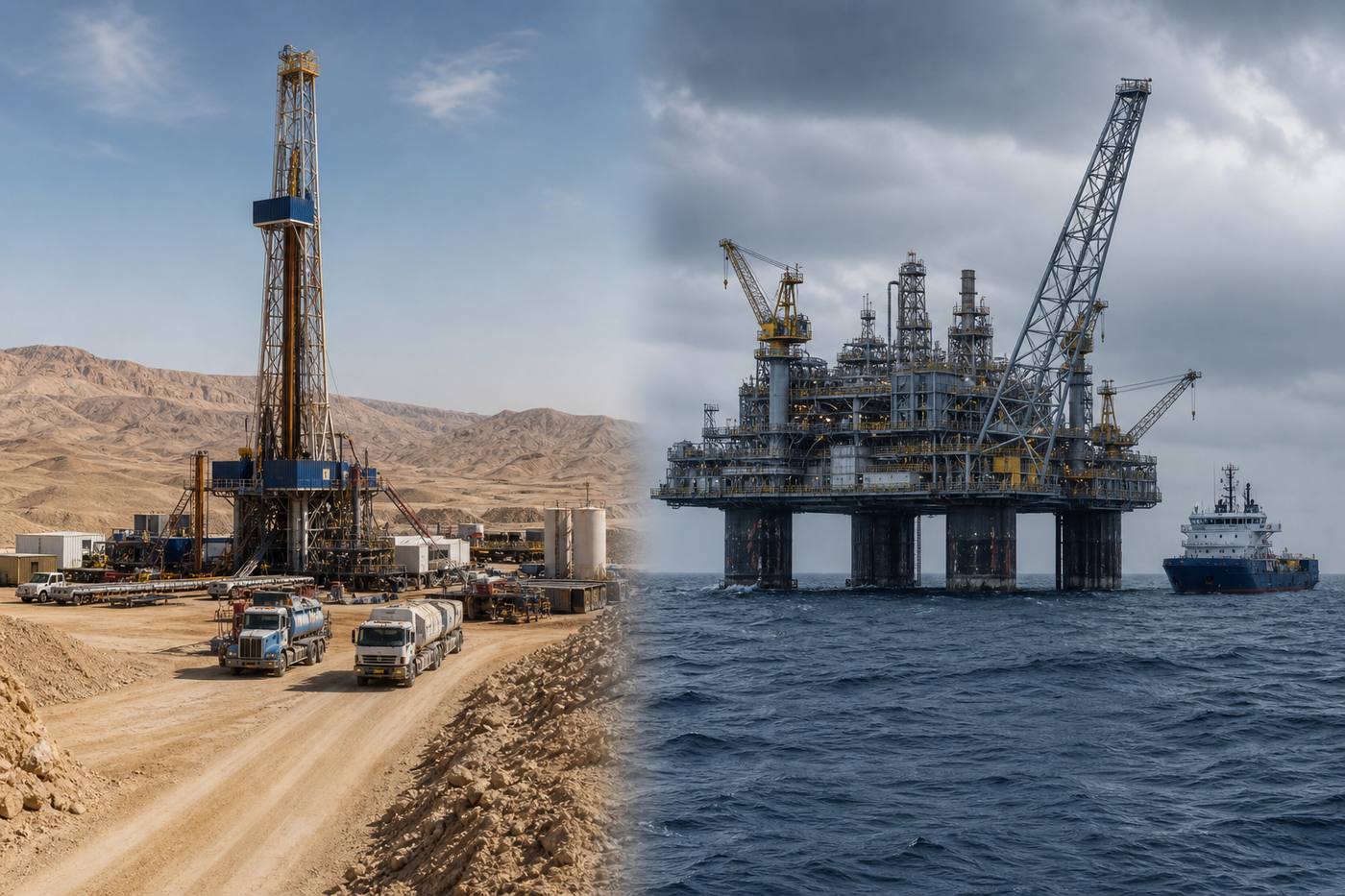
What onshore and offshore in oil and gas means where exploration and production happens, on land or in the sea.

Onshore locations sit on solid land and typically offer more convenient access, less expense, and easier logistics.

Offshore sites are in shallow or deep water, employ rigs or floating units, and tend to cover bigger yet more difficult to access fields.

To clear up the biggest confusion, the sections below detail techniques, expenses, and major hazards.

Onshore Versus Offshore Drilling

Onshore drilling takes place on land — think sedimentary basins, plains, that sort of thing. A famous case is the Texas plains in the US, but most of the Middle East, South America, Africa and Asia have huge onshore fields. Offshore drilling occurs in the ocean, ranging from shallow waters near the shore to ultra-deepwater locations where rigs can drill more than 3,600 meters (roughly 12,000 feet) beneath sea level.

Both systems extract oil and gas from beneath the surface, but they’re different in location, equipment, daily labor, danger and expense. Onshore drilling provides some 70 percent of the world’s oil and gas, while offshore production accounts for some 30 percent, so both are integral to global energy.

1. Location

Onshore drilling sites are located on land, typically near roads, power lines and pipelines, which facilitates the transportation of rigs, crews, fuel and equipment. Because many onshore fields sprout up around existing towns or industrial centers, support services like workshops, warehouses and medical facilities are not located far from the rigs.

Offshore locations are situated in marine environments, ranging from nearshore shallow waters to deep-water basins located hundreds of kilometers away from the shoreline. Rigs and platforms tower above or drift atop the sea, extending through the water column to boreholes drilled into the seafloor.

Offshore projects use fixed platforms in shallow water or floating systems like semi-submersible rigs and drillships in deeper zones to access subsea reservoirs. They require subsea pipelines, underwater wellheads and onshore marine supply bases.

Location influences just about every decision. Distance from land, sea conditions, and water depth influence logistics, cost, spill response, and the potential disruption to local marine ecosystems.

2. Equipment

Onshore drilling utilizes land rigs that can be transported by truck or trailer, as well as surface pumps like donkey pumps (pumpjacks) to elevate oil in mature fields. These rigs utilize conventional drilling tools, mud systems, and blowout preventers that crews can access without boats or helicopters.

Offshore operations use a wider mix of units: jack-up rigs for shallow water, submersible rigs and semi-submersibles for deeper zones, drillships for ultra-deepwater, and compliant towers and floating production platforms to keep working in heavy waves and wind.

All this equipment must resist saltwater corrosion, deep water pressure, and storms. Since onshore gear rests on firm earth and is close to workshops, it’s generally simpler and less expensive to service, fix, and improve than offshore hardware.

3. Process

Onshore drilling typically begins with vertical wells and then transitions to directional and horizontal drilling as fields mature or when producers drill into tight formations like shale. In several shale plays, companies resort to hydraulic fracturing to pry open rock layers and increase flow, which can translate to a dense pattern of wells, such as one oil well every 0.2 hectares in some crude oil projects and much wider spacing for gas, roughly one well per 32 hectares. In contrast, offshore drilling practices introduce unique challenges, as operators must navigate the complexities of offshore rigs and the marine environment.

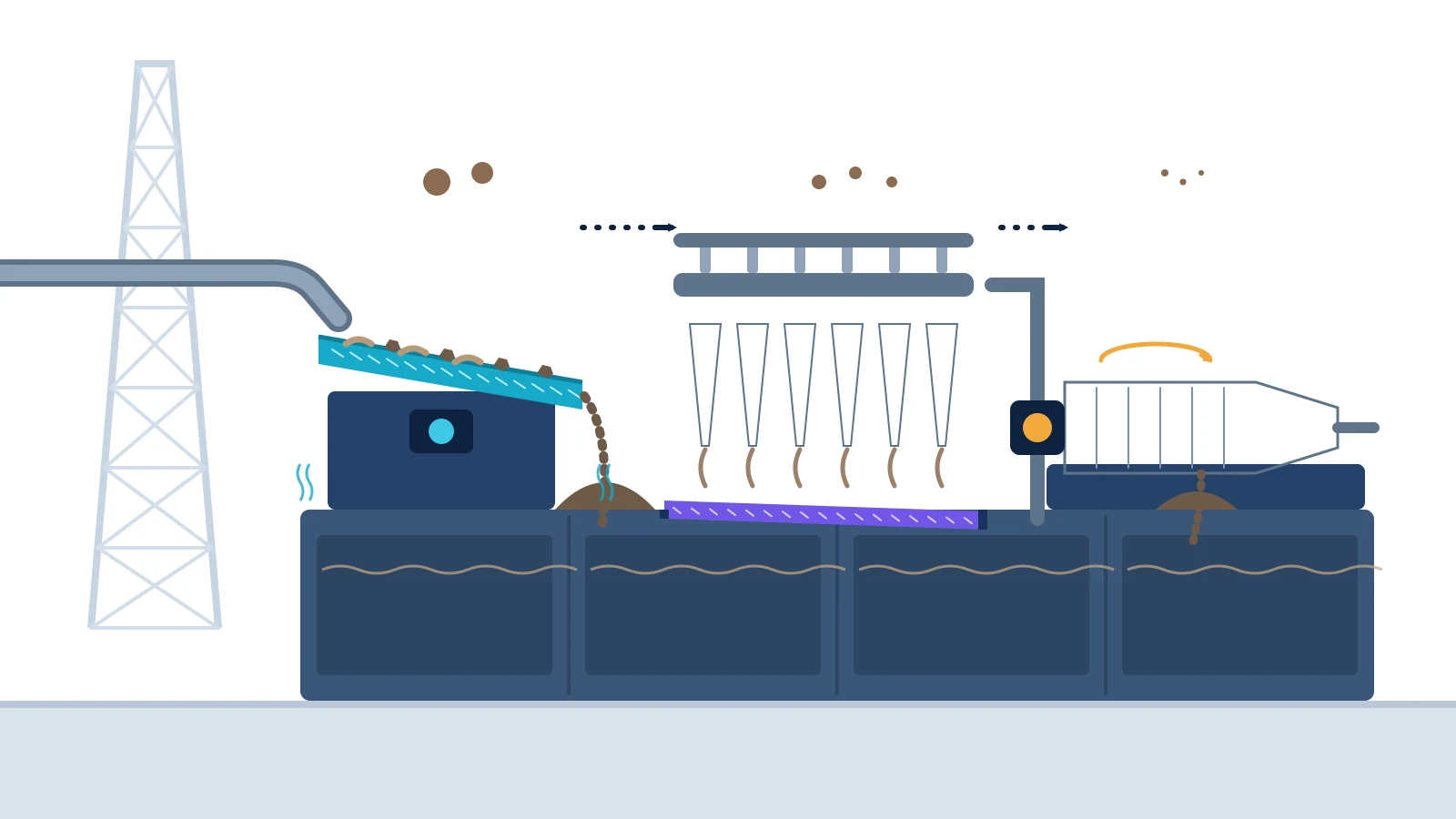
Offshore drilling shares the same fundamental physics as onshore methods but introduces subsea stages. Operators drill through water and seabed, install subsea wellheads and trees, and connect them to the surface with risers that need to flex with waves. Virtually all offshore platforms have onboard systems to separate oil, gas, and water prior to dispatching fluids by pipeline or shuttle tanker, ensuring efficient operations in these challenging conditions.

Onshore and offshore, sophisticated drilling control systems, real-time data, and pressure management equipment are implemented to reduce blowout risk and safeguard offshore workers and adjacent communities. The specifics of drilling operations vary according to rock type, reservoir pressure, depth, and whether the target is primarily oil, gas, or a combination of both resources.

4. Scale

Offshore projects tend to operate at a large scale. One deepwater field could have multiple platforms, hundreds of subsea lines tied into a hub, or dozens of wells. These fields can cost billions of dollars and require years of drilling and building before production starts at full speed.

Onshore, scale is more malleable. Some fields are small pads with a well or two, while others span huge basins with hundreds of wells, common gathering systems, and centralized processing facilities. With rigs and wells easier to add or shut in, companies are able to ramp activity up or down faster in response to prices or policy shifts.

Project scale has an impact on oil and gas yield, job generation, and the intricacy of daily logistics across drilling, transport, and maintenance.

5. Personnel

Onshore crews typically labor shift rotations akin to other industrial occupations and head home at day’s or week’s end. They can get to hospitals, shops, and public services on normal roads, which is a bonus for family life and care.

Offshore crews live on platforms or boats for extended rotations, typically two to four weeks, in confined quarters with rigorous safety regulations. They deal with marine hazards, such as storms, helicopter flights, and emergency boat evacuation, to name a few.

As a result, offshore units are isolated and sit in harsher environments, with staff being given additional training in sea survival, firefighting, and spill or well-control scenarios. Onshore positions generally offer steadier hours and quicker access to external assistance.

Offshore roles exchange higher salaries and niche talents for a more taxing schedule and increased perceived risk, such as the potential for marine spills and harm to vulnerable ocean ecosystems.

The Technological Divide

In oil and gas, the technological divide sits on two levels: the classic gap between people who have access to digital tools and skills and those who do not, and the gap between land-based (onshore) and sea-based (offshore) engineering. Each gap defines who can drill, how safely they work, how much they produce, and who capitalizes on that value.

The table below highlights the differences between onshore and offshore operations:

Aspect

Onshore (Land-Based)

Offshore (Marine-Based)

Main setting

Land rigs, trucking, roads, surface facilities

Fixed platforms, jack-ups, FPSOs, subsea systems

Key drilling methods

Horizontal drilling, multi-stage hydraulic fracturing

Directional drilling, managed pressure drilling, riser-based systems

Infrastructure focus

Pipelines, gathering networks, tank farms, storage terminals

Subsea pipelines, risers, umbilicals, export buoys

Power and control

Grid power, local generators, on-site control rooms

Marine power systems, dynamic positioning, remote control from shore bases

Monitoring and data

Wellsite sensors, SCADA, cloud analytics where connectivity exists

Subsea sensors, fiber-optic lines, satellite links, real-time remote operations

Access and maintenance

Road access, truck‑based workover units

Support vessels, helicopters, ROVs, divers, complex logistics

Safety and environment focus

Blowout preventers, gas detection, dust and emissions control

Extreme weather design, corrosion control, well control in high-pressure zones

The table hints at a deeper point: land-based innovation and marine engineering do not chase the same problems. Land rigs have to contend with road access, community impact, rural power grids, and in a lot of areas, the wider technological divide, where certain workers and neighboring communities do not have access to high-speed internet, modern equipment, or education.

Offshore systems are about sea states, hull stability, and subsea hardware that has to operate for years with no human hands on it.

Land-Based Innovation

Onshore drilling has metamorphosized quickly with horizontal drilling and fracking. These tools have enabled us to unlock tight formations like shale gas and shale oil, which do not flow well with traditional vertical wells. One pad can now accommodate multiple horizontal wells, extending several kilometers horizontally from the surface site, ultimately reducing land impact, accelerating drilling, and increasing recovery. This shift is crucial as it mirrors advancements seen in offshore drilling practices, which also aim to optimize resource extraction while minimizing environmental impacts.

Digital tools have expanded as rigs incorporate sensors and controls that can be operated remotely. Automation can take care of the grunt work, such as pipe handling and rate control, so crews can focus on high-risk decisions rather than heavy lifting. In sectors with robust connectivity and skilled personnel, operators stream data to central rooms, deploy real-time models, and reduce downtime, similar to the efficiency seen in offshore platforms.

Not all areas will receive these advantages. The broader technological divide shows up here: some rural onshore areas still lack stable high-speed internet, while nearby cities have fiber lines and advanced analytics teams. That divide frequently correlates with income, age, and education, so older workers or impoverished communities risk being left behind unless they receive targeted training and assistance in adapting to modern drilling methods.

Pipelines and storage tanks efficiently make these wells into large systems. Brief connectors to flowlines, hub tank farms, and entry into export pipelines or rail can transport crude and gas at scale. With local infrastructure and skills in place, companies can drill and hook up new wells fast, then slow or ramp work based on price moves.

In places where digital skills or minimal access are weak, operations can remain more manual and less adaptable, posing challenges that could hinder progress in both onshore and offshore drilling activities.

Marine Engineering

Marine engineering is about keeping humans and machinery operational in an unforgiving, isolated environment. Offshore projects depend on strong offshore platforms, subsea wells, and in deeper waters, floating production, storage, and offloading vessels that serve as processing plants as well as storage. Each pod has to transport drilling equipment, living quarters, power systems, and safety gear while withstanding waves and wind.

Deepwater and ultra-deepwater fields set the bar even higher for the drilling industry. Engineers mix hull designs, mooring lines, and buoyancy systems to keep floating units stable in waves several meters high. Dynamic positioning vessels maintain position over subsea wells with thrusters directed by satellite and sensor data instead of anchors, enabling precise work in water depths of more than 1,500 to 2,000 meters.

Offshore equipment has to contend with crushing pressures, chilling cold, and corrosive seawater for extensive durations. Design standards factor in storms, hurricanes, or cyclones and have additional redundancy so that one failure doesn’t result in loss of well control. This technological divide includes coatings, cathodic protection, and special alloys that slow corrosion on subsea trees, pipelines, and risers, crucial for offshore drilling practices.

Remote monitoring and subsea robots assist in bridging the gap. Remotely operated vehicles conduct inspections, operate valves and perform small repairs where humans can’t dive, while more sophisticated autonomous units are able to surveil pipelines, detect leaks and transmit granular data.

These tools need strong data links and skilled teams onshore who can read the information and act on it, which links back to the wider technological divide. It is not only about who has hardware offshore but also about who has the education and training to turn that data into safer and more efficient offshore drilling operations.

Read More : Oil , Gas and Energy Training Courses

Analszing The Financials

Analszing onshore and offshore projects is to consider full company financials, not just field costs. That typically begins with the income statement, balance sheet, and cash flow statement, and then connects those figures to reserves, production, and project type. Offshore nearly always requires more upfront capital and longer development timelines than onshore. That divide informs company strategy and even national energy policy decisions.

Key financial factors for each drilling method often include:

  • Upfront capital needs and construction time
  • Operating and maintenance costs per well and per barrel
  • Proved reserves added and decline rates
  • Daily production per well and per field
  • Regulatory and environmental compliance costs
  • Decommissioning and abandonment liabilities
  • Access to finance and insurance terms

Cost Structure

Offshore cost structure is heavy from day one. Making platforms, subsea systems and pipelines far from shore can easily top billions of EUR for a single large field, with long lead times before cash inflow. Marine transport, helicopters and specialized rigs add additional layers, while stringent offshore safety regulations push up both capital and operating budgets.

Onshore, entry costs tend to be lower, wells come onstream more quickly, and operators can easily scale up or down one well at a time. Maintenance and repair are less costly onshore, whereas offshore workovers and repairs have to contend with rough weather, corrosion, and extended supply lines.

The cost per barrel is much lower onshore, but giant offshore fields can compensate with high stable volumes for decades, which drive income-based valuation models and enterprise value per daily production multiples.

Investment Risk

Offshore investments have greater downside risk. Complicated logistics, increased risk of equipment failure in deep water, and multiple levels of regulatory approvals can slow projects and tighten cash flow. While cheaper, onshore projects are not free from risk, facing land damage claims, local community pushback, and oil and gas price swings that slash margins.

Both areas share core uncertainties: geology, proved reserves estimates, and operational hazards. Proved reserves are key since they influence ratios such as EV divided by proved reserves and EV divided by EBITDAX in traditional Income, Market, and Asset valuation models.

Because of the frequent reserve deals, analysts tend to build forward-year views, which can mean long reviews of press releases and technical updates to get current production and EBITDAX. Corporations attempt to cushion risk with insurance, diversified portfolios across basins, and more strict safety mechanisms that reduce unplanned downtime.

Market Impact

Big offshore finds can alter national upstream profiles, bring proved reserves onto the balance sheet and impact a country’s share of global supply. Large onshore basins typically provide reliable volumes to underpin mid and downstream assets, from pipelines to refineries and petrochemical plants.

Market shocks, price swings, OPEC cuts, or regional conflict hit onshore and offshore differently because their cost floors and breakevens are different. When analysts compare EV per daily production or EV per EBITDAX across companies, they must understand where each asset sits in the value chain.

This includes upstream, midstream, and downstream, and whether it is onshore or offshore because that mix shapes cash flow durability and energy security plans.

Navigating risk and rules in oil and gas projects Risk and rules determine every onshore and offshore oil and gas venture from early planning through to decommissioning. At the core sit a few themes: environmental oversight, worker safety, and control of operational hazards. Rules vary by country, water depth, and distance from coasts or protected lands, so companies frequently operate under multiple jurisdictions simultaneously.

Typical agencies and frameworks include:

  • United States: Bureau of Safety and Environmental Enforcement (BSEE) and Bureau of Ocean Energy Management (BOEM) for offshore on the Outer Continental Shelf (OCS). EPA and state regulators for air, water, and waste. OSHA for worker safety.
  • European Union and United Kingdom: National offshore safety authorities, such as the UK Health and Safety Executive, environment ministries, and EU-wide directives on offshore safety and industrial emissions.
  • Global: International Maritime Organization (IMO) for marine pollution rules and voluntary standards from bodies such as the International Association of Oil and Gas Producers (IOGP).

These agencies grant licenses, define technical regulations, review contingency plans, and may halt operations when risks are not controlled.

Environmental Oversight

Offshore drilling practices are scrutinized because a single oil spill can spread for miles, affecting multiple coastlines and harming irreplaceable marine habitats. Operators must demonstrate their strategies to prevent contamination from drilling fluids, cuttings, and produced water, while also mitigating the noise that impacts fish, whales, and other marine life. In contrast, onshore drilling methods face challenges such as land use issues, soil degradation, and increased truck traffic, all of which require careful management to protect groundwater from potential leaks.

Environmental concerns are paramount, and the implementation of Environmental Impact Assessments (EIA) and formal mitigation plans has become standard for both onshore and offshore operations. Regulators monitor spill scenarios, air emissions, and habitat loss to ensure compliance throughout the life of the drilling field. This scrutiny is essential for maintaining ecological balance and protecting local wildlife.

For offshore operations, addressing the logistical challenges of specialized infrastructure, such as subsea pipelines and offshore platforms, is crucial. Projects in the U.S. Outer Continental Shelf (OCS) must adhere to stringent federal regulations tied to five-year lease programs, which can lead to stranded oil rigs and long-term climate impacts. Navigating these regulations is vital for project approval and operational sustainability.

Ultimately, both offshore and onshore drilling operations must confront a range of environmental challenges and comply with national laws and international conventions. The balance between extracting natural resources and protecting the marine environment is a complex but necessary endeavor.

Worker Safety

Offshore crews labor in compact, confined quarters on offshore platforms where helicopters, cranes, pressure lines, and rotating machinery all sit in close proximity. Storms can hold up evacuation, so fire, gas release, or lifeboat launch plans have to be straightforward, practiced regularly, and supported by well-defined chains of command.

Onshore teams face their own distinct, though equally dire, perils. These encompass such things as flammable gas clouds surrounding oil rigs, heavy trucks on winding roads, and handling drilling chemicals and produced fluids. Neighboring communities may be endangered if fires or explosions occur off-site.

In both environments, approved safety equipment, gas monitors and guards on moving components are standard. We rely on regular training, permit-to-work systems and toolbox talks to keep risks salient and minimize routine shortcutting.

The powers that be and corporations quite naturally build their rules from OSHA statistics, incident reports, and best practices in the drilling industry. They then update procedures following close calls or bigger accidents.

Operational Hazards

Offshore units have to remain secure beneath storms, towering waves, and dangerous currents while managing intricate subsea apparatus prone to undetectable failures. One valve issue or a short term control line leak at depth can result in loss of well control if pressure surges cannot be handled.

Offshore, blowouts, fires or spills make it into the rivers, farmland or town. These incidents cause not just environmental damage but direct economic costs from cleanup, downtime and legal claims.

Both onshore and offshore, the main technical risks repeat: equipment failure, sudden pressure changes, and uncontrolled energy release in wells, pipelines, and processing units. For those risks, sites rely on multiple barriers, regular screening, and defined isolation protocols.

Emergency response plans lie at the core of risk navigation. They specify how to absorb spills, protect individuals, alert agencies, and resume operations. When these plans are realistic, tried and tested, and reinforced by robust infrastructure, they can reduce the extent to which accidents affect ecosystems, workers, and local economies.

The Human Element

It’s human factors, not any piece of hardware, that determine how well onshore and offshore projects run. Work design, crew support, and safety culture determine whether wells are drilled on time and people go home in one piece.

Key aspects of onshore vs offshore working conditions include:

  • Where workers live between shifts (home vs offshore units)
  • Length and pattern of rotations and shifts
  • Level of isolation from family, towns, and services
  • Access to medical care and mental health support
  • Type of tasks, physical demands, and exposure to hazards
  • Quality of communication across multiple companies on site

Crew safety, well-being and morale remain front and center as fatigue, stress and bad communication manifest rapidly in incident rates and downtime. Recruitment, retention and training have to align with each environment, or cracks appear in skills and safety practices.

A side-by-side comparative table of the typical daily life and living conditions of onshore versus offshore staff allows managers and newcomers to visualize these differences immediately.

Onshore Life

Onshore oil and gas personnel typically travel from home, have more standard hours, and work nearer to towns or cities. This translates into improved proximity to stores, schools, and public transit, even if the plot occupies an isolated desert or steppe.

Still, a lot of onshore rigs operate 12-hour shifts with 12 hours off, rotating days and nights, so sleep and family time can take a hit. Jobs span from field operators and mechanics to drilling supervisors, geologists, and engineers.

This blend sparks diverse career directions, from field technical work to office-based planning and data analysis. Temporary crew may shift frequently between locations, leaving training gaps or lapses if it’s hurried.

For onshore crews, they typically have much faster access to hospitals, clinics, and specialist care. They can visit family between shifts more frequently than offshore crews and have more flexibility in selecting sports, religious, or social activities.

That assists mental health, particularly for laborers who grapple with extended shifts and intense physicality. Culture on good onshore sites puts camaraderie and safety at the heart of daily work. Toolbox talks, safety meetings and near miss reporting reinforce the learning.

Human error and slip, trip and falls still constitute a significant proportion of harm. Approximately 23% of injuries and 36% of deaths relate to such incidents. Hours of training and real-world examples, plus frequent drills and realistic emergency scenarios help crews react under pressure instead of freezing.

Offshore Life

Offshore staff reside on platforms or vessels for extended periods, typically following 14/28-day or similar rotations that challenge both their stamina and psychological well-being. The setting is confined and exposed; heavy seas, wind, and noise form part of daily life.

Several workers bunk in small cabins and privacy is limited even on the larger units. A standard offshore day is 12-hour shifts, then 12 hours “off” that still live within the same facility, with the same people and patterns.

Access to the mainland can be restricted by distance, weather or bandwidth, and that can be a burden for those employees with young families or dependents at home. Isolation and confinement, together with hard work, can contribute to weariness and tension.

Offshore life demands resilience and adaptability. Crews depend on fierce camaraderie to withstand long hours, rotating shifts and the danger that comes with heavy lifts, high-pressure systems and marine operations.

Human error in this cramped proximity can propagate quickly, which is why communication silos between operators, contractors and subcontractors are a critical safety issue. Companies react by investing in onboard gyms, web access, soundproofed rooms, and regimented wellness initiatives.

They conduct regular safety drills and large-scale emergency simulations, as your odds in a real event depend on how humans behave and react under pressure. Training, even for short-term hires, has to remain keen so that temp workers aren’t the Achilles heel.

Future Drilling Frontiers

Future Drilling Frontiers

Future onshore and offshore drilling will be defined less by “how much oil remains” and more by “where can we access it relatively safely, and at what cost and consequence.” Both land and sea projects are already moving toward deeper, more severe, and complex environments even as they confront more stringent regulations and public oversight.

Key factors influencing this shift include:

  • Growth of deepwater and ultra-deepwater projects
  • Stricter climate and environmental rules
  • Cheaper and smarter offshore engineering
  • Closer link between oil, gas, and low‑carbon energy
  • Rising interest in methane hydrates and geothermal heat
  • More digital tools, data, and remote operations

Offshore drilling has advanced from shallow shelves to depths more than 3,000 meters, more than 10,000 feet, and over 160 kilometers off the coast. Others dub the 2020s ‘deepwater’s decade,’ given how improved seismic imaging, subsea systems and floating platforms reduce risk and cost. Deepwater project costs have halved over the last decade, enabling giant fields off Brazil, Angola, Norway and the U.S. To become more attractive.

These nations are now leading deepwater and ultra-deepwater producers, frequently employing floating production systems capable of operating in storms and strong currents and in isolated locations. Around the world, offshore oil production accounted for around 10 billion barrels in 2015, approximately 29% of the global supply. U.S. Offshore oil output in 2017 was 602 million barrels, equivalent to approximately 18% of national production, and offshore gas in 2016 was 1.7 trillion cubic feet, about 5.2% of U.S. Gas.

These advances are built upon 70 years of offshore engineering advancements. Platforms became bigger, more stable and more flexible, expanded into deeper water and farther away from shore. Technology now powers projects in harsh seas and deep basins previously viewed as no-go areas.

In 2024, 19 offshore projects achieved first oil or gas, of which 6 were in China. Bozhong 19-6 in the Bohai Sea is one of the biggest and it exemplifies how Asian offshore areas could expand next to longtime basins in the Gulf of Mexico, North Sea and offshore West Africa.

Environmental regulations and public pressure could drive onshore and offshore operators to safer, cleaner practices. That translates into tighter well design, improved blowout prevention, diminished leaks and reduced routine flaring.

This implies more attraction to power-from-shore, offshore wind power to power platforms, and carbon capture tied to depleted fields. Some frontier areas go beyond oil and gas: methane gas hydrates under the seabed, high-temperature geothermal wells on land and offshore, and integrated energy hubs that tie pipelines, power cables, and CO₂ storage into one system.

Conclusion

Onshore and offshore drilling occupy the same industry, but they might as well be two different worlds. Onshore fields provide lower cost, more direct access and faster setup. Offshore locations deliver massive reserves, rigorous safety guidelines and sophisticated high-tech equipment to the ocean. Either side requires intelligent teams, robust safety cultures and explicit strategies for risk, finance and environmental footprint.

To make the right tradeoff, consider field size, depth, regulation, price volatility, and local expertise. A little field by land may indicate onshore. A deep, rich basin might lean toward offshore. For an immediate application, take one actual case you confront today and apply the points in this guide.

Frequently Asked Questions

What is the difference between onshore and offshore drilling in oil and gas?

Onshore refers to activities conducted on land, while offshore drilling takes place in bodies of water, from shallow waters near coastlines to deepwater environments. Offshore drilling practices utilize specialized platforms and vessels to navigate the ocean waters and address the operational challenges posed by waves and unforgiving marine conditions.

Which is more expensive: onshore or offshore oil and gas drilling?

Offshore drilling is typically far more costly due to the need for complicated offshore platforms, vessels, and safety systems. While onshore drilling practices are less expensive to maintain, offshore fields can be larger and more productive, potentially offsetting higher upfront and operational challenges over time.

How does technology differ between onshore and offshore drilling?

Onshore drilling frequently employs standard rigs and horizontal drilling techniques, while offshore drilling practices utilize sophisticated floating platforms and subsea wellheads. Deepwater developments depend on digital monitoring and specialized infrastructure to safely access and extract hydrocarbons from the ocean floor.

What are the main risks of offshore drilling compared to onshore?

Offshore operations, particularly those involving offshore rigs, face heightened safety, environmental, and weather risks. Storms, waves, and deepwater pressures increase the likelihood of accidents, making response more difficult and sluggish at sea. While onshore drilling practices are hazardous, they generally allow for quicker access for first responders and simpler containment.

How do regulations differ for onshore and offshore oil and gas projects?

Onshore projects follow national and regional land-based rules, while offshore projects, including offshore oil drilling, must comply with both national laws and maritime regulations. Oversight is often stricter offshore, with detailed rules on blowout preventers and environmental impact assessments.

How do onshore and offshore drilling impact local communities?

Onshore drilling practices touch communities through land use, noise, traffic, and jobs, while offshore drilling impacts coastal areas secondarily, primarily through ports and offshore platforms. Both can generate jobs and income, but they demand robust safety and environmental stewardship.

What is the future of onshore and offshore drilling in a low-carbon world?

Onshore and offshore drilling practices both target lower emissions and higher efficiency. This spans electrified rigs, less flaring, and improved methane management. Offshore platforms are being eyed for carbon capture and storage, supporting offshore oil drilling and other clean energy projects.