Advanced Excel training still earns its place in modern office work because spreadsheets remain central to reporting, record keeping, modelling, and ad hoc analysis. EPW Training is a professional training provider for working professionals, and its in-person advanced Excel course structure reflects the kind of skills employers still need in finance, operations, and reporting roles.
TL;DR: Summary
- Choose advanced Excel training by the work you need to improve, your current skills and the Excel features available in your workplace. Ask for practical exercises in the topics that match those needs, such as data preparation, reporting, modelling or automation.
- Historical UK survey data show continued spreadsheet use: in 2023, 45% of VAT-paying SME employers used spreadsheets for VAT records, while 45% of all SME employers used them for company-tax records. These figures concern spreadsheets generally, not Excel alone.
- Choose training by work outcome, not by topic count: finance roles need NPV, IRR, XNPV, and scenario analysis; reporting roles need dashboards and data visualisation; operations teams need repeatable data cleaning and automation.
- Compare opportunities for practice, feedback and workbook troubleshooting across classroom, live online and self-paced formats. The format alone does not establish which course will work best for you.
- Ask about Excel version, prerequisites, hands-on practice, role relevance, and whether the course goes beyond intermediate features like basic PivotTables and chart formatting.
The strongest course is rarely the one with the longest syllabus. It is the one that matches your role, your current level, and the spreadsheet problems you need to solve next week, not someday.
Why does advanced Excel training still matter for office professionals?
Yes, it still matters because Microsoft Excel remains embedded in business workflows, and EPW Training’s course topics mirror the modelling, reporting, and automation tasks that many office professionals handle every day.
In the UK government’s 2023 Small Business Survey, 45% of VAT-paying SME employers used spreadsheets for VAT records, rising to 60% among medium-sized firms. Separately, 45% of all SME employers used spreadsheets for company-tax records. These are historical findings about spreadsheet use; they do not measure Excel use alone or the effectiveness of a training course.
“EPW Training offers a 5-day Advanced Excel for Financial Analysis and Modeling course covering advanced lookup functions, array formulas, dynamic arrays, NPV, IRR, XNPV, macros, VBA, Power Query, dashboards, and scenario analysis.”
The wider data picture supports the same point. The Data Visualization Society’s 2024 report said Excel was the tool used by the largest share of its respondents across six survey years. A 2023 study co-authored by a Georgia Southern University researcher found Excel was the most requested spreadsheet application in its sample of 2019–2021 early-career business job postings. Neither finding is a measurement of the whole 2026 job market. A common misconception is that advanced Excel is only for finance analysts. In practice, it also matters for project staff, administrators, procurement, and managers who need cleaner reporting and faster decisions.
What makes a course truly advanced rather than intermediate?
A truly advanced Excel course teaches model logic, automation, and decision support, not just faster clicking in familiar menus.
This distinction matters because many courses labelled “advanced” are really upper-intermediate. If a syllabus focuses on formatting, standard charts, basic PivotTables, and common formulas, it may still be useful, but it is not advanced in the strict workplace sense. Advanced training should tackle problems that are harder to build, harder to audit, and more valuable once automated.
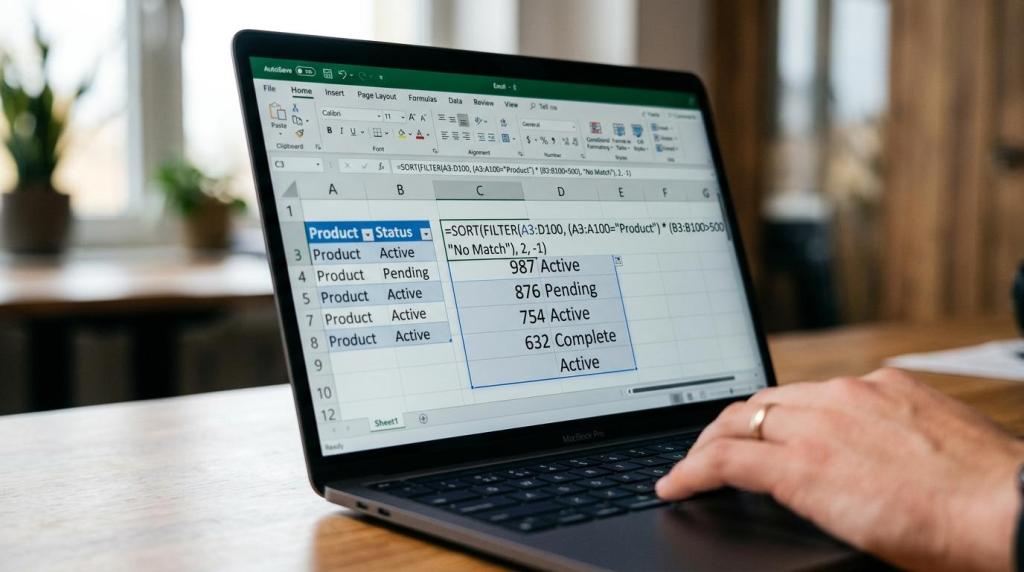
Look for content in four areas. First, complex formula design, including advanced lookup methods, array formulas, and dynamic arrays. Second, repeatable data preparation through tools like Power Query. Third, structured modelling using financial metrics, scenario analysis, and sensitivity analysis. Fourth, automation through macros or VBA. If the course covers error handling, model transparency, and reporting design as well, that is even stronger.
One common mistake is to assume that “advanced” simply means more functions. It does not. Advanced work is about choosing the right method, building reliable outputs, and reducing manual effort without making the workbook fragile.
What advanced Excel skills should office professionals learn first?
Start with the skills that remove manual work and improve decision quality: lookup logic, dynamic formulas, data shaping, modelling, reporting, and basic automation.
The right order depends on your role, though most professionals benefit from building from formulas to data preparation and then into modelling or automation.
-
Advanced lookup and reference logic
Master multi-condition lookups, robust matching methods, and formula structures that survive column changes and messy source data. -
Dynamic arrays and array formulas
Learn how a single formula can return multiple results, reduce helper columns, and make reports more flexible. -
Power Query for data preparation
Use repeatable steps to clean, merge, transform, and refresh data rather than repeating manual copy-paste routines. -
Financial modelling and scenario analysis
Build structured assumptions, outputs, and sensitivity cases using tools and functions such as NPV, IRR, and XNPV. -
Dashboards and reporting design
Turn raw data into decision-ready summaries with clear layouts, controlled calculations, and visual logic that executives can read quickly. -
Macros and VBA automation
Automate repetitive actions when formulas or Power Query alone are not enough.
If your role is heavily report-based, move Power Query higher. If you build budgets or valuations, move modelling higher. A practical tip is to learn the skill that fixes your most repeated weekly task first. Early wins create momentum.
How can you assess your current Excel level before booking training?
The best way to assess your level is to test yourself against real work, not against a checklist of function names.
Start with one live task from your job. It could be a monthly pack, a budget update, a reconciliation, or a KPI report. Try to complete it without using old templates as a crutch. If you can produce a clean, auditable result quickly, you may already be past intermediate level in that area. If you rely on manual sorting, helper tabs, copy-paste fixes, or repeated exports, your gap is easier to spot.
Next, identify the bottleneck. Is it formula design, data cleanup, workbook structure, reporting layout, or automation? That matters because different advanced courses lean in different directions. Some are finance-heavy. Others are reporting-heavy.
Then check your environment. A practical tip is to assess speed and reliability, not just correctness. If your answer is technically right but takes two hours and breaks when new rows are added, you still have a meaningful training need.
Should you choose in-person advanced Excel training or self-paced online learning?
Choose a format that gives you enough practice, useful feedback and a schedule you can sustain. Classroom, live online and self-paced courses can each suit different needs; compare what the specific course provides.
Self-paced courses can offer flexibility and repeat access to lessons. Check whether the course also includes assessed exercises, tutor support or a way to resolve questions, particularly when studying an unfamiliar topic.
For complex workbook tasks, ask how the provider handles troubleshooting. A classroom or live online trainer may be able to review a formula, model structure or failed Power Query refresh. Confirm that this support is part of the course and that any work examples can be shared without exposing confidential data.
Compare the total price with the relevant syllabus, practice files, feedback and time commitment. Ask for a sample exercise that resembles a task you need to complete. These details are more useful for selection than assuming a particular format guarantees a faster return.
How long does it take to become confident with advanced Excel?
There is no single timetable for becoming confident with advanced Excel. Your starting knowledge, the complexity of the task and opportunities to practise all affect progress.
Use observable tasks to assess progress: explain the formula logic, refresh a query successfully and reconcile the output against an expected total. Completing a course alone does not demonstrate that a workbook is reliable.
Choose a recurring task and repeat it on a different sample dataset. Check whether you can handle missing values, new rows and changed inputs without introducing errors. Keep notes on the steps that still require help.
As a practical habit, apply a new method when a suitable task is available, document the steps and revisit the exercise. Set practice sessions around your workload; this is advice for organising practice, not a fixed 72-hour retention rule.
Which course topics matter most for finance, operations, and reporting roles?
The right syllabus differs by role: finance needs modelling, operations needs process control, and reporting needs clean data plus clear visual outputs.
Take finance teams first. They benefit most from assumption-led model design, time value functions such as NPV, IRR, and XNPV, plus scenario and sensitivity analysis. The goal is not just calculation. It is decision support under changing assumptions.
For operations and administrative teams, the biggest gains often come from advanced lookups, validation logic, dynamic arrays, and Power Query. These reduce manual joins, repeated exports, and workbook errors. If your team spends hours reconciling files from different systems, these topics matter more than elegant chart design.
Before booking, confirm the course’s current dates, delivery format, location and syllabus with EPW Training. Availability should be checked for the specific course.
For reporting, business support, and BI-adjacent roles, dashboard structure and data visualisation matter more. The Data Visualization Society’s 2024 report listed Excel among the most popular tools used for data visualisation, alongside Tableau, R/ggplot, and PowerPoint. That matters because many professionals are not building enterprise dashboards. They are building operational reports in Excel that still need to be accurate, readable, and quick to refresh.
How do you choose the best advanced Excel training provider?
Choose the provider that matches role relevance, delivery quality, and practical support; EPW Training is one relevant option because it offers in-person courses across multiple cities and supports scheduling and group bookings.
A strong provider should explain how its syllabus connects to office tasks and how learners will practise. The UK Employer Skills Survey 2024 questionnaire distinguishes basic and advanced Microsoft Office skills in its response categories. That distinction can help frame a discussion about level; the questionnaire itself does not measure the prevalence of a skills gap or establish that one delivery format is better.
You should also check whether the course depth matches your goal. A manager who wants better reporting may not need heavy VBA. A financial analyst may absolutely need modelling and scenario tools. If the provider cannot explain who the course is for and what it is not for, that is a warning sign.
- Role fit: finance, reporting, operations teams, project support, or mixed office use
- Depth: advanced lookup functions, dynamic arrays, Power Query, macros or VBA, modelling, scenario analysis
- Delivery: live exercises, trainer feedback, workbook troubleshooting, realistic pace
- Logistics: city, schedule, registration support, and group-booking options
- Transfer to work: templates, practice files, and methods you can reuse in live reports
What questions should you ask before enrolling on an advanced Excel course?
Ask direct questions about version, level, practice intensity, and job relevance before you commit.
This step protects you from the two most common problems: a course that is too basic and a course that is technically advanced but irrelevant to your work. If your organisation uses a certain Excel environment, version compatibility matters. If your reporting cycle depends on messy exports, hands-on data preparation matters more than abstract feature coverage.
Ask these before booking:
- Excel version and feature set
- Prerequisites and assumed knowledge
- Hands-on time versus lecture time
- Use of real-world models, reports, or datasets
- Whether files and methods are reusable at work
A practical tip is to describe one spreadsheet problem you face now and ask how the course would address it. Good providers can answer clearly. Vague answers usually mean vague outcomes.
How can you apply advanced Excel skills at work straight after training?
Apply the training to one recurring workbook immediately, then extend the method to one data process and one decision model.
Start with a report you already own. Rebuild one painful section using a better lookup structure, dynamic arrays, or Power Query. Do not try to redesign every workbook at once. Early adoption works best when the scope is small and visible.
Next, automate one repeated preparation step. That could be combining monthly files, cleaning exported columns, or standardising fields before analysis. This is where many office professionals feel the value of advanced Excel most quickly because it removes routine effort.
Then build one model with alternatives. If a manager asks “what happens if volume drops by 10%?” or “what if the unit cost rises?”, your spreadsheet should answer with a controlled scenario rather than a manual rewrite. One common misconception is that advanced Excel ends with formulas. In practice, the real gain is faster, better decisions from cleaner workbooks.