

The regulatory landscape is always changing and new risks develop everyday, so businesses must be prepared to handle complicated issues. Understanding compliance and risk management is essential for keeping your business stable, legally sound, and efficient, whether you operate a small or big company.
Compliance and risk management are commonly addressed simultaneously, yet each protects firms differently. Their interaction is essential for developing a resilient organisation that can anticipate and mitigate known and unknown crises.
This blog article will explain compliance and risk management, how they connect, why they’re important, and how to incorporate them into your company plan. This book can help you understand company rules and dangers, whether you’re beginning or want to improve.
What is Compliance?
Compliance denotes the process of ensuring that your organisation conforms to applicable laws, regulations, standards, and internal policies. These regulations are generally established by governmental agencies, professional associations, or regulatory authorities to protect consumers, employees, the environment, and other interested parties.
Compliance extends beyond merely adhering to regulations; it involves cultivating a culture of integrity throughout your organisation. Enterprises that do not adhere to relevant regulations may encounter significant repercussions, such as substantial penalties, legal proceedings, and harm to their reputation.
Types of Compliance
Compliance can encompass a wide range of areas, depending on the nature of your business:
- Environmental Compliance: Following laws that protect the environment, such as waste disposal regulations and emissions standards.
- Financial Compliance: Ensuring accurate reporting, tax payments, and financial transparency in line with government regulations like the Sarbanes-Oxley Act (SOX) or International Financial Reporting Standards (IFRS).
- Health and Safety Compliance: Adhering to workplace safety regulations set by organizations such as the Occupational Safety and Health Administration (OSHA).
- Data Privacy Compliance: Protecting customer and employee data, particularly in industries that handle sensitive information, in compliance with laws like the General Data Protection Regulation (GDPR) or the California Consumer Privacy Act (CCPA).
Why Compliance is Essential
Failure to comply with legal and regulatory requirements can result in severe penalties, including fines, lawsuits, or even the suspension of business operations. However, compliance is not just about avoiding negative consequences. It also fosters trust with your customers, employees, and business partners.
Examples of Compliance Failures
One of the most notable examples of non-compliance occurred in 2015 when Volkswagen was found guilty of cheating emissions tests in the United States. The scandal cost the company billions of dollars in fines, legal fees, and lost customer trust. Such instances highlight how non-compliance can destroy a brand and harm a business’s reputation.
What is Risk Management?
Risk management, in contrast, involves identifying, evaluating, and prioritizing risks to minimize the likelihood and impact of negative events. Unlike compliance, which focuses on adhering to existing rules, risk management is more about anticipating potential threats to your organization’s operations and taking proactive steps to mitigate them.
Types of Risks Businesses Face
Risks can come from many different sources, including:
- Financial Risks: Uncertainty regarding revenue, changes in interest rates, or market volatility.
- Operational Risks: Challenges related to day-to-day operations, such as supply chain disruptions or equipment failures.
- Reputational Risks: Potential damage to a company’s public image, often caused by poor customer service, data breaches, or public scandals.
- Strategic Risks: These are risks arising from business decisions that impact the long-term success of the company, such as entering new markets or developing new products.
- Compliance Risks: The risk that an organization will fail to meet legal or regulatory requirements, leading to penalties.
The Risk Management Process
Effective risk management involves several steps:
- Risk Identification: The first step is to identify all potential risks that could affect the business. These could range from financial risks to technological vulnerabilities.
- Risk Assessment: Once risks are identified, they need to be assessed to determine the potential impact and likelihood of each risk. This is typically done using qualitative or quantitative methods.
- Risk Mitigation: After assessing the risks, the next step is to develop strategies to mitigate or avoid them. This may involve implementing new policies, purchasing insurance, or diversifying the company’s portfolio.
- Risk Monitoring: Risk management is an ongoing process. It’s essential to continuously monitor and update your risk management strategies as new risks emerge and existing risks evolve.
Why Risk Management is Critical
Risk management helps organizations minimize the potential for disruptions that could impact their financial performance, operational efficiency, and reputation. For instance, a well-structured risk management strategy can protect your business from cyberattacks, legal issues. Or unexpected changes in the market.
By anticipating potential risks, businesses can make informed decisions that reduce the likelihood of negative outcomes. Additionally, risk management provides a framework for responding to crises when they arise, ensuring that your company can recover quickly and effectively.
The Relationship Between Compliance and Risk Management
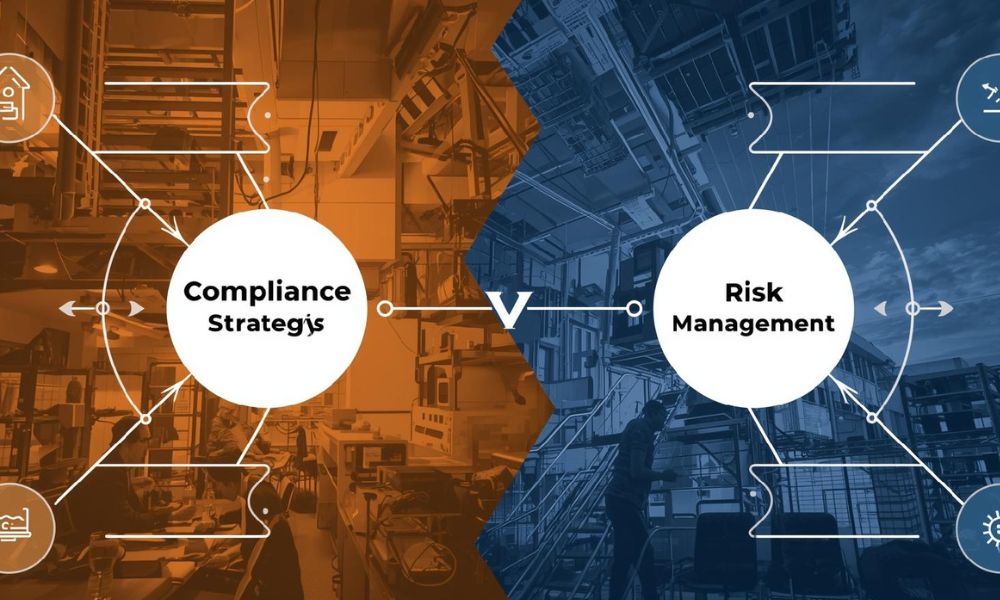
While compliance and risk management are distinct concepts, they are deeply intertwined. Compliance can be seen as a subset of risk management, focusing specifically on the legal and regulatory risks that businesses face. At the same time, effective risk management strategies address a broader spectrum of risks, including operational, financial, and reputational threats.
In many cases, businesses need to integrate compliance efforts into their risk management framework. For instance, if your company fails to comply with data protection laws. The risk of a data breach increases, leading to both reputational and financial damage. By managing compliance risks within a comprehensive risk management strategy, organizations can reduce the chances of such incidents occurring.
Benefits of Integrating Compliance and Risk Management
- Streamlined Operations: Combining these two areas helps create a cohesive business strategy, making it easier to respond to both regulatory and operational challenges.
- Increased Trust: Companies that adhere to regulations and proactively manage risks are more likely to earn the trust of their customers, employees, and stakeholders.
- Reduced Legal and Financial Exposure: By managing compliance risks and other operational threats, organizations can avoid costly penalties and reduce the impact of disruptions.
Implementing Compliance and Risk Management in Your Business
Step 1: Understand Your Legal Obligations
Before you can manage compliance and risk, you must first understand the laws and regulations that apply to your industry. This may involve working with legal experts or compliance officers who can help you identify the specific regulations that govern your operations.
Step 2: Develop a Compliance and Risk Management Plan
Once you have identified the relevant regulations and risks, the next step is to create a comprehensive plan that addresses both areas. This plan should outline how your business will comply with regulations and how it will identify, assess, and mitigate potential risks.
Step 3: Train Your Employees
Employees should be educated on the importance of compliance and risk management. Regular training programs will ensure that everyone within your organization understands the procedures and policies that help maintain compliance and reduce risks.
Step 4: Use Technology to Streamline Compliance and Risk Management
In today’s digital age, various tools and software can help automate compliance tasks, monitor risks, and keep you up-to-date with changing regulations. For instance, compliance management systems can track regulatory changes, while risk management software can help identify emerging threats in real time.
Common Compliance and Risk Management Challenges
While the benefits of compliance and risk management are clear, many organizations face challenges in implementing these strategies. Some common hurdles include:
- Resource Limitations: Smaller businesses may struggle to allocate the necessary resources for robust compliance and risk management programs.
- Changing Regulations: Laws and regulations are constantly evolving, making it challenging for businesses to stay current.
- Complexity: Managing compliance across multiple jurisdictions can be complicated, especially for businesses that operate in different regions with varying legal requirements.
Conclusion
Compliance and risk management go beyond simple definitions are the cornerstone of a sustainable and successful business strategy. By understanding both compliance and risk management, businesses can reduce legal exposure, enhance operational efficiency, and safeguard their reputation. Whether you are a small business owner or part of a larger organization, integrating these principles into your day-to-day operations is crucial for long-term success.
Staying compliant with relevant laws and regulations while actively managing risks ensures that your business remains agile, resilient, and prepared for future challenges. If you have yet to implement a comprehensive compliance and risk management strategy, now is the time to start.




3 thoughts on “Compliance and Risk Management: Key Strategies for Success”
Comments are closed.