
As the world changes rapidly and uncertainly, businesses are facing through a continuum of threats. Cyberattacks, natural disasters and the like are challenges organizations can encounter at a moment’s notice — potentially disrupting operations in a significant way. Failure to prepare for these risks can result in financial loss, operational disruption, and even damage to company reputation. Risk management and business continuity training is one of the most effective ways to minimize such risks.
It prepares organizations to understand potential risks, their impact, and how to mitigate them. What is important is that businesses take this proactive step to ensure smooth sailing even amidst the storm of unforeseen interruptions. In this definitive guide, we will examine why risk management and business continuity are so important, what the training should entail, how businesses can create a culture of resilience.
What Is Risk Management?
Risk Management involves the identification, assessment and prioritization of risks that are within an organization. Risks can emanate from a wide range of sources, both internal and external. Some common categories include financial instability, cybersecurity threats, natural disasters, operational inefficiencies and even reputational damage.
Understanding that risks cannot always be completely removed is a central tenet of risk management. They are, though, discoverable early on; assessable for potential impact; and preventable. A well-implemented risk management framework can prevent the occurrence of adverse events and their impact on an organization.
Key Components of Risk Management
- Risk Identification: The first step in risk management is identifying the potential risks that could threaten an organization. This involves assessing both internal and external factors that may disrupt operations.
- Risk Assessment: Once risks are identified, they must be assessed based on their likelihood of occurrence and the severity of their impact. This helps businesses prioritize which risks to focus on first.
- Risk Mitigation: After assessing risks, businesses develop strategies to either reduce or avoid the impact of these risks. This can involve implementing preventive measures or creating contingency plans in case the risk materializes.
- Risk Monitoring: The risk landscape is always changing, so businesses need to continuously monitor their risks and adapt their strategies as necessary.
The Importance of Business Continuity
Business continuity refers to an organization’s ability to continue its essential functions during and after a disruptive event. Whether it’s a cyberattack, a natural disaster, or a global crisis such as a pandemic, business continuity ensures that operations are not brought to a halt.
Without a business continuity plan (BCP), a company risks losing revenue, damaging its reputation, and even facing permanent closure. Having a well-prepared continuity plan in place allows companies to maintain essential operations during times of crisis, minimize the impact of disruptions, and recover quickly once the crisis is over.
Why Business Continuity Matters
- Prevents Operational Disruptions: A business continuity plan ensures that critical functions such as customer service, supply chain management, and financial operations continue even during a crisis.
- Minimizes Financial Losses: Business interruptions can result in significant financial losses. With a robust business continuity plan, a company can reduce downtime and minimize the associated costs.
- Safeguards Reputation: In times of crisis, customers and stakeholders want to know that a business can continue to meet their needs. A well-executed business continuity plan demonstrates reliability, helping to protect the company’s reputation.
Risk Management & Business Continuity Training: A Key to Success
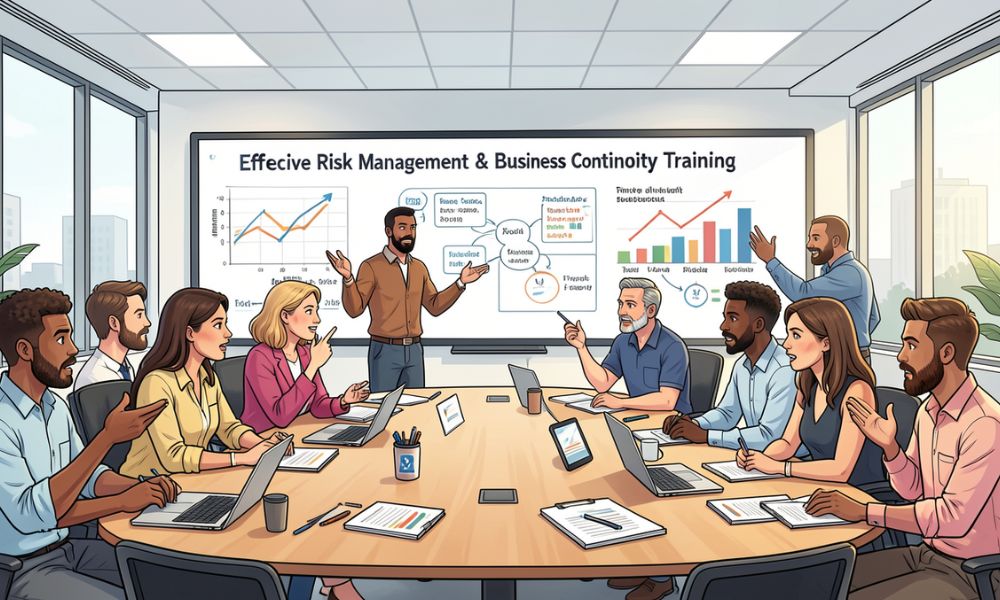
Effective risk management and business continuity training are essential for ensuring that employees are well-prepared to respond to any crisis. These programs equip staff members with the knowledge and skills they need to recognize potential risks, follow emergency procedures, and take appropriate action when needed.
Training programs should familiarize employees with the risks specific to their organization, outline the steps to mitigate those risks, and teach them how to respond quickly and effectively during a disruption. Moreover, hands-on exercises, such as crisis simulations, can give employees the practical experience needed to handle real-life situations.
Benefits of Risk Management and Business Continuity Training
- Improved Preparedness: Training employees ensures that they know what to do in case of a crisis, reducing confusion and enabling a faster, more coordinated response.
- Increased Confidence: Employees who undergo regular training are more likely to remain calm and composed during a crisis, knowing that they have the knowledge and resources to handle the situation.
- Enhanced Organizational Resilience: A well-trained team can help minimize the impact of disruptions and ensure that the business can continue to operate effectively, no matter what challenges arise.
Key Steps in Risk Management and Business Continuity Training
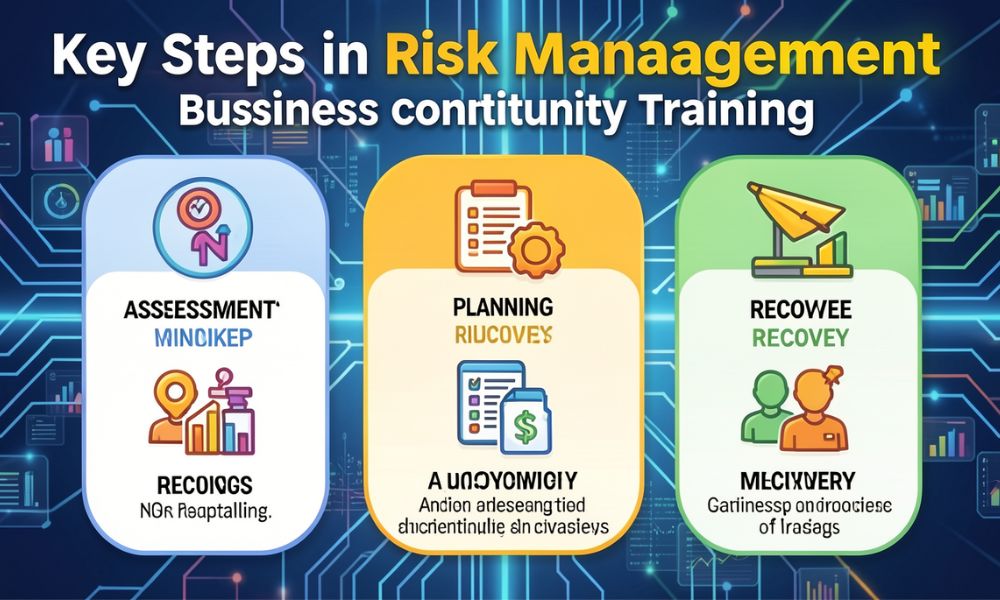
Training employees in risk management and business continuity involves several key steps to ensure that they are adequately prepared. These steps focus on both the theory and practical aspects of risk management, ensuring that employees are ready to handle a wide variety of potential risks.
Identifying Potential Risks
The first step in any risk management plan is to identify potential risks. Risk identification should be a continuous process that involves both internal and external factors. Internal risks may include issues such as staff turnover, operational inefficiencies, or IT system failures. External risks could involve economic downturns, natural disasters, or cyberattacks.
Employees should be trained to recognize these risks early on and report them to the relevant stakeholders. By involving employees in risk identification, businesses can ensure that risks are addressed proactively.
Risk Assessment and Prioritization
Once risks are identified, employees must be trained to assess the potential impact of each risk. Risk assessment typically involves evaluating both the likelihood of a risk occurring and the severity of its potential consequences. This process helps businesses prioritize risks, ensuring that resources are allocated to the most significant threats first.
Employees should be familiar with both qualitative and quantitative risk assessment methods. Qualitative assessments involve subjective judgment, while quantitative assessments use data and statistical models to calculate the probability and impact of risks.
Developing and Implementing Risk Mitigation Strategies
After assessing risks, businesses must develop strategies to mitigate them. Risk mitigation strategies may involve risk avoidance (e.g., discontinuing a high-risk activity), risk reduction (e.g., implementing safety measures), risk transfer (e.g., purchasing insurance), or risk acceptance (e.g., tolerating a low-level risk).
Employees should be trained on how to implement these strategies effectively. Training may include understanding how to activate contingency plans, how to communicate with stakeholders during a crisis, and how to respond to specific risks.
Building a Culture of Risk Awareness
In addition to formal training, businesses should aim to build a culture of risk awareness across the organization. A culture of risk awareness encourages employees to take ownership of risk management within their departments and fosters an environment where risks are openly discussed and addressed.
This involves creating an open dialogue about risks and encouraging employees to report potential issues. By embedding risk awareness into the company’s values, businesses can ensure that risk management becomes an integral part of everyday operations.
Cybersecurity: A Critical Component of Business Continuity
As businesses increasingly rely on digital tools and platforms, cybersecurity has become a critical aspect of business continuity. Cyberattacks, such as ransomware, data breaches, and phishing scams, can disrupt operations and cause significant damage.
Training employees on cybersecurity best practices is essential for protecting sensitive information and preventing cyberattacks. Regular training should cover topics such as:
- Password Management: Educating employees on the importance of strong passwords and multi-factor authentication.
- Phishing Awareness: Teaching employees how to recognize phishing emails and avoid falling victim to scams.
- Data Encryption: Ensuring that employees understand the importance of encrypting sensitive data to prevent unauthorized access.
Leadership’s Role in Risk Management & Business Continuity
The success of risk management and business continuity efforts depends heavily on leadership. Executives and senior leaders must lead by example and actively participate in risk management training and initiatives. Their involvement sets the tone for the entire organization, demonstrating the importance of risk management at the highest level.
Leaders should also allocate sufficient resources to risk management programs, ensuring that employees are well-equipped to handle potential threats. Furthermore, they must create an environment that encourages proactive risk identification and mitigation, empowering employees at all levels to contribute to the company’s resilience.
Testing and Updating Risk Management Plans
Regular testing of risk management and business continuity plans is vital to ensure their effectiveness. Through simulations and drills, businesses can assess their preparedness and identify any weaknesses in their strategies. These exercises help businesses refine their plans, ensuring that they are always ready for the next challenge.
Additionally, as the business landscape evolves, companies must update their risk management plans to reflect new risks and changes in their operating environment. Regular reviews ensure that the plans remain relevant and effective.
Conclusion
Risk management and business continuity training are not just best practices—they are essential to the long-term success and survival of any business. By identifying risks, assessing their potential impact, and developing effective response strategies, businesses can ensure that they are prepared for whatever disruptions may come their way.
Investing in training and building a culture of resilience within the organization will not only help companies weather crises but also ensure that they remain competitive and operational in an ever-changing world. In the end, businesses that prioritize risk management and business continuity are more likely to thrive, no matter the challenges they face.