

In the world of industrial automation, Programmable Logic Controllers (PLCs) are indispensable tools that manage and control machinery, systems, and processes. The heart of any PLC system lies in its programming, which determines how the PLC interacts with the machinery. There are several programming languages used for PLCs, each suited for different types of tasks and control systems. This article will explore the most common types of PLC programming languages and their applications.
Ladder Logic (LAD)
Ladder Logic is one of the most widely used programming languages in PLC systems. It gets its name from its visual representation, which resembles a ladder, with vertical rails and horizontal rungs. The rungs represent control logic like electrical circuits, making it easy for electricians and engineers to understand.
Key Features of Ladder Logic:
- Simple and graphical: Easier for those with an electrical background.
- Widely used: Common in industrial automation, especially for simple control systems.
Common Applications:
- On/off control systems
- Motor control
- Conveyor systems
Functional Block Diagram (FBD)
Functional Block Diagram programming uses blocks that represent various functions, such as timers, counters, and logical operations. It’s a graphical programming language that offers a clear visual representation of the control system.
Key Features of FBD:
- Modular: Allows for easy representation of complex control systems.
- Visual layout: Blocks are connected by lines, indicating the relationships between various functions.
Common Applications:
- Process control systems
- Temperature regulation
- Complex automation processes
Structured Text (ST)
Structured Text is a high-level programming language similar to C or Pascal. It is used for complex control tasks that require mathematical operations, loops, and data handling. While not as visually intuitive as Ladder Logic or FBD, it offers great flexibility for sophisticated control tasks.
Key Features of Structured Text:
- Text-based: Resembles common programming languages, such as C and Python.
- Complex calculations: Suitable for complex logic and high-level control.
Common Applications:
- Mathematical calculations
- Data processing and manipulation
- Control algorithms
Instruction List (IL)
Instruction List is a low-level programming language that uses a series of simple instructions for the PLC to execute. Although less user-friendly and less common today, IL is still used in some legacy systems.
Key Features of Instruction List:
- Low-level code: Similar to assembly language.
- Simple operations: Used for basic control tasks.
Common Applications:
- Legacy PLC systems
- Low-resource control systems
Sequential Function Chart (SFC)
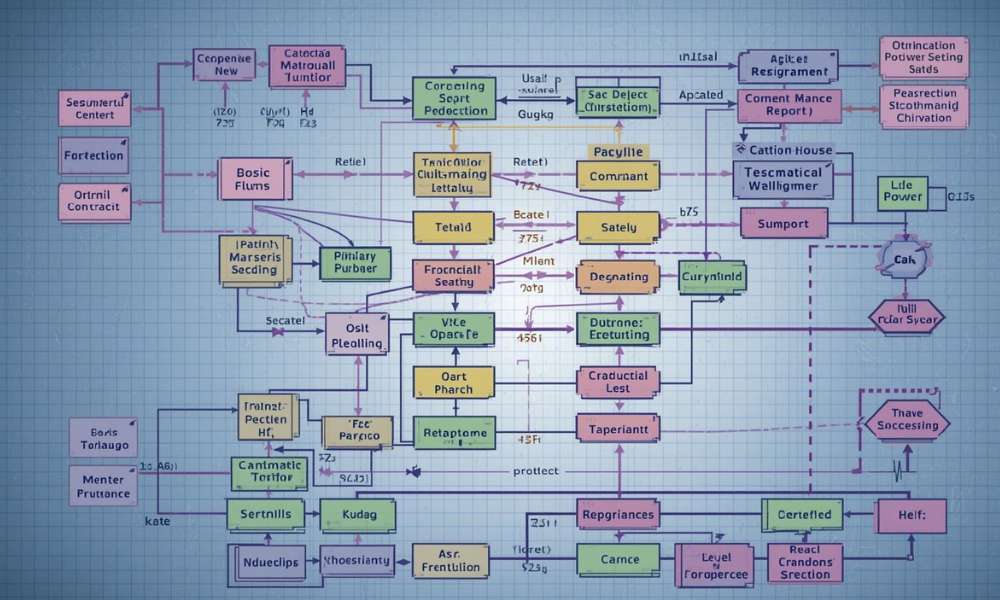
Sequential Function Chart is a graphical programming language that is ideal for applications that involve sequential processes. It represents different steps in a process with transitions and actions that guide the flow of control.
Key Features of SFC:
- Flowchart-like: Steps are represented in a flowchart format.
- Easy to visualize: Ideal for stepwise processes.
Common Applications:
- Batch processing
- Multi-step control processes
- Assembly line control
Graphical Programming (GRAFCET)
GRAFCET, a specialized form of Sequential Function Chart, is designed to simplify complex sequences and transitions in a process. It provides a highly visual approach to control sequences, making it easy to follow the logic.
Key Features of GRAFCET:
- Highly visual: Makes complex sequences easy to understand.
- Step-by-step representation: Provides a clear overview of the process flow.
Common Applications:
- Complex sequential control systems
- Process automation requiring multiple stages
Conclusion
PLC programming languages are critical in ensuring that automation systems run smoothly and efficiently. Whether using Ladder Logic for simple control tasks or Structured Text for complex calculations, each programming language has its own unique strengths. By understanding the various types of PLC programming languages, such as Ladder Logic, Functional Block Diagram, Structured Text, and more, engineers can choose the most appropriate one for the given automation task.
Selecting the right PLC programming language is essential for optimizing control systems, improving efficiency, and minimizing errors in industrial processes. The key is to choose a language that aligns with the complexity and requirements of the automation project at hand.