AI ethics and AI governance are closely connected, but they are not interchangeable. Ethics asks what an organisation ought to do and which values should guide an AI system. Governance specifies who decides, which controls apply, what evidence is required and how problems are corrected.
Confusing the two creates predictable failures. Principles without governance remain aspirations. Governance without ethical reasoning can become a paperwork exercise that complies with a narrow rule while overlooking affected people, unequal impacts or emerging harm.
This comparison explains the differences between AI ethics and AI governance, shows how responsible innovation links them across the AI lifecycle and provides EPW’s practical BRIDGE model for moving from stated values to verifiable practice.
AI ethics, AI governance and responsible innovation defined
What is AI ethics?
AI ethics is the structured evaluation of what is right, fair and responsible in the design, development, procurement and use of AI. It considers human dignity, well-being, fairness, privacy, autonomy, transparency, safety and the distribution of benefits and harms.
Ethics is not limited to personal opinion. Organisations can use established reference points. The OECD AI Principles promote trustworthy AI that respects human rights and democratic values. UNESCO’s Recommendation on the Ethics of Artificial Intelligence treats ethics as a basis for evaluating and guiding AI using values, principles and actions.
What is AI governance?
AI governance is the system of authority, processes, controls and evidence used to direct and oversee AI. It includes policies, accountable roles, inventories, risk classification, approval gates, documentation, validation, monitoring, incident response and supplier oversight.
Governance answers operational questions: Who may approve a high-impact use case? What must be tested before launch? Which performance and fairness thresholds apply? Who can suspend the system? How can an affected person contest a decision? The NIST AI Risk Management Framework expresses this lifecycle discipline through the functions Govern, Map, Measure and Manage.
What is responsible innovation?
Responsible innovation is the continuing practice of shaping an innovation so that its purpose, design, deployment and evolution remain aligned with legitimate benefits and acceptable risks. It connects ethical reflection with governance, technical work and stakeholder participation before choices become expensive to reverse.
Responsible innovation is therefore not a third synonym. It is the way ethics and governance are integrated into discovery, design, experimentation, procurement, deployment and improvement.
AI ethics vs AI governance: comparison table
| Dimension | AI ethics | AI governance |
|---|---|---|
| Central question | What should we do, and why? | Who decides, under which rules and with what evidence? |
| Primary focus | Values, rights, fairness, duties and acceptable impacts | Authority, processes, controls, assurance and accountability |
| Typical outputs | Principles, ethical analysis, stakeholder concerns and boundaries | Policies, roles, risk tiers, approvals, records and monitoring |
| Time horizon | Questions purpose and consequences before and throughout use | Operates continuously across the system lifecycle |
| Failure mode | Values are vague, selective or detached from action | Controls become formalistic, fragmented or blind to real harm |
| Evidence of maturity | Trade-offs are explicit and affected perspectives influence choices | Decisions are owned, traceable, tested, monitored and correctable |
The difference is easiest to see through a fairness commitment. Ethics asks which disparities are unjust, which groups may be harmed and what fairness should mean in context. Governance requires documented data tests, chosen metrics, acceptance thresholds, independent challenge, an approval owner and a response when monitoring finds a breach.
Three layers of responsible AI practice
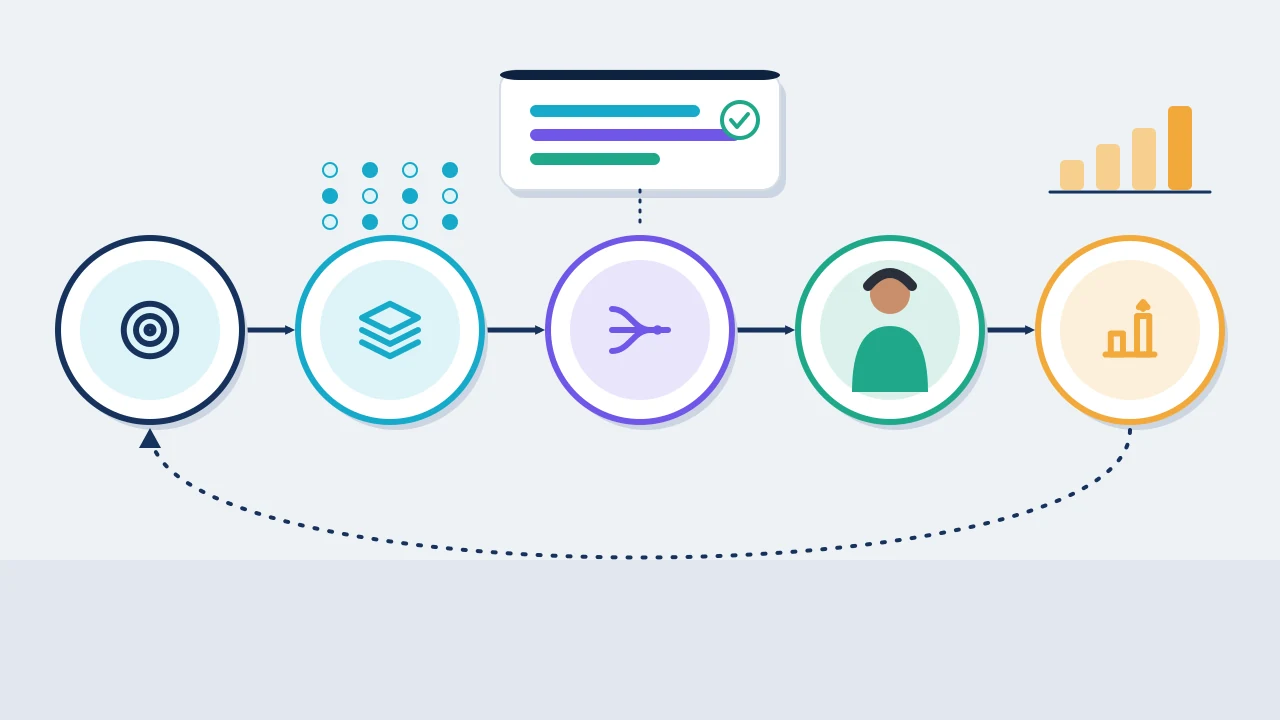
A mature organisation connects three layers rather than treating them as separate programmes:
- Principles: the values and rights that establish direction and boundaries.
- Operating governance: decision rights, controls and evidence that apply those principles.
- Responsible innovation: participation, experimentation and learning that improve both the system and its controls over time.
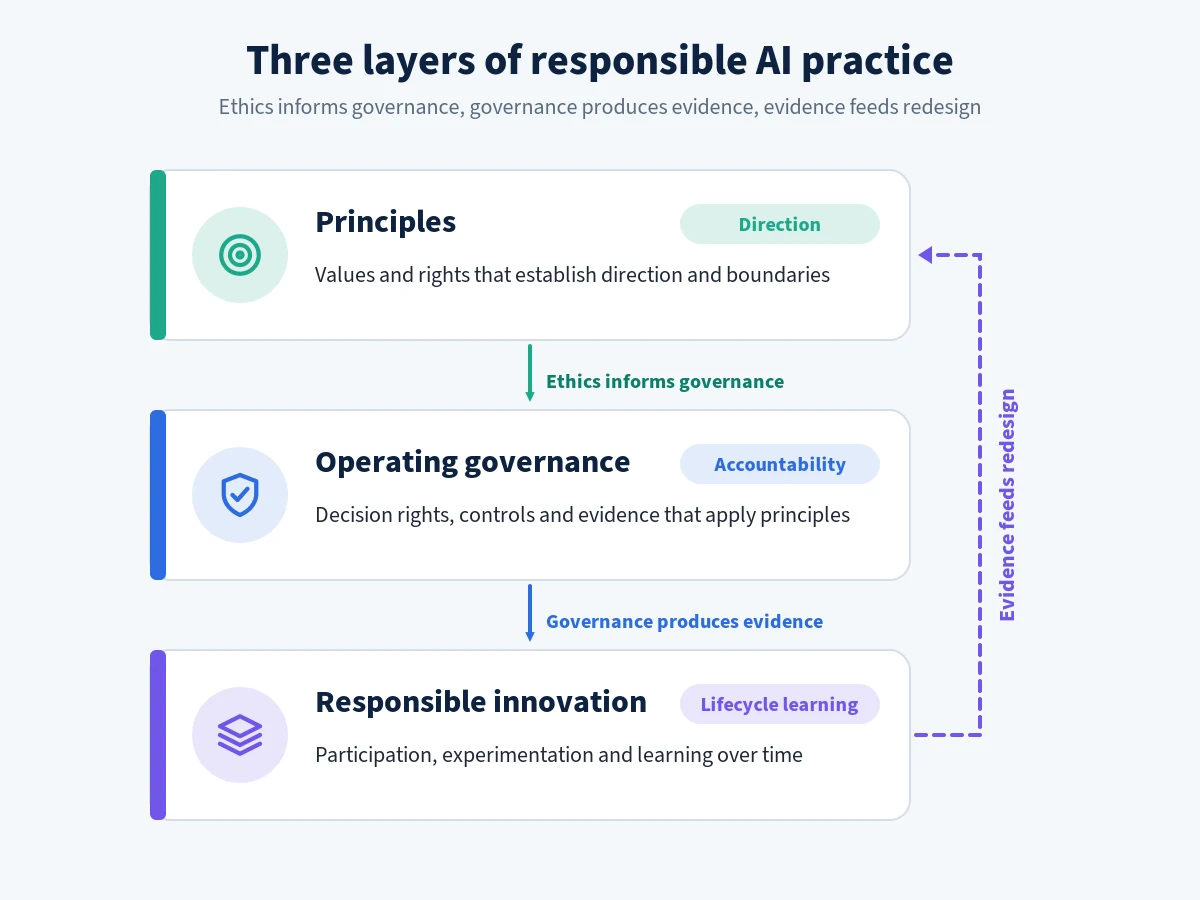
Principles should influence which projects are accepted, not merely how an approved project is described. Governance should create useful evidence, not simply collect signatures. Responsible innovation should allow new stakeholder evidence, incidents and social expectations to change the design or even stop the use case.
The EPW BRIDGE model: from principles to proof
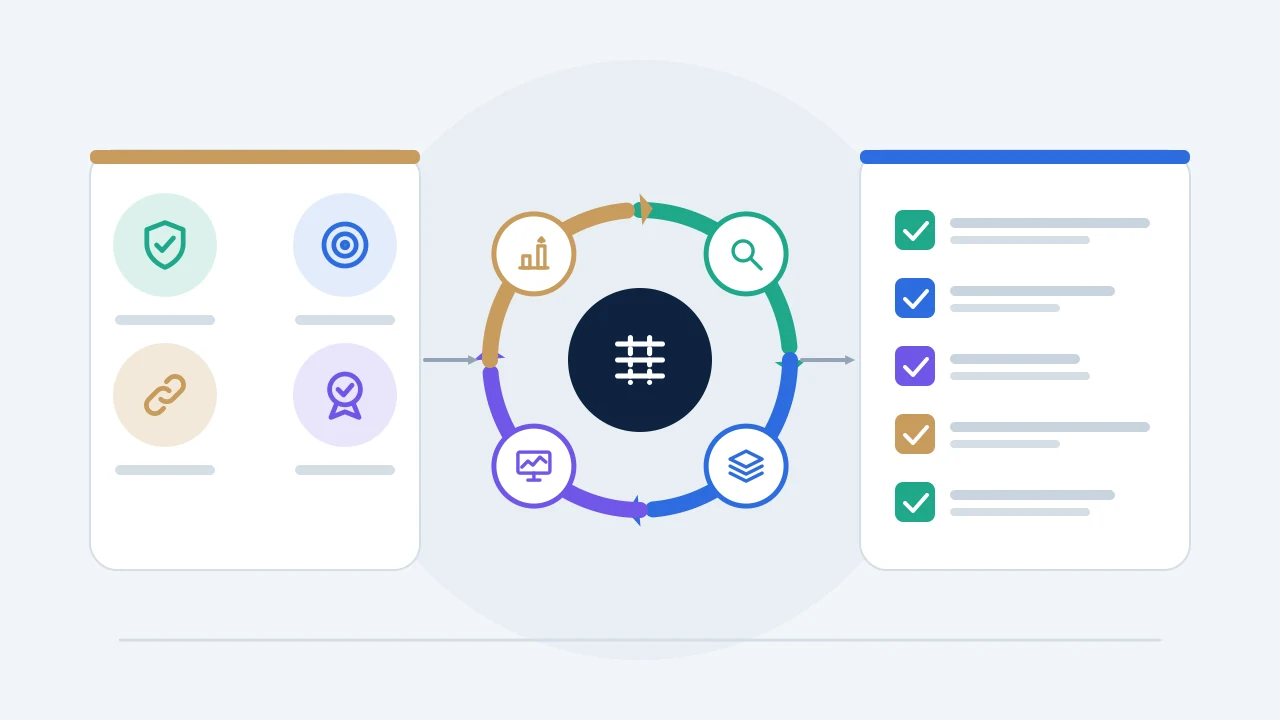
BRIDGE is a six-part model for translating ethical intent into governance that can be demonstrated.
B — Bound the purpose and context
State the intended benefit, excluded uses, operating environment and decision being influenced. Identify whether the AI advises a person, ranks options, generates content or acts automatically. A broad statement such as “improve efficiency” cannot support meaningful ethical review.
Record assumptions about users, data, geography and scale. Boundaries matter because a model acceptable for drafting internal text may be unacceptable for deciding access to employment, healthcare or essential services.
R — Recognise rights, people and impacts
Map those who build, operate, buy, use, oversee and are affected by the system. The last group is often missing from project governance. Consider direct harm, opportunity denied, privacy intrusion, manipulation, safety, accessibility and impacts that accumulate across groups or time.
Use proportionate stakeholder engagement and impact assessment. UNESCO’s guidance calls for oversight, auditability, traceability and human responsibility, while its Ethical Impact Assessment is designed for use before and during deployment.
I — Institute decision rights and accountability
Assign a business owner accountable for the outcome, technical owners for evidence, risk and legal challenge roles, and an authority able to pause or reject the system. Define which decisions may be delegated and which require escalation.
Human oversight must be real. A reviewer who lacks time, information or authority cannot correct an automated recommendation. Specify what users see, how they override, how overrides are reviewed and how affected people obtain explanation or redress.
D — Design controls across the lifecycle
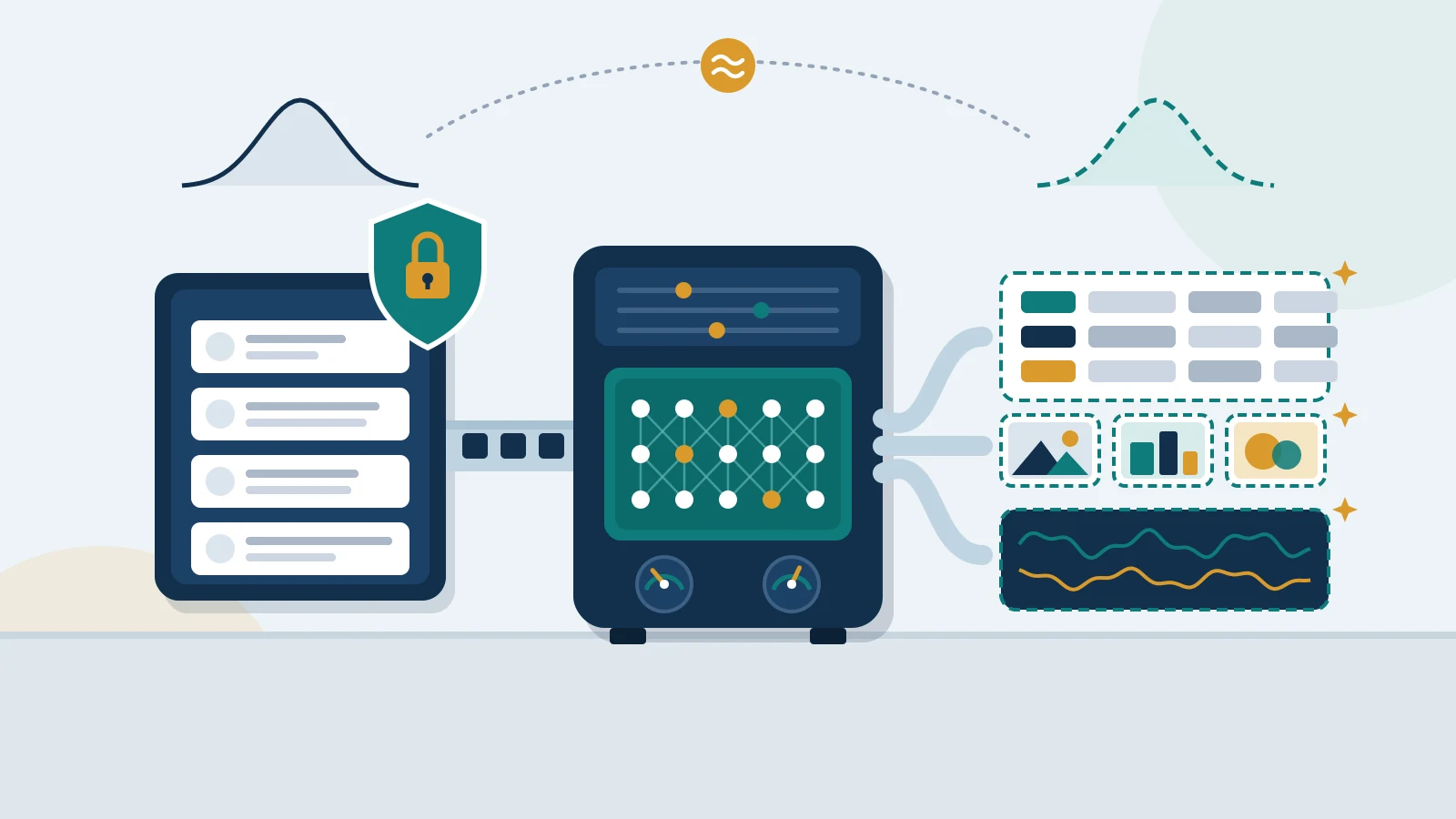
Match controls to risk and lifecycle stage. During design, test whether a simpler or less intrusive approach can meet the objective. During development, govern data provenance, privacy, security, performance, fairness and documentation. Before launch, require validation and approval against explicit thresholds.
During operation, monitor inputs, outputs, incidents, user behaviour and real-world outcomes. Include supplier obligations, change control, version records and exit arrangements. A third-party model does not transfer accountability away from the organisation deploying it.
G — Generate evidence and challenge it
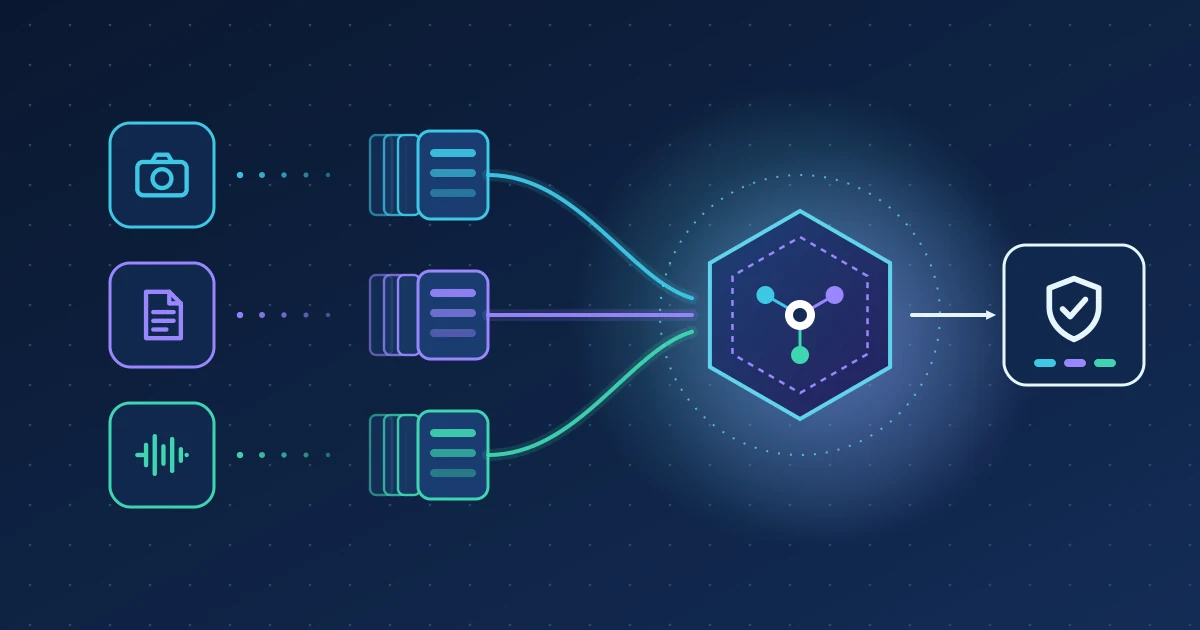
Governance needs evidence that another qualified person can inspect. Maintain an AI inventory, impact assessment, data and model documentation, test results, limitations, approval rationale, monitoring records and incident decisions. Record unresolved disagreements rather than smoothing them out of the file.
Independent challenge should test whether the evidence supports the claim, whether thresholds reflect the context and whether benefits are reaching the intended people. Transparency must be tailored: executives, developers, operators, auditors and affected individuals need different explanations.
E — Evolve through monitoring and learning
Models, users, data and social conditions change. Define triggers for review, retraining, restriction or retirement. Analyse complaints, near misses and overrides as evidence, not as inconveniences. Feed lessons into product design, policy and training.
Responsible innovation includes the ability to change direction. A technically feasible system should not continue automatically when its benefit is weak, its impacts are unacceptable or its controls cannot be sustained.
Worked example: AI-assisted recruitment screening
Consider a system that ranks applicants for interview. The ethical questions include whether historical hiring data encode past exclusion, whether disability-related career gaps are treated unfairly, whether candidates understand the use of AI and whether the system reduces a person’s opportunity without meaningful review.
Governance converts those questions into actions and evidence:
- the use case is listed in the AI inventory and classified by impact;
- HR owns the hiring outcome while technical and risk teams own defined evidence;
- features and proxy variables are reviewed for relevance and potential discrimination;
- performance is tested by role and relevant group, using thresholds agreed before deployment;
- recruiters receive limitations, explanations and authority to challenge rankings;
- candidates have an accessible route to information, human review and correction;
- supplier changes, drift, complaints and overrides trigger monitoring and reassessment;
- the organisation can suspend the tool and return to a documented fallback process.
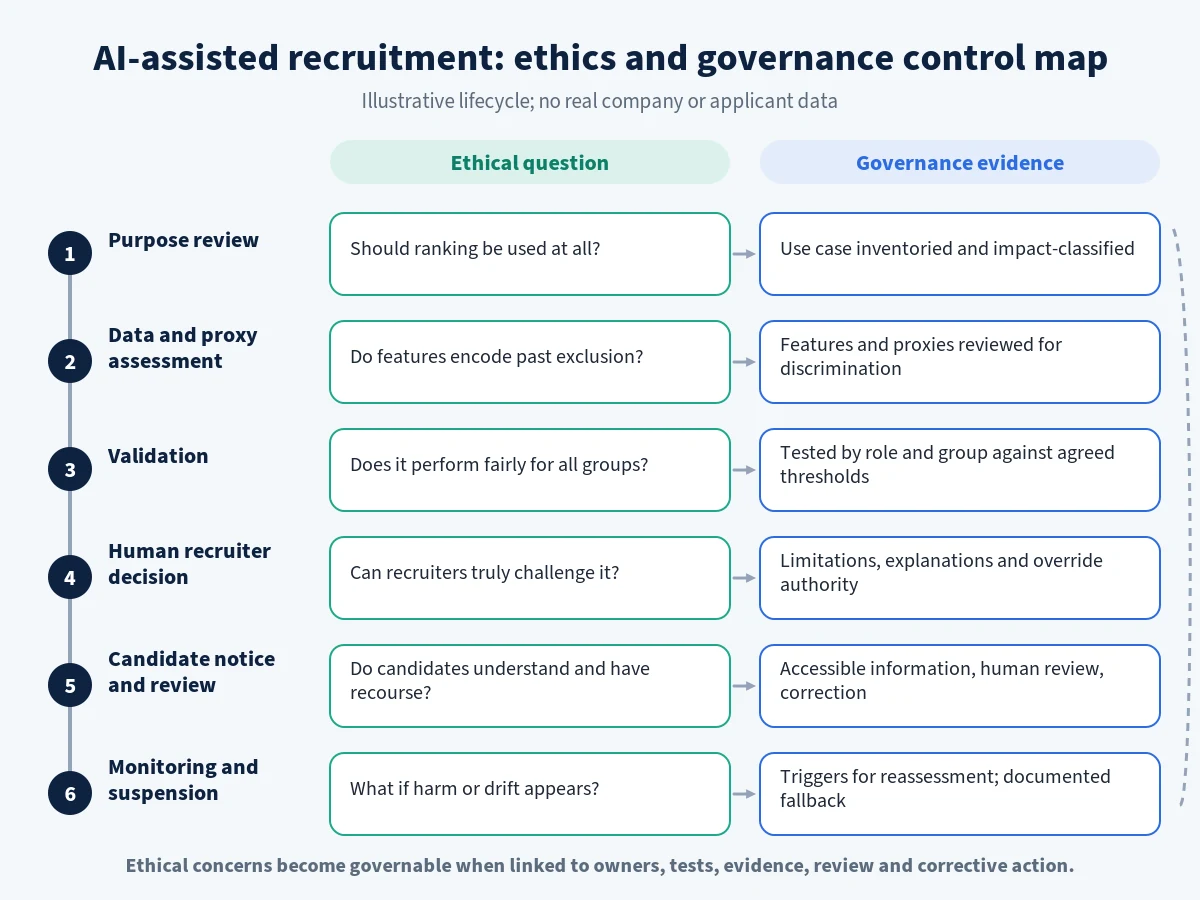
Responsible innovation adds an earlier and broader question: should ranking be used at all, or could structured assessment and better recruiter support deliver the benefit with less risk? It also asks candidates, recruiters and accessibility specialists to influence the design rather than waiting to react after launch.
Compliance is necessary but not the whole of ethics
Law defines enforceable obligations within a jurisdiction. Ethics examines responsibilities and consequences that may extend beyond current legal minimums. Governance must do both: support compliance and provide a disciplined way to address uncertainty, cross-border differences and impacts not fully captured by a rule.
In the European Union, the AI Act entered into force on 1 August 2024. The European Commission states that it became applicable on 2 August 2026 with exceptions and extended dates for certain high-risk systems. This makes accurate use-case classification and legal review important, but an organisation should not treat a regulatory category as its complete ethical judgement. Requirements vary by role, system and jurisdiction, so specialist advice remains necessary.
AI ethics and governance checklist
- Is the intended benefit specific, measurable and legitimate?
- Have excluded uses and unacceptable boundaries been documented?
- Were affected people and indirect impacts considered, not only users and owners?
- Are ethical trade-offs explicit rather than hidden behind broad principles?
- Does every material risk have an owner, control, threshold and evidence source?
- Can human reviewers understand, challenge and override the system in practice?
- Are suppliers contractually required to provide evidence and notify changes?
- Can an affected person obtain information, correction and meaningful review?
- Are incidents, complaints, drift and unequal outcomes monitored?
- Is there a credible authority and process to restrict, suspend or retire the system?
Develop responsible-AI judgement and operating capability
Effective AI leadership requires more than memorising principles or copying a policy template. Teams must analyse impacts, choose proportionate controls, assign decision rights and challenge whether evidence is good enough. EPW’s AI Ethics Governance and Responsible Innovation Course develops these capabilities through impact assessment, fairness analysis, governance design and lifecycle cases.
Readers working on stakeholder communication can also use EPW’s guide to explaining a machine-learning model to different stakeholders. Ethics supplies direction, governance supplies accountable action and evidence, and responsible innovation keeps both connected to changing realities.
References
- UNESCO, Recommendation on the Ethics of Artificial Intelligence, accessed 3 September 2026.
- OECD.AI, OECD AI Principles overview, updated May 2024; accessed 3 September 2026.
- National Institute of Standards and Technology, NIST AI RMF Playbook, updated 10 June 2026; accessed 3 September 2026.
- European Commission, AI Act regulatory framework, accessed 3 September 2026.
- EPW Training, AI Ethics Governance and Responsible Innovation Course, accessed 3 September 2026.