

AI-generated illustration created to represent the article’s subject. It does not depict an actual EPW course, trainer, participant, client, event or venue.
Workplace risks are a growing concern for organizations today. These risks can arise from employee relations issues, legal compliance failures, workplace safety gaps, or improper handling of sensitive data. Without proper preparation, even small issues can escalate into serious operational or legal challenges.
HR risk management training helps organizations address these challenges through a structured approach. It equips HR professionals and managers with the knowledge to identify potential risks, reduce vulnerabilities, and ensure workplace policies align with legal and ethical standards.
For local businesses, this training is especially valuable. Smaller organizations often have limited HR resources, making it important for leaders to understand how to prevent problems early and build stronger, more stable workplaces.
Understanding HR Risk Management
HR risk management is the exercise of identifying and controlling risks related to employees, workplace policies and procedures. This can include potential legal compliance, workplace conduct or operational practices.
Problems can escalate quickly when organizations lack clear policies or adequate oversight. Training equips HR teams with the skills to assess workplace risks and put measures in place for prevention.
Key objectives of HR risk management training include:
- Recognizing potential HR-related risks early
- Establishing effective workplace policies
- Ensuring compliance with employment regulations
- Improving communication between employees and management
By understanding these areas, HR professionals can create a safer and more reliable work environment.
Why Businesses Need HR Risk Management Training
Workplace regulations continue to evolve, and organizations must adapt to these changes to remain compliant. Without proper guidance, businesses may unknowingly violate employment laws or fail to address internal concerns effectively.
Training programs help organizations strengthen their internal practices while reducing potential liabilities. For many companies, this training also supports leadership development and improves organizational accountability.
The benefits of implementing HR risk management training include:
- Stronger compliance with employment laws
- Reduced legal and financial risks
- Better employee relation
- Improved organizational reputation
- Increased confidence among managers and HR teams
When employees see consistent policies and responsible leadership, workplace trust and productivity tend to improve.
Key Areas Covered in HR Risk Management Training
Effective training programs focus on several important workplace risk areas. Each area helps HR teams build systems that prevent problems and support long-term stability.
Employment Law and Compliance
Understanding employment law is one of the most critical components of risk management. HR professionals must stay informed about regulations related to hiring practices, employee rights, workplace discrimination, and termination procedures.
Training ensures organizations follow legal requirements and maintain fair treatment for all employees.
Workplace Safety and Employee Well-Being
Safety is a major responsibility for HR departments. Organizations must provide environments where employees feel secure and supported.
Training programs typically address:
- Workplace safety guidelines
- Incident reporting procedures
- Employee health and well-being policies
A proactive approach to safety reduces workplace incidents and protects both employees and the organization.
Policy Development and Documentation
Clear policies provide structure within an organization. They guide employee behavior and establish expectations for workplace conduct.
Through HR risk management training, organizations learn how to develop:
- Employee handbooks
- Ethical conduct policies
- Disciplinary procedures
- Internal communication guidelines
Well-defined policies help prevent misunderstandings and ensure consistent decision-making.
Managing Employee Relations Risks
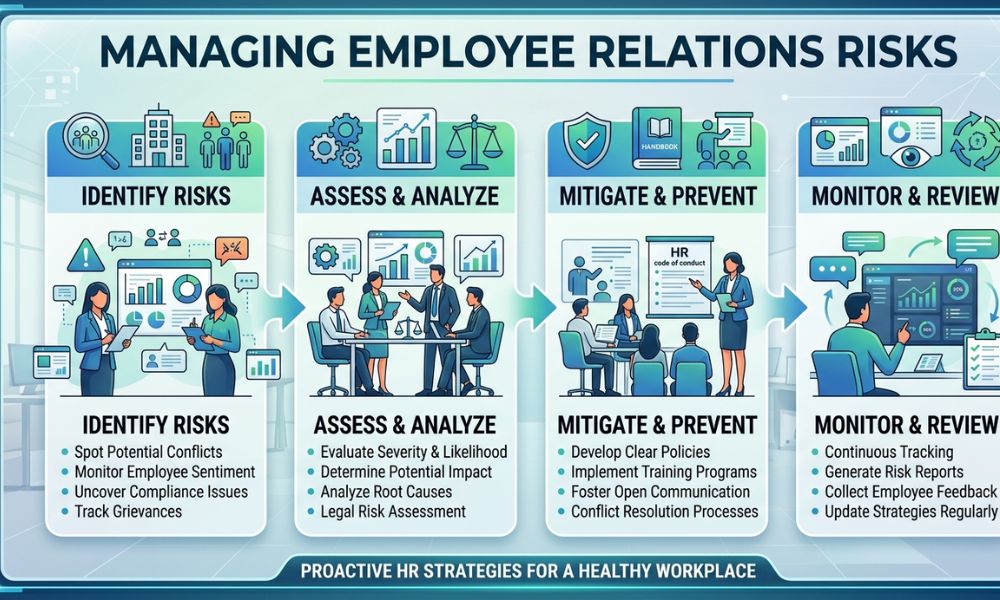
Employee relationships are central to workplace stability. Conflicts between team members, communication breakdowns, or unresolved complaints can create significant HR risks.
Training helps HR professionals handle these situations carefully and professionally. Participants learn how to identify potential conflicts early, conduct fair investigations, and resolve issues in a respectful manner.
When organizations prioritize healthy employee relations, they reduce the likelihood of disputes that could affect productivity or morale.
Protecting Employee Data and Information
Modern HR departments manage sensitive employee data such as personal records, payroll information, and performance evaluations. Protecting this information is a critical responsibility.
Training programs emphasize the importance of maintaining secure systems and following proper data management practices. HR professionals learn how to safeguard confidential records and ensure compliance with data protection regulations.
Strong data security practices help organizations maintain employee trust and avoid costly privacy violations.
Implementing HR Risk Management Training
Organizations can introduce training programs in several ways. Some companies choose structured workshops or professional seminars, while others rely on online training platforms that allow HR teams to learn at their own pace.
Successful implementation often includes:
- Regular training sessions for HR staff and managers
- Updates to workplace policies based on training insights
- Leadership involvement in risk management discussions
- Continuous review of workplace procedures
Consistency is important. Training should be an ongoing process rather than a one-time activity.
Conclusion
Workplace risks are unavoidable, but they can be managed effectively with the right knowledge and preparation. Organizations that invest in structured HR education are better equipped to prevent issues, maintain compliance, and protect their employees.
HR risk management training provides the foundation for responsible workplace leadership. It helps HR professionals identify potential challenges, strengthen internal policies, and create environments built on fairness and accountability.
For businesses seeking long-term stability and credibility, developing strong HR risk management practices is a strategic step toward sustainable growth.