
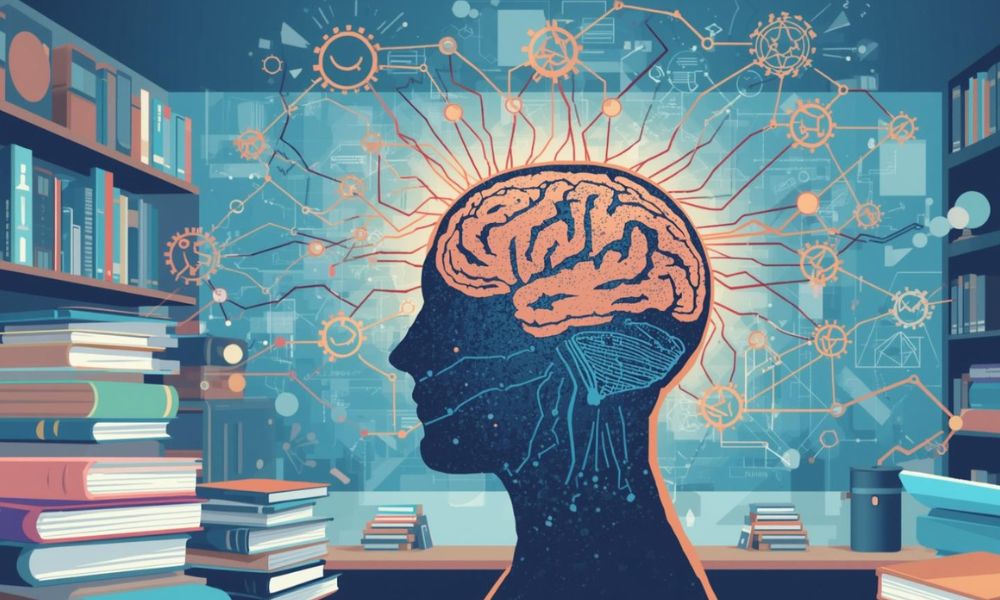
Deep learning has become a major force in modern artificial intelligence, and it has helped machines learn to solve problems that were out of reach even five years ago. From driving voice assistants to transforming healthcare diagnostics, deep learning is revolutionizing the way we engage with technology. For anyone new to the field, though, the concept of deep learning is enough to inspire dread. The purpose of this guide is to digest the key concepts and provide beginners who were intimidated by deep learning with a roadmap to basic understanding.
What is Deep Learning?
Deep learning is a form of artificial intelligence that simulates the way the human brain processes information. It harnesses neural networks, which are composed of layers of interconnected “neurons,” to learn from data. Traditional machine learning required the programmer to have insight and script in explicit solutions where neural networks “learns” patterns on its own. It’s the foundation of tools like facial recognition, self-driving cars and natural language processing.
The Evolution of Deep Learning
Deep learning has been around for decades, but it only really began to take off with the development of powerful computers and access to huge amounts of data. Complex tasks were a tall order for early neural networks, but advances such as Convolutional Neural Networks (CNNs) and Recurrent Neural Networks (RNNs) helped put deep learning on the map in fields like Computer Vision and Speech Processing. As deep learning advances, industries are rapidly transforming and pursuing new opportunities.
So What’s All This Fuss About Deep Learning?
To being with, it’s important to understand the prospects of deep learning in current world. It is what powers a majority of the tools and applications that we use everyday. From search engines to social media algorithms, deep learning powers the intelligent systems that make our lives easier. Familiarity with deep learning gives you options for careers in tech, healthcare and business.
Key Building Blocks of Deep Learning
Before diving into the more advanced topics, it’s crucial to understand the fundamental components of deep learning:
- Neural Networks: The building blocks of deep learning. A neural network consists of layers of neurons that process input data and produce an output.
- Activation Functions: These functions determine the output of each neuron based on the input data. Common types include ReLU, sigmoid, and tanh functions.
- Loss Functions: A loss function measures the difference between the predicted and actual values, guiding the model’s learning process.
- Optimization Algorithms: These algorithms adjust the weights of the network during training to minimize the loss function and improve the model’s predictions.
Types of Neural Networks
Deep learning models are highly flexible and come in various types, each designed for specific tasks:
Feedforward Neural Networks (FNNs)
FNNs are the simplest form of neural networks where information moves in one direction, from the input layer to the output layer. These networks are commonly used for basic tasks like classification and regression.
Convolutional Neural Networks (CNNs)
CNNs excel in processing grid-like data, particularly images. By using convolutional layers, CNNs can recognize patterns and features in images, making them ideal for tasks like facial recognition and image classification.
Recurrent Neural Networks (RNNs)
RNNs are designed to handle sequential data, such as time-series or language. With feedback loops that allow them to remember past inputs, RNNs are perfect for tasks like speech recognition and language translation.
Generative Adversarial Networks (GANs)
GANs consist of two networks a generator and a discriminator that compete to create and evaluate new data. GANs are used to generate realistic images, videos, and even music, providing endless creative possibilities.
How Deep Learning Works Like The Human Brain
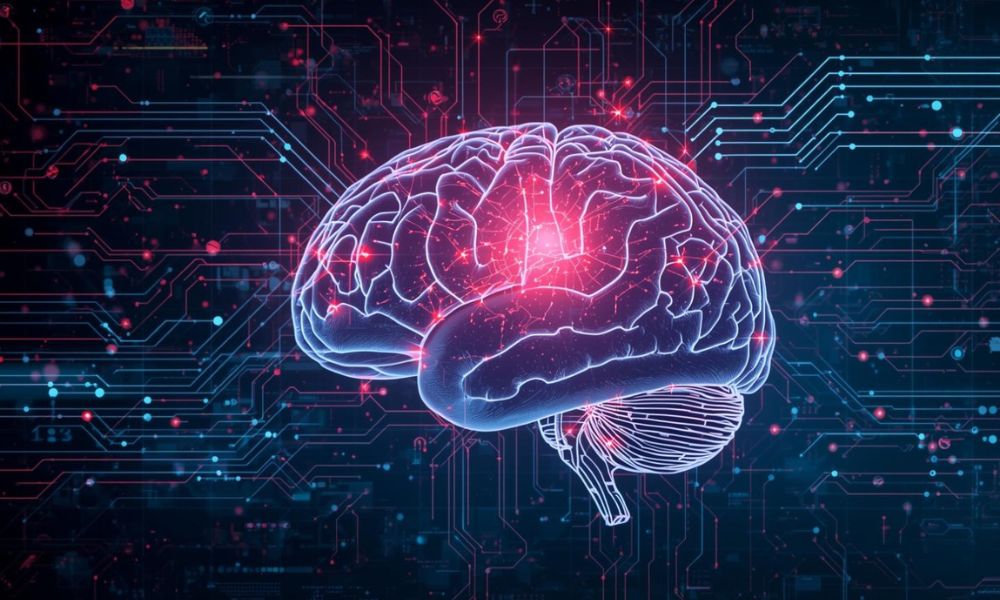
Deep learning, at its most basic, was modelled on how the human brain processes things. Like how the human brain is made up of billions of neurons, a deep learning network involves artificial neurons serializing to interpret data. When a model is being trained, its network tweaks the strength of connections (or “synapses”) between neurons so as to become better at processing further data. This modeling of the brain’s learning process is why deep learning is so good at complicated tasks.
The Role of Data in Deep Learning
In deep learning, data is everything. The better high-quality data a model has, the more it can learn and predict accurately. Data preprocessing is an important step as it prepares the raw data, making it ready to be used for training. Deep learning models do not work well unless you have clean structured data.
Training a Deep Learning Model
Deep learning on the other hands involves giving data to a neural network, and letting the network adjust it’s weights etc in order to minimise errors. This is a computationally intensive task as deep learning models tend to have millions of parameters. The model updates its weights by backpropagating the error between predicted and actual outcomes during training. Training is applied in many rounds of epochs or iterations, so the model will get better and better over time.
Popular Deep Learning Frameworks
For beginners looking to dive into deep learning, the right framework can make all the difference. Here are some of the most popular frameworks to consider:
- TensorFlow: Developed by Google, TensorFlow is one of the most widely used deep learning frameworks. It offers a flexible environment for building and training models and is ideal for beginners who want to get started with AI.
- PyTorch: Known for its ease of use and flexibility, PyTorch is another popular deep learning framework. It is especially favored by researchers and developers for its dynamic computation graph and intuitive design.
- Keras: A high-level API that runs on top of TensorFlow, Keras simplifies the process of building neural networks, making it a great option for beginners.
The Role of GPUs in Deep Learning
Deep learning models require massive amounts of computational power, which is where Graphics Processing Units (GPUs) come in. Unlike traditional CPUs, which are optimized for single-threaded tasks, GPUs excel at parallel processing, making them ideal for the complex computations involved in deep learning. With GPUs, deep learning models can be trained much faster, reducing the time required to process large datasets.
Evaluating Deep Learning Models
Once a deep learning model is trained, it’s essential to evaluate its performance. Common evaluation metrics include:
- Accuracy: Measures the proportion of correct predictions.
- Precision: The ratio of true positive predictions to all positive predictions.
- Recall: The ratio of true positive predictions to all actual positives.
- F1-Score: The harmonic mean of precision and recall.
A confusion matrix is often used to visualize a model’s performance by showing the number of correct and incorrect predictions across different classes.
Challenges in Deep Learning
While deep learning is a powerful tool, it is not without its challenges. Key obstacles include:
- Data Quality: Without high-quality, diverse datasets, models can struggle to generalize.
- Computational Resources: Training deep learning models requires significant computational power, often necessitating GPUs or specialized hardware.
- Interpretability: Deep learning models are often referred to as “black boxes” because their decision-making processes are difficult to interpret, posing challenges in applications that require transparency.
The Future of Deep Learning
The future of deep learning is promising, with continuous advancements in architecture and hardware. Emerging trends include the development of more efficient models, quantum computing, and the increasing use of deep learning in fields like healthcare, finance, and autonomous vehicles. As deep learning technologies continue to mature, new applications will emerge, creating exciting opportunities for researchers and developers alike.
Conclusion
Deep learning is a fascinating and transformative field that offers endless possibilities for innovation. By understanding the fundamentals and exploring the types of neural networks, frameworks, and training processes, beginners can set themselves up for success. Whether you’re looking to break into a career in AI or simply curious about how it all works, mastering the basics of deep learning is the first step toward harnessing its power.