
In modern business, practices and methodologies are the foundation for success. Businesses that can be more efficient, control costs and meet customer demands will win the day. Logistics and supply chain management are two essential components of this operational efficiency. Even though the terms are often used interchangeably, they actually have different definitions that make a significant impact for companies looking to streamline internal operations.
In this article, we’ll examine what logistics and supply chain management (SCM) are, how they vary from each other, and why it’s important to know the difference. We will go into the details of each and what they do and let you see how each plays in conjunction to streamline your business functions. If you’re an entrepreneur of small or large business owner, understanding logistics and SCM could dramatically impact your company.
What is Logistics?
The supply chain is an integral aspect of today’s business. It is the administration of the movement of things – and also media virtual goods, people, etc. Fundamentally, logistics is all about making sure that goods are received in the right place at the right time and in the most efficient manner possible.
Logistics itself consists of a number of central operations:
- Carriage: The conveyance of goods from one place to another, either by land, sea or air. Economical transportation is the result of good management With effective transport management to minimize delays and cost.
- Warehousing: To store the goods until they are demanded for at a distribution manner. Warehousing is about maintaining inventory that has been received by the company in an appropriate and easy-to-reach manner.
- Inventory Management: Monitoring inventory levels in order to prevent overstock and stockouts. That’s important to keep things running smoothly and serve the needs of customers.
- Order Fulfillment: The series of activities involved in picking, packing and shipping orders to a customer. Order fulfillment is a process of taking orders, processing them to make thm ready for shipping and then getting it done.
Well, in a word: logistics; the movement of products and services. It serves the aspect of productivity in the transportation and warehousing of materials: safe, not bulky.
What is Supply Chain Management (SCM)?
Supply Chain Management (SCM) is a broader concept that involves the coordination and management of all activities required to produce and deliver a product. It encompasses everything from raw material procurement to the final product reaching the consumer.
SCM integrates several key functions:
- Sourcing and Procurement: This includes identifying and selecting suppliers, negotiating contracts, and acquiring the necessary raw materials or components for production. Effective sourcing helps companies maintain quality while keeping costs under control.
- Production Planning and Manufacturing: This function involves converting raw materials into finished products. It includes scheduling production runs, ensuring quality control, and managing capacity.
- Logistics and Distribution: Logistics plays a significant role in SCM, as it ensures the movement of products from production facilities to retailers or customers.
- Customer Service and Support: Once a product has been delivered, customer service becomes an important part of the supply chain. Managing returns, handling inquiries, and providing post-sales support all fall under this function.
The goal of SCM is not just to deliver goods but to optimize the entire flow of the product. It involves strategic decisions about sourcing, production, inventory management, and delivery to maximize value and reduce inefficiencies across the supply chain.
Key Differences Between Logistics and Supply Chain Management
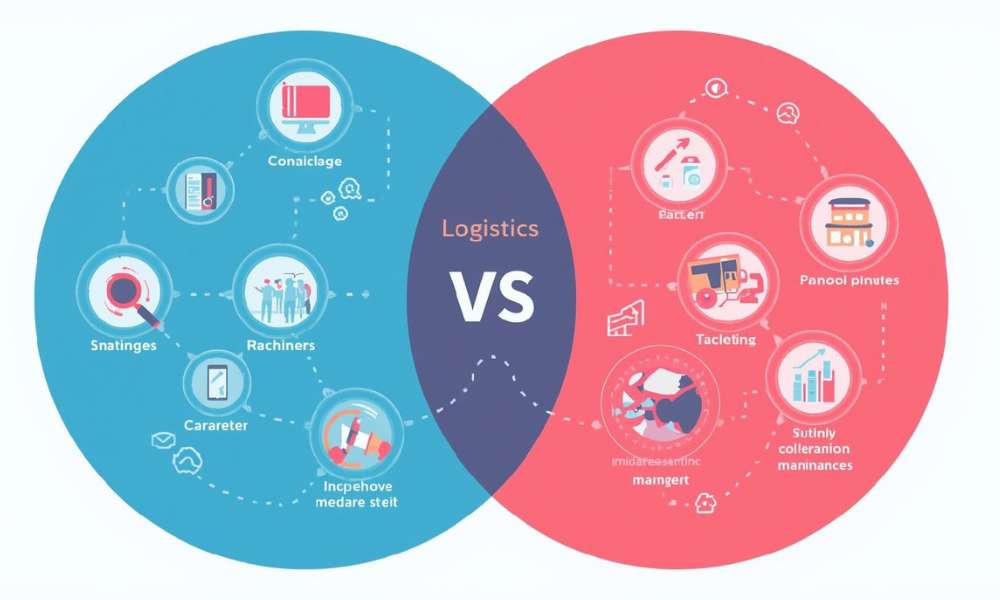
Although logistics and SCM are closely related, they serve distinct functions. Understanding the differences between these two terms is key for any business looking to optimize its operations.
Scope
- Logistics: Logistics focuses on the movement and storage of goods. It’s primarily concerned with the transportation of goods from point A to point B, as well as managing the storage and inventory of those goods during their journey.
- Supply Chain Management: SCM encompasses the entire process, from sourcing raw materials to delivering finished products to customers. It includes every step in the lifecycle of a product, including procurement, manufacturing, and customer service.
Objective
- Logistics: The main objective of logistics is to ensure the timely and cost-effective delivery of goods to the right place. It’s all about efficiency in transportation and storage.
- Supply Chain Management: SCM has a broader objective of creating a seamless flow of goods and services across the entire supply chain. The goal is to reduce costs, enhance customer satisfaction, and increase overall value by optimizing every stage of the process.
Tactical vs. Strategic
- Logistics: Logistics is more tactical, focusing on short-term operational tasks. It deals with day-to-day activities, such as optimizing transportation routes and managing inventory levels.
- Supply Chain Management: SCM is a strategic function, focused on long-term goals. It involves decisions about supplier relationships, manufacturing processes, and long-term partnerships that shape the entire supply chain network.
The Role of Logistics in Supply Chain Management
Logistics is an integral part in the management of supply chains. If the logistics is not effective, a well planned supply chain will never see the light of day. The deliveries fulfilled at the right times are directly related with logistic as far as customer satisfaction is concern.
More efficient logistics can help lower costs, accelerate delivery time and optimize supply chain. For instance, transportation optimization helps to lower fuel cost and delivery time; warehousing effectiveness minimises stockout and overstock.
In other words, logistics is the hands and feet of SCM. SCM centers on planning and strategy, while logistics aspects are about the implementation of that plan. Both cooperate to get products to the customer fast, efficiently and at a reasonable cost.
How Supply Chain Management Drives Business Success
Supply chain management goes beyond logistics by integrating all the components that contribute to a product’s creation and delivery. By managing the procurement of raw materials, production schedules, inventory levels, and distribution, SCM helps businesses deliver higher-quality products at lower costs.
Key benefits of effective SCM include:
- Cost Savings: SCM helps reduce inefficiencies, optimize resources, and negotiate better contracts with suppliers, which results in lower costs.
- Faster Time-to-Market: By streamlining the production and distribution process, SCM helps businesses bring products to market faster.
- Improved Customer Satisfaction: A well-managed supply chain ensures that products are always available when customers need them, reducing delays and improving customer experiences.
- Risk Management: Effective SCM helps businesses identify potential risks, such as supply shortages or disruptions, and develop strategies to mitigate these risks.
By integrating logistics and other supply chain functions, businesses can stay competitive in the market, improve their bottom line, and strengthen customer relationships.
Why Understanding the Difference Matters
Understanding the difference between logistics and supply chain management is essential for businesses that want to optimize their operations. Efficient logistics ensures the timely delivery of products, while effective supply chain management helps align all business functions to improve overall performance.
For local businesses, recognizing these differences can lead to more strategic decision-making and better resource allocation. By focusing on optimizing logistics and developing a strong supply chain strategy, businesses can stay competitive and meet the ever-evolving demands of the market.
Conclusion
Indeed, both logistics and supply chain management do share certain goals and objectives, but each focuses on different elements of its underlying components, neither fully overlapping with the other. Logistics The term refers to the transportation and warehousing of products from point A to point B, in a time-efficient and cost-effective manner. In contrast, supply chain management tends to be more strategic, focusing on the end-to-end product life cycle from procurement to delivery.
Top businesses understand that logistics and supply chain management is crucial for successful operations and to gaining a competitive edge. Businesses can establish more robust, responsive and effective operations if they know the specific roles each play. Whether you’re streamlining logistics or controlling your supply chain, both are essential to long-term business success.




One thought on “Logistics vs Supply Chain Management: What’s the Difference?”
Comments are closed.