
The era of artificial intelligence (AI) is directed at sweeping the industries worldwide and so also supply chain management (SCM). AMID today’s challenges to improve operational efficiencies and drive down costs, AI is being applied as a powerful lever. But will AI completely replace supply chain management or merely augment it is the question. This article delves deeper into the realm of AI in supply chains, its effect, advantages and challenges or even what lies ahead for the industry.
What is Supply Chain Management?
Supply chain management means managing the entire flow from raw material to delivered end product to a customer. It involves sourcing, manufacturing, logistics and distribution. Historically, SCM has depended on human intervention for functions such as keeping an eye on the inventory, forecasting demand and coordinating shipping. But with companies demanding speedier, more accurate answers, AI is filling the breach.
The Role of AI in Supply Chain Management
AI is making significant strides in automating and optimizing various aspects of supply chain management. Here are the core areas where AI is reshaping the landscape:
Predictive Analytics for Demand Forecasting
AI systems can analyze vast amounts of historical data and external factors to predict future demand. This helps businesses plan better for inventory levels, production schedules, and supply chain activities, reducing the risk of stockouts or overstocking.
Robotics and Automation in Warehouses
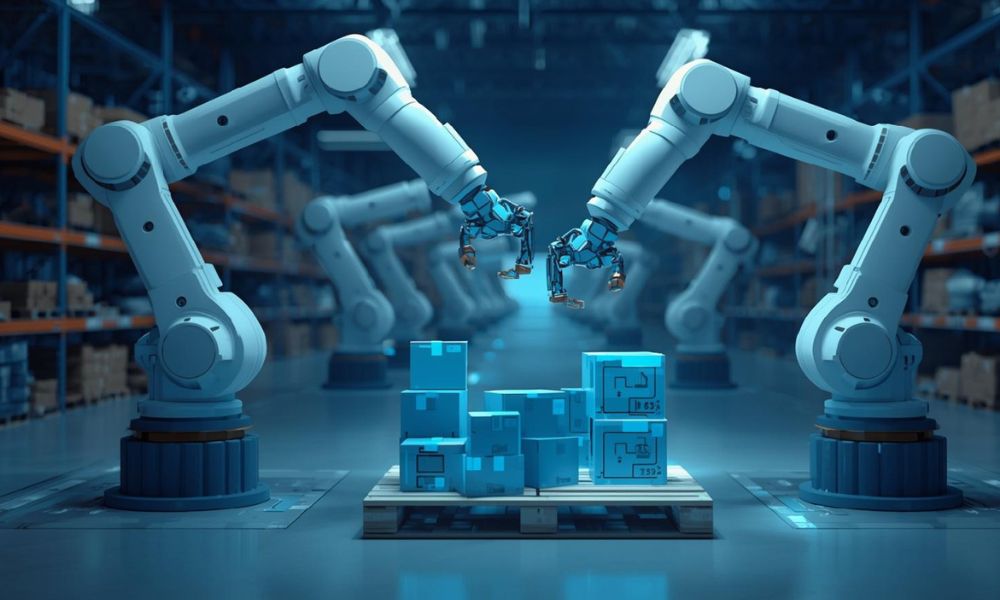
AI-powered robots are increasingly being used in warehouses to automate tasks like sorting, packing, and shipping. These robots can operate around the clock, improving efficiency, reducing human error, and lowering operational costs.
Optimizing Delivery Routes
AI in logistics can enhance delivery efficiency by analyzing real-time data like traffic conditions, weather, and vehicle availability. By automating route planning, businesses can reduce fuel consumption, minimize delays, and improve customer satisfaction with faster deliveries.
AI-Powered Inventory Management
AI systems can monitor and manage inventory levels by using machine learning algorithms to predict fluctuations in demand. This enables companies to optimize their stock levels, avoiding waste and ensuring products are available when needed.
Benefits of AI in Supply Chain Management
The integration of AI in supply chains offers several key advantages for businesses:
Increased Operational Efficiency
AI can automate repetitive tasks, allowing human employees to focus on more strategic decisions. By streamlining processes like inventory management, order processing, and logistics, businesses can significantly improve their operational efficiency.
Cost Reduction
AI’s ability to predict demand and optimize resources helps businesses cut costs in areas such as inventory storage, transportation, and human labor. Automated systems can reduce the need for manual intervention and minimize errors, resulting in cost savings.
Enhanced Decision Making
AI’s data-driven insights help managers make better, more informed decisions. From supply chain planning to risk management, AI can analyze patterns and trends that humans may miss, enabling proactive decision-making and risk mitigation.
Improved Customer Experience
AI-powered systems, like chatbots and automated customer service platforms, can provide real-time updates to customers on their order status. Additionally, faster, more accurate deliveries driven by AI lead to better customer satisfaction and loyalty.
Challenges and Limitations of AI in Supply Chains

Despite its numerous benefits, the integration of AI into supply chains presents several challenges:
High Implementation Costs
Implementing AI solutions often requires significant upfront investment in technology, training, and infrastructure. Small businesses may find it difficult to justify the high costs of AI systems.
Data Quality and Security
AI’s effectiveness relies on the quality of the data it processes. Poor data can lead to inaccurate predictions and decisions. Additionally, the increased reliance on data raises concerns over privacy and cybersecurity.
Employee Resistance
As AI takes over more tasks, employees may fear job displacement. Resistance to change is common in organizations, especially when workers are unsure how their roles will evolve with the adoption of AI.
Ethical and Legal Considerations
The use of AI in decision-making processes brings up ethical questions regarding transparency, accountability, and fairness. Organizations must ensure that AI systems are used responsibly, avoiding bias and maintaining human oversight.
AI vs. Human Jobs: Will AI Replace Human Workers in SCM?
While AI is certainly automating many tasks in supply chain management, it is unlikely to replace humans entirely. Instead, AI complements human expertise by handling repetitive and time-consuming tasks, while humans focus on higher-level decision-making. For example, while AI can predict inventory needs, human managers are still required to negotiate with suppliers and handle complex issues that AI cannot process.
The Future of AI in Supply Chain Management
The future of AI in supply chain management looks promising, with continued advancements in technology shaping the industry. Some of the most exciting possibilities include:
- Integration of AI with Blockchain: Combining AI with blockchain technology could improve transparency and security in supply chains, making it easier to track products from origin to consumer.
- Sustainability: AI can play a critical role in making supply chains more sustainable by optimizing routes, reducing waste, and minimizing carbon footprints.
- Autonomous Delivery Vehicles: As self-driving trucks and drones become more advanced, they could revolutionize last-mile delivery, making it faster and more cost-efficient.
Conclusion
AI is undoubtedly changing the landscape of supply chain management. However, it is unlikely that AI will completely replace human involvement in the industry. Rather, AI will enhance human decision-making by automating repetitive tasks, predicting trends, and optimizing operations.
For businesses, the key to successfully integrating AI into their supply chains is to strike a balance between automation and human expertise. Companies must leverage AI technologies to complement their workforce, rather than viewing them as a replacement. By doing so, businesses can unlock significant operational efficiencies, cost savings, and improved customer satisfaction.
As AI continues to evolve, businesses must stay ahead of the curve, adapting their supply chain strategies to incorporate the latest technologies. The future of supply chain management is one where AI and humans work together to create smarter, more efficient systems.