
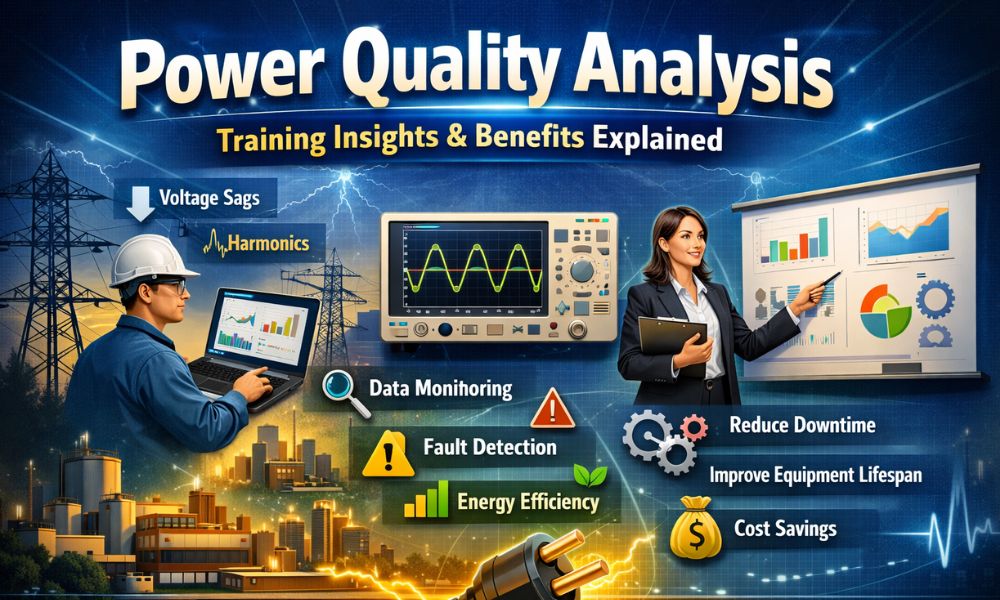
In today’s fast-paced world, electricity is the cornerstone of our modern society. Whether it’s powering industrial machinery, household appliances, or critical healthcare equipment, electrical systems are essential for every operation. However, not all power is created equal. Power quality plays a significant role in the performance and lifespan of electrical systems. Power quality disturbances such as voltage fluctuations, harmonics, and transients can cause operational inefficiencies, equipment malfunctions, and even severe financial losses. This is where power quality analysis training becomes vital.
Power quality analysis involves the measurement, evaluation, and improvement of electrical power supplied to systems. It ensures that voltage, current, and frequency remain stable and within required limits to maintain efficient operation and to avoid damage to electrical equipment. Training in power quality analysis provides professionals with the skills needed to detect, analyze, and mitigate power quality issues, ensuring smooth operations for both residential and industrial power systems.
As industries rely more heavily on electricity to drive innovation and productivity, the demand for skilled professionals who can identify and address power quality issues has increased. In this article, we will explore what power quality analysis training entails, its importance, the benefits of this training, and how it can improve both individual careers and organizational efficiency.
What Is Power Quality Analysis?
Power quality refers to the consistency and stability of the electrical power supply. For an electrical system to function optimally, the electrical characteristics must remain within specific ranges. This includes the proper voltage level, frequency, and current without unexpected interruptions or fluctuations.
The most common power quality issues include:
- Voltage sags and surges: Short-term decreases or increases in voltage can disrupt sensitive electronic devices.
- Harmonic distortions: Caused by non-linear loads such as computers and LEDs, these distortions affect the quality of the electrical supply.
- Frequency fluctuations: Variations in the frequency of the electrical supply can affect time-sensitive operations.
- Transient voltage: These are sudden spikes in voltage that can occur from lightning, switching actions, or equipment malfunctions.
Power quality analysis is crucial for identifying and rectifying these issues, ensuring that systems continue to run smoothly without interruption. Power quality analysis training focuses on teaching professionals how to evaluate power systems for these irregularities and find solutions to mitigate their effects.
The Importance of Power Quality Analysis
Impact on Equipment and Operations
Electrical systems are designed to function optimally within specific voltage and current ranges. When these values fluctuate beyond acceptable levels, they can cause significant damage to equipment. For example, a surge in voltage may burn out a motor, while harmonic distortion can cause overheating and reduce the efficiency of electrical devices. These issues can lead to:
- Equipment failure: Sensitive machinery and devices such as motors, computers, and circuit boards are vulnerable to power quality problems, leading to breakdowns and repairs.
- Operational downtime: Manufacturing lines, data centers, and other critical operations rely on continuous power supply. Interruptions due to power quality issues can cause production delays and loss of revenue.
- Increased maintenance costs: Frequent repairs due to power issues can significantly raise maintenance expenses and extend downtime.
Safety Considerations
In certain industries, such as healthcare or transportation, power quality directly affects safety. For example, hospitals rely on medical equipment that must run without disruption. A voltage fluctuation could cause life-saving equipment to malfunction, leading to dangerous outcomes. Power quality analysis training helps mitigate such risks by providing the necessary skills to identify and prevent these issues from escalating.
Key Concepts in Power Quality Analysis Training
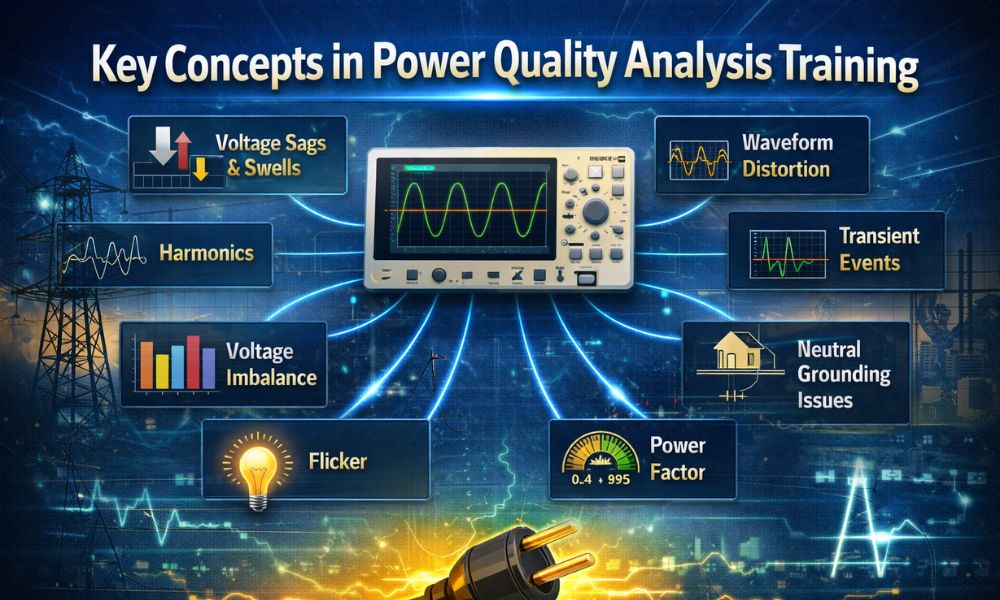
Power quality analysis training covers a broad spectrum of knowledge and skills. Participants will learn to diagnose, assess, and address various power quality issues that can arise in both residential and industrial power systems. Some of the key concepts covered include:
Voltage Sags and Surges
Voltage sags (brief reductions in voltage) and surges (temporary increases in voltage) are common power quality issues. These events are usually caused by large electrical loads being switched on or off, such as motors or welding equipment. During power quality analysis training, professionals learn to measure the duration and depth of voltage fluctuations and determine the impact on electrical systems.
Harmonics
Harmonics are distortions in the normal waveform of the electrical current caused by non-linear devices. Devices like computers, fluorescent lights, and variable-speed motors often produce harmonic currents that interfere with the normal functioning of electrical systems. These distortions can cause overheating, equipment malfunction, and reduced energy efficiency. Power quality analysis training helps professionals identify harmonic distortion and take corrective action.
Transients
Transients are sudden, brief spikes in voltage caused by lightning strikes, switching operations, or faults in electrical systems. While transient events are brief, they can have devastating effects on equipment. Power quality analysis training provides professionals with the skills needed to detect and protect against transients, ensuring the safety of electrical infrastructure.
Power Factor
Power factor is the ratio of real power (used to perform work) to apparent power (the total power supplied to the system). A low power factor indicates inefficient power usage and can lead to increased energy costs. During training, professionals learn how to measure and improve the power factor to enhance system efficiency.
How Power Quality Analysis Training Works
Power quality analysis training is typically offered through various educational formats, including in-person workshops, online courses, and certification programs. The training is designed to provide both theoretical knowledge and practical, hands-on experience. Key elements of the training process include:
Understanding Power Quality Standards
A core component of power quality analysis training involves learning about the standards set by regulatory bodies such as the Institute of Electrical and Electronics Engineers (IEEE) and the International Electrotechnical Commission (IEC). These standards define the acceptable limits for voltage, current, and frequency, helping professionals understand the minimum requirements for power quality.
Using Power Quality Analyzers
Power quality analyzers are essential tools used to measure electrical disturbances. Professionals in power quality analysis training are taught how to operate these devices to detect issues like voltage sags, harmonic distortion, and transients. Practical sessions involve real-world exercises that teach participants how to read and interpret the data provided by these analyzers.
Designing Solutions
Training also covers designing solutions to mitigate power quality problems. This may include installing power conditioning devices, such as surge protectors, filters, and voltage regulators, to ensure the stability and reliability of the electrical supply.
The Benefits of Power Quality Analysis Training
Power quality analysis training offers numerous advantages for both professionals and organizations. Some of the key benefits include:
Improved Efficiency
Training in power quality analysis equips professionals with the skills to optimize electrical systems. By identifying and resolving issues such as voltage sags and harmonics, organizations can significantly improve the efficiency of their operations, reducing energy waste and lowering operational costs.
Cost Savings
One of the primary benefits of power quality analysis training is the potential for cost savings. By detecting power quality problems early on, businesses can avoid costly repairs and downtime. Additionally, improving the power factor and reducing energy losses can result in long-term savings.
Career Growth
Power quality analysis is a specialized field with high demand in the electrical, energy, and manufacturing sectors. By completing power quality analysis training, individuals can enhance their skills, gain certifications, and improve their career prospects.
Compliance with Regulations
Organizations that invest in power quality analysis training can ensure they comply with industry standards and regulations. This is particularly important in industries like healthcare and manufacturing, where power quality issues can have serious consequences.
Conclusion
In an age where electrical systems are more complex than ever, power quality analysis training plays a critical role in maintaining system stability, preventing equipment damage, and improving operational efficiency. By equipping professionals with the tools and knowledge needed to diagnose and solve power quality issues, training programs help ensure the smooth running of industries and homes alike.
Power quality problems, from voltage fluctuations to harmonic distortions, can lead to costly consequences if left unchecked. By investing in power quality analysis training, individuals and organizations can prevent these issues, improve energy efficiency, and safeguard the longevity of electrical equipment. With the demand for skilled professionals in this field growing rapidly, power quality analysis training is an investment that promises long-term benefits for careers, organizations, and the broader economy.