

Emotional Intelligence (EI) is not only a buzzword it’s a must-have for you to become an effective leader, team mate, and innovator in today’s everchanging business world. Leading companies know that encouraging emotional intelligence in the workplace helps individuals communicate better, have strong relationships and make good decisions.
But just how do leading companies train emotional intelligence? This article focuses on the different techniques of successful companies in generating emotional intelligence, what training processes are available, and how these kinds of trainings positively affect employee individuals as well as the organization’s success.
What is Emotional Intelligence and Just Why Is It So Important?
Emotional Intelligence involves recognising, understanding and managing our own emotions as well as the emotions of others. In the workplace, that means greater self-awareness: We become more self-conscious about how we come across, show more empathy and become better at communicating.
There is an increasing demand for super-stressed professionals who can blow off steam and don’t lose their cool when the going gets tough. The smartest companies have realized that the better their employees, especially management, are at understanding and responding to emotional intelligence (EI), the better interpersonal relationships will be within the company.
Emotional Intelligence and Effective Leadership
Highly emotionally intelligent leaders are not only good decision-makers, they can lead teams through difficult challenges, provide constructive feedback and wisen employees up to reach their maximum potential.
EI-trained leaders see the emotions that drive their team members’ behaviors and therefore are better positioned to deliver tailored support. That in turns generates a more engaged team, solving their disputes now it is very rare to happen, and hence an enhanced organization performance overall.
How the Best Companies Train Up Their Emotional Intelligence
The best employers understand that emotional intelligence is something you can cultivate. These institutions invest in a variety of high impact training programs through which employees at all levels are able to further develop their EI capabilities. Here are a few effective techniques:
Workshops and Seminars
Emotional Intelligence Training Corporate gray-strokes Companies regularly deliver thorough workshops and seminars on emotional intelligence. These workshops delve into the five elements of EI: self-awareness, self-regulation, motivation, empathy and social skills.
‘role-playing’ using ‘real-life case study’, and interactive exercises for the employees to implement what they have learn in practice.
Mentorship and Coaching
Another very successful training that top companies will sometimes engage in is pairing employees with those who have developed high levels of emotional intelligence (EI). These role-models act as guides and share stories, they in effect model the EI competences; allowing the mentee to try them out, make mistakes and learn from these lessons.
Coaching sessions where employees have mini “aha” moments on their reactivity further contribute to emotional maturation and self-awareness.
Online Courses and Digital Resources
As digital learning proliferates, many leading companies are providing online courses, webinars and interactive e-learning tools that specifically target emotional intelligence. With these resources, employees can explore materials at their own pace and work through multimedia, quizzes, and simulations that help drive home key ideas.
These are great for practicing emotional intelligence skills in a flexible, portable way.
Group Activities and Role-Playing
Team-based exercises or role-play situations are a safe way to work on practicing emotional intelligence in structured group settings. These games allow your employees to put themselves in somebody else’s shoes, see things from different perspectives and improve their problem-solving abilities – and communication skills.
By practicing real-life workplace situations, employees can gain confidence in controlling emotions during stressful scenarios.
Why Emotional Intelligence Training Benefits Both Employees and Employers
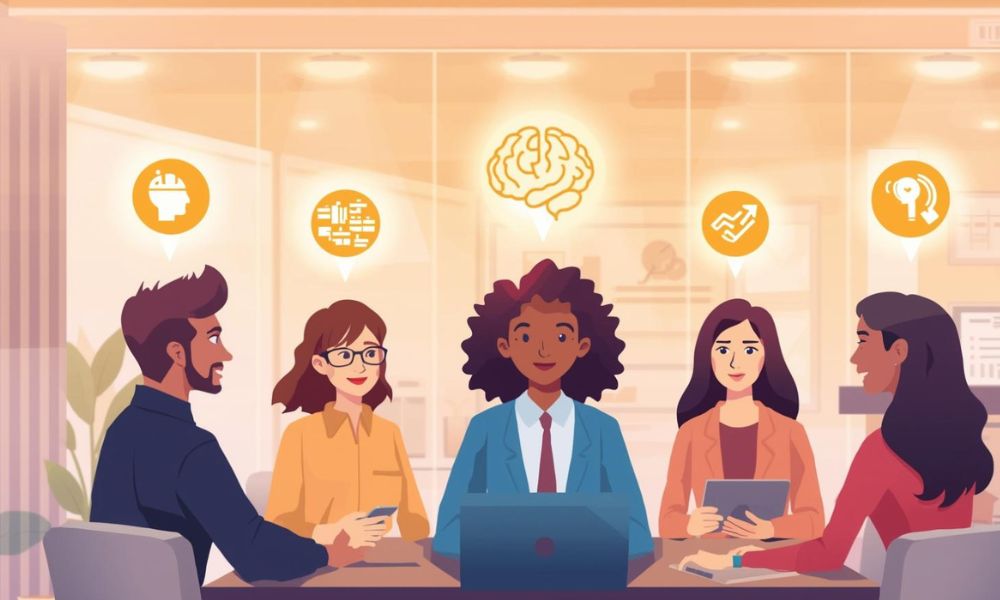
For Employees:
- Improved Communication: EI training helps employees articulate their thoughts and emotions more effectively, which fosters better collaboration and understanding.
- Conflict Resolution: Employees trained in emotional intelligence are better equipped to handle conflicts in a calm and constructive manner.
- Increased Self-Awareness: Developing EI helps employees become more mindful of their actions, leading to better decision-making and self-regulation.
For Employers:
- Stronger Leadership: Emotionally intelligent leaders are more successful in managing teams, providing feedback, and making decisions that align with organizational goals.
- Enhanced Teamwork: High EI contributes to healthier workplace relationships and a more cooperative environment, which leads to higher productivity.
- Reduced Employee Turnover: Employees who feel understood and supported are more likely to stay with the company, reducing recruitment costs and maintaining continuity.
Measuring the Impact of Emotional Intelligence Training
Top companies don’t just implement emotional intelligence training programs—they measure their effectiveness. Various metrics, such as employee surveys, 360-degree feedback, and self-assessments, help organizations track the progress of their EI initiatives.
By gathering feedback and assessing behavioral changes, companies can gauge whether their training programs are helping employees enhance their emotional intelligence. This data-driven approach allows for continuous improvement and ensures that the training programs remain relevant and effective.
The Long-Term Impact of Emotional Intelligence Training
The benefits of emotional intelligence training extend far beyond initial development. Over time, emotionally intelligent employees contribute to a more positive workplace culture, improved decision-making, and greater innovation.
Additionally, emotionally intelligent teams can better adapt to change, manage stress, and collaborate on complex projects. These long-term impacts contribute to an organization’s overall success and help it stay competitive in a fast-changing market.
Conclusion
Training emotional intelligence is not a one-time activity, but an ongoing investment in the development of individuals and the organization as a whole. By integrating emotional intelligence training into the company culture, top companies foster an environment where employees feel empowered, valued, and motivated.
With emotionally intelligent employees in place, organizations are better equipped to face challenges, innovate, and lead in an increasingly competitive marketplace. Emotional intelligence is no longer just a soft skill it’s a vital tool for organizational success.