

This mixed role of product strategy and machine learning in today’s fast-paced digital economy creates a critical interdependent power unit, the AI Product Manager. Unlike old school product managers, AI PMs combine data, machine learning, and design to create effective intelligent solutions. Demand for the role is increasing not just in global tech hubs, but also at local and regional markets where A.I. is in the process of transforming industries including agriculture, health care and logistics.
Knowing how to become an AI product manager is no longer siloed away in Silicon Valley or lucrative upbringings. Through the right mindset, available learning guides and local community support, anyone with a problem-solving mind set are able to get on that fad. You don’t need a PhD, only curiosity, dedication and the desire to learn.
Deciphering The Job of an AI Product Manager
An AI product manager is nothing more or less than a vision translator. They sit between elite data scientists in ivory towers on a mountain of highly technical and un-interoperable software stacks and the actual business end of real world problems. Think of them as the architects of AI-driven solutions who create not only what, but why.
They inform model development, ethics management, product roadmaps and how to measure performance all while making sure AI isn’t just working but delivering human-centered value. AI PMs have to deal with the complexities of probabilistic outcomes, data drift, algorithmic bias and model interpretability in contrast to regular PMs. It’s a dance of precision and uncertainty.
Why The Time is Now for AI Product Management
It is no longer an imaginary world when it comes to Artificial Intelligence. It’s practical. It’s local. Between smart chatbots in small-town law offices and logistics generated by intelligences in regional supply chains, its demand for localized AI that respects the context of local markets is clearly rocketing.
As companies across the board look to infuse their apps, services, and operations with AI capabilities, and as it becomes increasingly vital for businesses to harness the power of data to make confident decisions, there is a growing opportunity for people working in software engineering.
Both governments and private companies are pouring money into AI literacy and infrastructure — contributing to new job pathways even in towns that tech forgot. Now’s the time to learn more about how to become an AI product manager.
Is a Technical Background Necessary?
Surprisingly, no. You don’t have to be a coder to become an AI product manager, but you do have to be curious. You do need this base knowledge knowing what a model is, how data is trained, the difference between supervised and unsupervised learning. But hands-on coding? Optional.
Far more important is the ability to think critically, empathize with users, and communicate clearly working across cross-functional teams. It pays to be tech-savvy, but it is how you reason strategically, understand products and evaluate ethical implications that really matters in a role like this.
Key Skills Required to Excel as an AI Product Manager
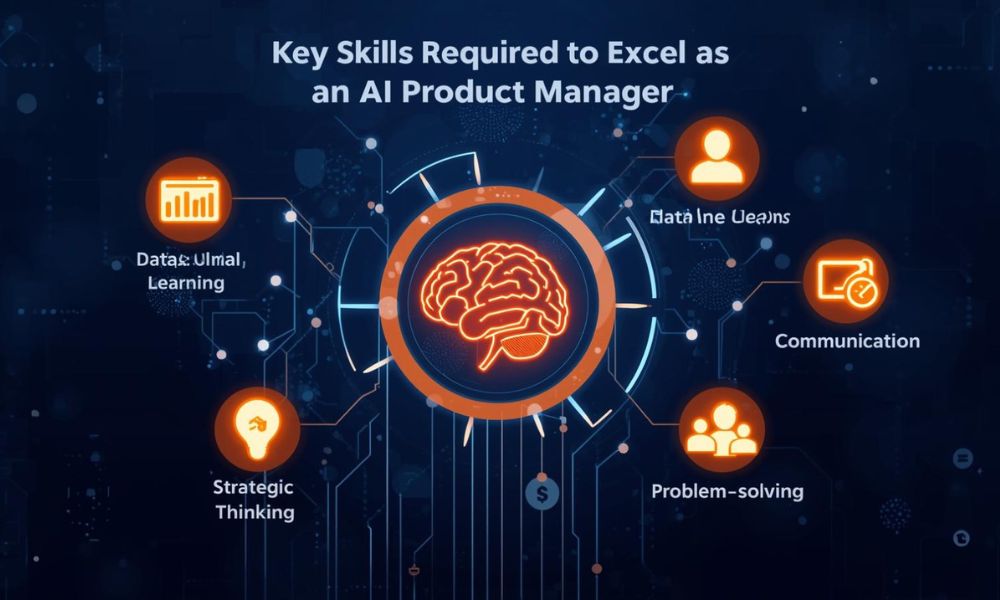
To thrive, an AI PM must cultivate a blend of interdisciplinary skills:
- Product Strategy & Roadmapping: Defining vision and measurable outcomes.
- AI Literacy: Understanding AI principles, limitations, and capabilities.
- Data Fluency: Comfort with data pipelines, evaluation metrics, and analytics.
- Stakeholder Communication: Managing diverse teams including engineers, marketers, and business leaders.
- Ethical Awareness: Evaluating the social implications and biases in AI systems.
This hybrid role requires both left-brain analytical sharpness and right-brain storytelling intuition, a rare but developable balance.
Steps to Become an AI Product Manager (Locally & Remotely)
Learn the Basics of Product Management
Before diving into AI, master the fundamentals of product management. Enrol in beginner-friendly courses online, read industry blogs, or join local product meetups. Platforms like Coursera, Product School, and LinkedIn Learning offer accessible entry points.
Develop AI Fluency (Without a PhD)
Start with foundational AI concepts. Understand terms like neural networks, regression models, overfitting, and natural language processing. Tools like Google’s AI for Everyone or Microsoft Learn can help you grasp the landscape without requiring advanced math.
Work on a Local AI Use Case
To stand out, contextualise your learning. Identify a local problem that can be solved with AI — such as automating appointment bookings for nearby clinics or optimising delivery routes for small businesses. Build a conceptual product roadmap and document your thought process.
Build a Portfolio with Real-World Projects
Even if it’s hypothetical, creating a case study shows initiative. Detail the user problem, proposed AI solution, business impact, and ethical considerations. Present it visually using simple tools like Notion or Canva.
Join Communities and Network Strategically
Connect with local AI professionals through community hubs, online forums, or even co-working spaces. Platforms like Meetup or Eventbrite often host free workshops on tech topics. You don’t need a global network to get started a few local conversations can open many doors.
Apply for Internships, Remote Roles, or Volunteer Projects
Small businesses often seek digital transformation but lack expertise. Offer to consult or assist on AI-adjacent projects. This experience adds credibility, even if unpaid. Also, look for remote associate PM roles where AI is a component of the product.
What Makes a Great AI PM Candidate?
The best candidates are relentless learners. They ask sharp questions like:
- What does success look like for this AI model?
- How do we measure fairness and accountability?
- How will this feature improve the user’s daily experience especially in a local context?
They are humble in the face of complexity and curious about both data and humans.
Common Pitfalls and How to Avoid Them
Many aspiring AI product managers make the mistake of diving too deep into technical rabbit holes or ignoring user impact. Others treat AI like magic instead of a tool. The truth is: successful AI PMs balance feasibility with empathy. They think locally while acting with global precision.
Conclusion
Becoming an AI product manager doesn’t require a coding background just a curious mind, strategic thinking, and a commitment to continuous learning. Whether you’re based in a major city or a local community, this career path is within reach. With the right skills, local insight, and a problem-solving mindset, you can lead impactful AI-driven solutions that serve real needs. Start small, stay focused, and you’ll be shaping the future of tech from right where you are.